Respirator Selector: Which Mask or Respirator Do You Need?
Selecting a respirator starts with one number: how many times the contaminant in the air exceeds its occupational exposure limit. Enter both figures and this tool calculates the hazard ratio and lists the respirator types whose assigned protection factor is high enough, from FFP2 and FFP3 dust masks to full face and powered respirators.
Find a suitable respirator
Enter your figures to see the result.
Hazard ratio and assigned protection factors
The hazard ratio is the measured concentration divided by the occupational exposure limit (OEL). A ratio of 10 means the air holds ten times the limit, so the respirator must cut exposure by at least ten times. Each respirator type has an assigned protection factor (APF), the reduction a trained, fit-tested wearer can expect in practice. The calculator uses the APFs published by the UK Health and Safety Executive in HSG53, which are widely used for EN- and SANS-certified equipment:
| Respirator | Particles | Gas / vapour |
|---|---|---|
| FFP1 disposable mask, or half mask with P1 filter | 4 | – |
| FFP2 disposable mask, or half mask with P2 filter | 10 | – |
| FFP3 disposable mask, or half mask with P3 filter | 20 | – |
| Half mask with gas filters | – | 10 |
| Full face mask with P3 / gas filters | 40 | 20 |
| Powered respirator, full face or TH3 hood | 40 | 40 |
| Compressed airline breathing apparatus (full face) | 40 | 40 |
| Self-contained breathing apparatus (positive pressure) | 2000 | 2000 |
Choose a respirator with an APF equal to or above the hazard ratio. In oxygen-deficient or immediately dangerous atmospheres, filtering respirators must never be used: only breathing apparatus with its own air supply is suitable.
Gas and vapour filter colour codes
| Filter | Colour | Protects against |
|---|---|---|
| A | Brown | Organic vapours with a boiling point above 65 °C (solvents, paints) |
| AX | Brown | Low-boiling organic compounds (below 65 °C) |
| B | Grey | Inorganic gases such as chlorine and hydrogen sulphide |
| E | Yellow | Acid gases such as sulphur dioxide and hydrogen chloride |
| K | Green | Ammonia and its derivatives |
| Hg | Red-white | Mercury vapour |
| P1 / P2 / P3 | White | Particles: dust, mist and fume |
Combination filters such as A2P3 protect against vapours and particles at once, which suits spray painting. South African disposable masks are tested to SANS 50149 (EN 149) and filters to EN 143 (particles) and EN 14387 (gases), or their SANS equivalents. A respirator only works if it seals, so fit test tight-fitting masks and keep wearers clean shaven where the seal sits.
This tool gives an estimate for planning and budgeting. It does not replace a risk assessment or the advice of an occupational hygienist.
Need respirators and dust masks?
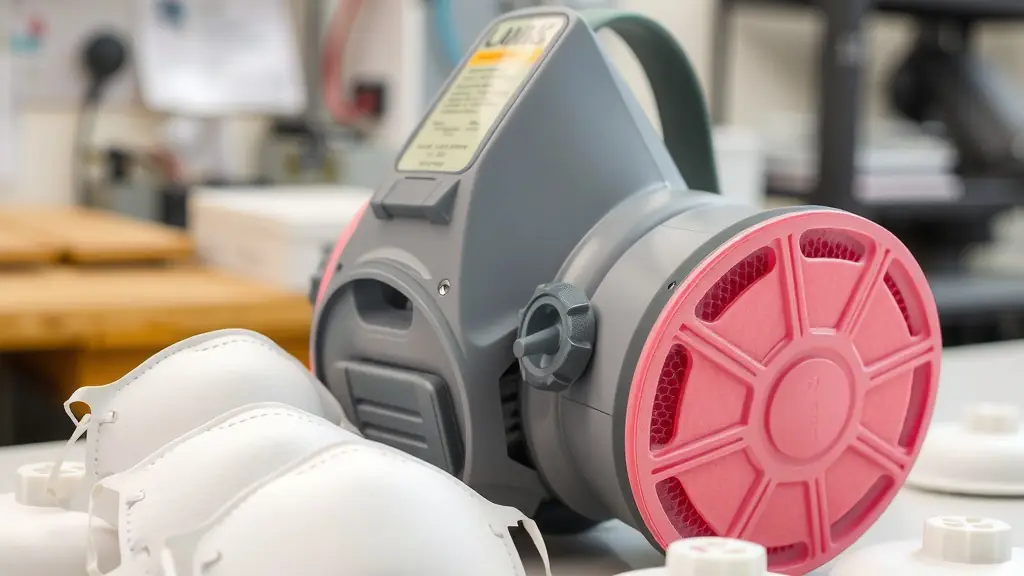 Respirators and Dust Masks: types, standards and how to get a quote
Frequently asked questions
- What is the difference between FFP2 and FFP3?
- FFP3 masks filter at least 99% of test particles and have an assigned protection factor of 20; FFP2 masks filter at least 94% and have an APF of 10. Use FFP3 for hazardous dusts such as crystalline silica when exposure is high.
- Can a dust mask protect against fumes and vapours?
- A particle mask (FFP or P filter) stops welding fume and mist particles, but not gases or solvent vapours. For vapours you need a respirator with the correct gas filter, such as type A for organic solvents.
- Where do I find the exposure limit for a chemical?
- In the Regulations for Hazardous Chemical Agents (2021) under the Occupational Health and Safety Act, and in section 8 of the product's safety data sheet.