Noise Exposure and Hearing Protection Calculator
Enter the noise levels a worker is exposed to and for how long, and this calculator works out the daily noise exposure (LAeq,8h), the noise dose as a percentage of the 85 dB(A) limit and how long each level can safely be tolerated. Add the SNR of your hearing protection to estimate the level at the ear and see whether the protector is strong enough, or too strong.
Calculate daily noise exposure
Enter your figures to see the result.
How noise exposure is calculated
Noise is measured in decibels on the A-weighted scale, dB(A), which is logarithmic: every 3 dB increase doubles the sound energy. That is why the safe exposure time halves for every 3 dB above 85 dB(A). Eight hours at 85 dB(A) is a 100% dose, four hours at 88 dB(A) is also 100%, and only 15 minutes at 100 dB(A) gives the same dose.
The calculator combines the tasks into one equivalent level over an eight-hour day: LAeq,8h = 10 × log10( Σ (ti ÷ 8) × 10Li/10 ), where t is the hours at each level L. The dose is 100% × 10(LAeq,8h − 85)/10, and the allowed time at a level is 8 ÷ 2(L − 85)/3 hours.
The 85 dB(A) limit in South Africa
The Noise-Induced Hearing Loss Regulations under the Occupational Health and Safety Act set 85 dB(A) as the noise rating limit for an eight-hour shift. Where workers are exposed at or above it, employers must demarcate noise zones, try to reduce noise at source, issue suitable hearing protection, train workers and run audiometric medical surveillance. Mines follow their own code of practice on noise under the Mine Health and Safety Act. Noise should be measured by an approved inspection authority, and the figures from that survey are the ideal input for this calculator.
Is your hearing protection good enough?
The SNR (single number rating) on ear plugs and ear muffs is measured in a laboratory with a perfect fit. In daily use protection is lower, so the calculator subtracts a 4 dB real-world allowance, as recommended by the UK Health and Safety Executive. Aim for a level at the ear between 70 and 80 dB(A). Above 85 dB(A) the protector is too weak. Below 70 dB(A) workers may feel isolated and remove the protector, or miss warning signals and reversing alarms, so a lower SNR can actually be safer. For very low-pitched noise, use the protector's H, M and L values or ask your supplier.
This tool gives an estimate for planning and budgeting. It does not replace a risk assessment or the advice of an approved inspection authority or occupational hygienist.
Need hearing protection?
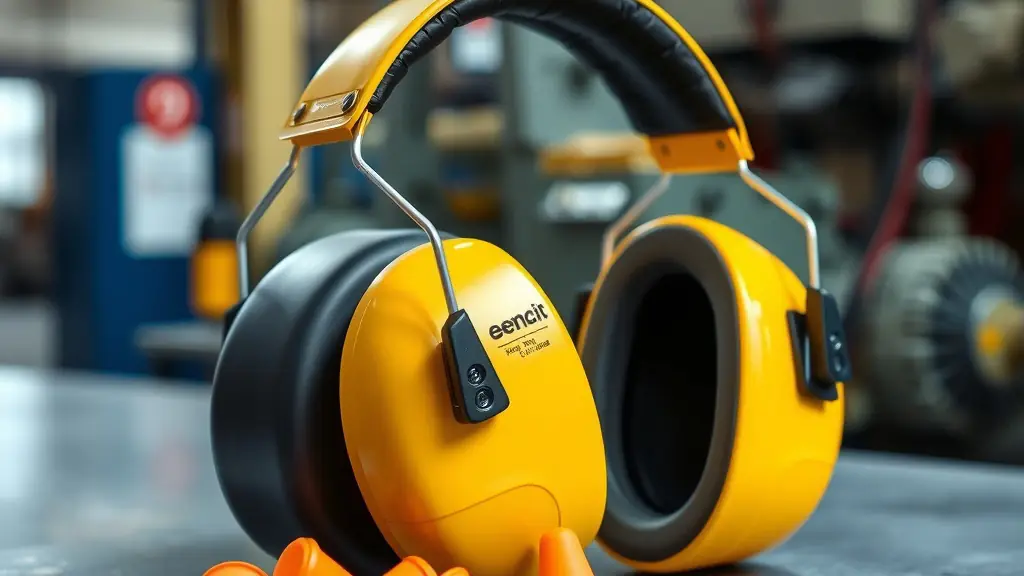 Hearing Protection: types, standards and how to get a quote
Frequently asked questions
- How long can you be exposed to 90 dB(A)?
- With a 3 dB exchange rate and an 85 dB(A) eight-hour limit, about 2.5 hours. At 94 dB(A) it is about one hour, and at 100 dB(A) only 15 minutes.
- What SNR do I need for my hearing protection?
- Choose an SNR that brings the level at the ear to between 70 and 80 dB(A) after a 4 dB real-world allowance. For an LAeq of 95 dB(A), an SNR of roughly 20 to 25 is usually enough.
- Is 85 dB(A) dangerous?
- Regular exposure at or above 85 dB(A) over a working day causes permanent noise-induced hearing loss in a share of workers, which is why it is the legal limit and the point where hearing protection becomes compulsory.