Selecting Durable Cleaning Equipment for Harsh Environments
High-Pressure Washers vs. Steam Cleaners
A single failed pump can halt an entire mining operation for hours! That reality drives every decision we make when specifying industrial cleaning and safety equipment for South African sites. Corrosive chemicals, abrasive dust, and extreme temperatures demand more than off-the-shelf tolerance.
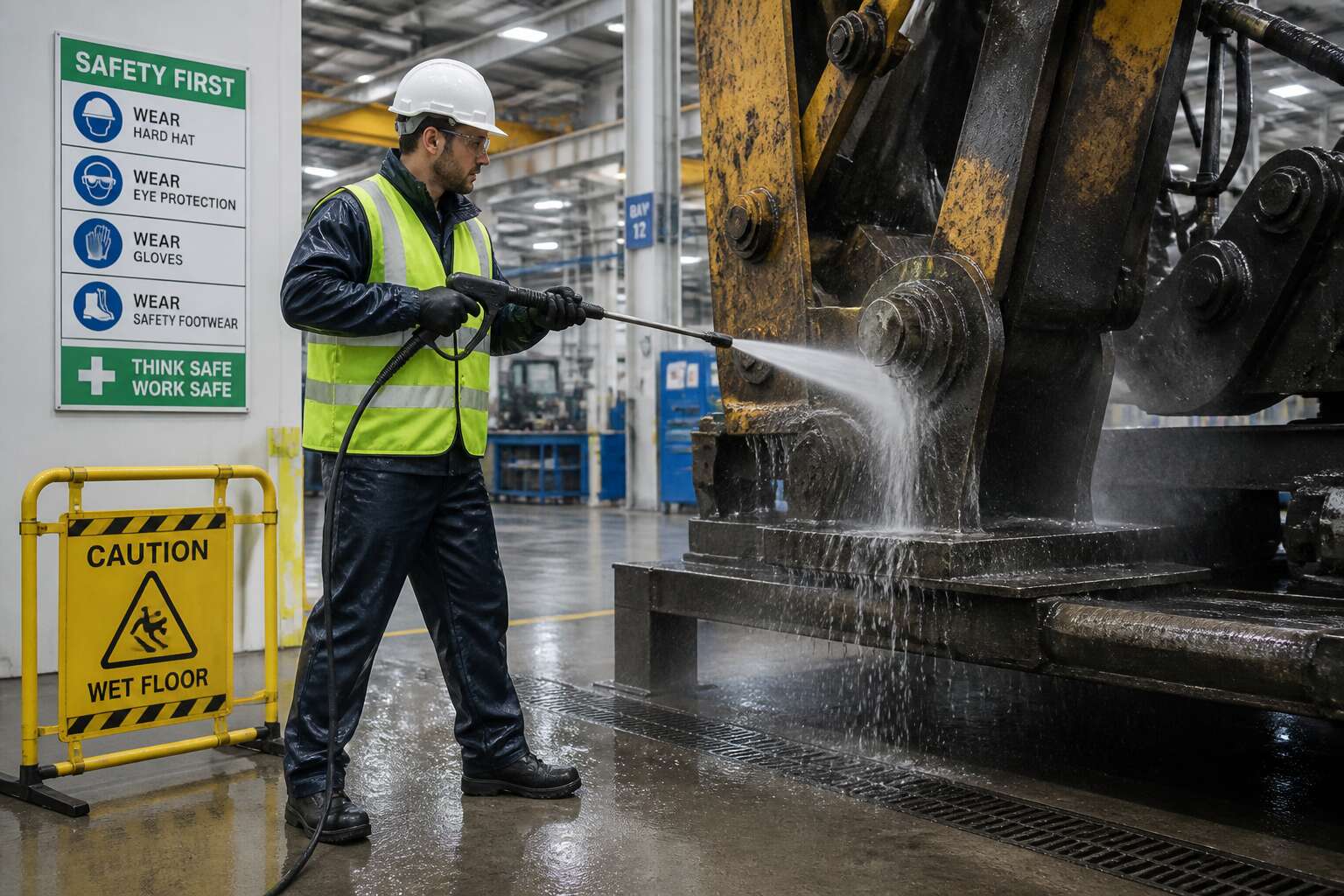
Comparing high-pressure washers against steam cleaners begins with the contaminant. Washers excel at blasting caked soil and grime, while steam cleaners dissolve grease and sanitise without chemical residue. For our clients, the choice often hinges on water availability and surface sensitivity.
- Check seals and gaskets for chemical resistance.
- Verify the pump’s duty cycle against shift lengths.
- Ask about local service support beyond warranty terms.
Durable frames, stainless steel fittings, and protected control panels separate robust units from fragile ones. We test equipment under real site conditions because printed specs rarely reveal vibration fatigue. Selecting durable industrial cleaning and safety equipment reduces downtime and protects your crew.
Automated Scrubbers and Industrial Vacuums
Walk onto any South African processing floor and you will see why automated scrubbers fail within months. The real enemy is not grime, it is abrasive dust grinding through seals and chemical vapours corroding unguarded circuit boards. We watched a new scrubber lose its traction motor after three weeks because the manufacturer skipped dust testing.
Industrial vacuums endure similar conditions. Filtration systems clog, hoses collapse under heat, and static discharge becomes an ignition risk in explosive atmospheres. That is why we specify equipment with certified ATEX components and HEPA filtration rated for continuous duty. These are not luxuries, they are survival traits! Three factors determine whether a machine survives:
- The ingress protection rating, not the brochure.
- Local warehouse stock for spare parts and service.
- Brush pressure sensors that prevent overload damage.
Every rand spent on durable industrial cleaning and safety equipment returns through fewer breakdowns and safer shifts.
Chemical Resistance and Material Compatibility
Caustic soda does not apologise. It finds the incompatible seam, the gasket chosen for price rather than chemistry, and forces it open until the machine loses hydraulic fluid. Chemical resistance is the first sentence of material compatibility, but never the whole story.
A scrubber built for a food plant fails in a battery recycling facility. Plastics age, seals swell, frames corrode around acid mist. We specify industrial cleaning and safety equipment with documented chemical resistance charts, not anecdotes.
Selecting materials means matching every component to the actual agents present. These failures occur:
- Seals dissolving in solvent atmospheres.
- Polycarbonate panels crazing after contact with alkali.
- Aluminium housings reacting with acidic dust.
The load bearing structure matters as much as the wetted surfaces. South African processing plants expose equipment to acids and oxidisers. Material compatibility decides whether your industrial cleaning and safety equipment survives a month or a decade.
Critical Safety Equipment for High-Risk Facilities
Respiratory Protection and Air Purification
Occupational respiratory diseases account for nearly a quarter of all work-related illnesses in South Africa’s high-risk sectors. That statistic changes how I approach every facility audit! Respiratory protection and air purification require specific, measurable actions, not general assurances.
In practice, the right equipment depends on the contaminant’s physical state. Gases demand filtration, while particulates need mechanical capture. I always verify these critical items:
- Self-contained breathing apparatus for oxygen-deficient zones
- Powered air-purifying respirators with replaceable cartridges
- Mechanical ventilation systems with HEPA-grade filters
Selecting the correct industrial cleaning and safety equipment for these tasks prevents exposure before it reaches the worker’s lungs.
Fall Protection Systems and Lanyards
A fall from height does not announce itself. It is the silent arithmetic of gravity, and in high-risk facilities, the ledger is unforgiving. I have walked catwalks where the void below hums with potential. That is why fall protection systems and lanyards are non-negotiable in any serious inventory of industrial cleaning and safety equipment.
The hardware must be inspected with suspicion. Harnesses, anchorage points, and energy absorbers all carry the weight of a single misstep. In South Africa’s industrial corridors, the sun bakes the webbing, the dust grinds the buckles. Trust nothing without verification.
- Full-body harnesses with load-distributing straps
- Shock-absorbing lanyards with snap hooks
- Vertical lifelines and rail systems
Each element is a promise against the abyss. Check them like your life depends on it, because it does.
Emergency Shower and Eyewash Stations
Chemical accidents are impolite. They arrive unannounced, usually when your hands are full and judgment is occupied elsewhere. Emergency shower and eyewash stations are a facility’s apology delivered in advance, a necessary line in any industrial cleaning and safety equipment ledger.
The social rules are straightforward. Store a corrosive, you must offer the means to rinse it away. In South African plants, where line pressure dips without warning, the weekly activation test is not bureaucracy. It is survival.
What demands scrutiny:
– Tepid water to encourage the full 15 minute drench
– An unobstructed path from the hazard
– Regular flushing to clear sediment and bacteria
A station that stumbles when called upon is a failure of character, with consequences far beyond embarrassment.
Integrating Cleaning and Safety Protocols for Operational Efficiency
Cross-Functional Training for Staff
Cross-functional training reshapes how teams perceive risk. Cleaning and safety are not separate domains. They are two readings of the same physical environment. A worker who understands both can spot a leaking chemical container while mopping a corridor. This dual awareness reduces response time.
- Maintenance staff learn to flag ergonomic hazards in equipment placement.
- Operators practice lockout procedures during scrubber maintenance.
- Supervisors review incident reports alongside chemical compatibility charts.
Each exercise builds a shared mental map. Over time, the distinction between cleaning duty and safety duty dissolves. That is when industrial cleaning and safety equipment earns its true value.
The resulting efficiency is faster work. It is work that anticipates its own consequences.
Scheduling Deep Cleaning to Minimize Downtime
Every unscheduled hour of downtime carries a hidden price: corrosion, residue buildup, and skipped safety checks. In South African plants, the deepest cleaning opportunities arrive when machinery sleeps, yet too many teams waste those hours waiting for permission.
Integrating cleaning and safety protocols means treating the shutdown schedule as a fixed sequence. The scrubber runs while maintenance inspects extraction hoods. The pressure washer targets the loading bay while electricians verify emergency stops. Each task has its own window, and industrial cleaning and safety equipment earns its value only when those windows overlap.
I have seen a four-hour night shift replace a full weekend of catch-up. One planner, one checklist, a relentless focus on sequence. That is operational efficiency. Sequence determines outcome, and the equipment is simply the instrument of that order!
Inventory Management for Consumables
In an operating plant, the quietest failures happen in the storeroom. Consumables like filters, spray tips, and chemical refills disappear without fanfare, and the industrial cleaning and safety equipment sits idle while someone hunts for a replacement nozzle. I have watched a crew lose two hours because a filter sat on a requisition form for three days.
Integrating cleaning and safety protocols means tying inventory to the maintenance schedule. When the planner knows a scrubber runs every Tuesday, the storeman orders pads the week before. When respirator filters are logged against usage hours, depletion never surprises the crew!
- vacuum filters
- spray nozzles
- chemical refills
- glove liners
- absorbent socks
When those five are tracked, cleaning keeps pace with production. The storeroom becomes a buffer, not a bottleneck.
Regulatory Compliance and Industry Standards
OSHA Guidelines for Hazardous Materials
A single spill of a hazardous chemical can cost a facility more than just cleanup time. Regulatory compliance under OSHA guidelines for hazardous materials demands a systematic approach. Your industrial cleaning and safety equipment must align with these standards, from containment to disposal. OSHA requires proper labeling, secondary containment, and accessible spill kits.
Consider the essentials:
– Hazard communication training for every employee
– Regular inspection of storage areas
– Immediate availability of neutralizing agents
Each element reduces risk and legal exposure. Without adherence, fines escalate quickly. South African facilities often adapt these principles to local OHS regulations. I’ve seen audits fail over a missing label!
Chemical Safety Data Sheets (SDS) Interpretation
The SDS tells you what that mysterious drum actually contains, before you turn it into a fountain. That last part is the joke, but a fountain of reactive chemicals is no laughing matter. Interpreting these sheets requires attention to Section 8, where exposure limits live, and Section 10, where reactivity lurks. A worker who misreads the SDS might pair an acid with a base, creating a geyser no one asked for.
South African regulations mirror international standards, but local details differ. Your industrial cleaning and safety equipment must match the SDS specifications, not the other way around. When the sheet says ‘use a solvent-resistant hose,’ a garden pipe won’t cut it. Auditors check SDS availability and legibility. They also check that employees can find the emergency procedures without a map.
A torn, faded SDS invites penalties and, worse, a messy afternoon.
ISO 14001 Environmental Management
More than 400,000 facilities worldwide operate under ISO 14001 certification, and South African suppliers are feeling that pressure. This standard forces you to measure every output, including the water and detergents discharged by your cleaning systems. Your industrial cleaning and safety equipment must carry its own environmental credentials, from pump seals to disposal routes.
Auditors look for three things:
- Documented procedures for spill containment.
- Evidence that cleaning agents are correctly dosed.
- Maintenance logs proving no leaks.
If your industrial cleaning and safety equipment cannot trace its own waste stream, certification stalls. That is why we pair every machine with a compliance folder, not a handshake. ISO 14001 does not care about intention. It cares about data.
NFPA Standards for Flammable Storage
Most fire marshals start by asking one question: where do you keep the solvents? NFPA 30 and NFPA 30A define the allowable spacing, containment, and ventilation for flammable storage. In high-volume manufacturing plants, a single pallet of cleaning agents in the wrong corridor negates every safety claim you make. Your industrial cleaning and safety equipment must be compatible with those storage protocols, from explosion-proof vacuums to grounded transfer pumps.
Auditors verify three specific elements:
- Cabinet construction meets NFPA 30 fire-resistant ratings.
- Ignition sources stay at least 25 feet from uncapped containers.
- Spill containment trays sit under every drum spigot.
Missing one detail stalls a permit or voids an insurance policy. We test flow rates and static dissipation on every system we deliver, so your storage area survives scrutiny.
Auditing and Certification Procedures
Certification is a haunting ritual. Auditors arrive unannounced, their clipboards bearing the weight of SABS standards and international protocols. They photograph every weld, every hose clamp, every grounding strap on your industrial cleaning and safety equipment.
Most facilities fail before lunch. Serial numbers don’t match. Maintenance logs show gaps. Calibration certificates expired months ago.
- Verify certificates against physical equipment tags
- Confirm technician training records
- Test emergency shutoff functions under load
That unforgiving process determines whether your permits survive another cycle. We maintain audit-ready documentation for every machine we deliver, because in South Africa, compliance is not administrative theatre, it is survival.
Innovative Technologies Shaping the Future of Facility Maintenance
IoT-Enabled Cleaning Equipment Monitoring
A single sensor failure can cost millions in downtime. IoT-enabled cleaning equipment monitoring transforms routine machines into data sources, revealing usage patterns, filter status, and battery health in real time. This intelligence changes how we source industrial cleaning and safety equipment, supporting predictive maintenance.
A connected scrubber tracks water temperature, brush pressure, and operator habits, all without manual inspection. On large industrial sites, that means fewer breakdowns and lower energy consumption. Anomalies appear on a dashboard within seconds!
Here is what modern sensors commonly report:
- Motor load and wear indicators
- Chemical dilution ratios
- Filter clogging alerts
These inputs let managers allocate resources precisely for industrial cleaning and safety equipment. Teams schedule service before failure, not after. For anyone overseeing a warehouse or factory, this is less about gadgets and more about control. The outcome is smoother operations and safer conditions, driven by signals we once overlooked.
Robotic Cleaning and Autonomous Safety Systems
A warehouse that cleans itself sounds improbable, until robotic scrubbers and autonomous safety patrols take the floor. These machines inspect for spills, detect thermal anomalies, and reroute foot traffic around hazards in real time. South African facilities are adopting this technology to reduce human exposure to dangerous zones. The cost of accidents is simply too high for manual monitoring alone.
Robotic cleaning units navigate narrow aisles and dock charging stations without intervention. They operate alongside staff, using lidar and pressure sensors to avoid collisions. Meanwhile, autonomous safety systems monitor air quality and structural integrity. They flag risks before a person ever enters the vicinity.
- Autonomous scrubbers with self-cleaning filters
- Mobile robots that detect gas leaks
- Drones that inspect elevated storage racks
These tools are becoming standard components of industrial cleaning and safety equipment. The result is a facility that responds to danger faster than any human crew could!
Green Cleaning Agents and Sustainable Practices
The shift toward green cleaning agents is quietly rewriting the rules of facility maintenance. In South Africa, where water scarcity and environmental regulation press upon every industry, the choice of chemicals carries weight beyond simple efficacy. Plant-derived surfactants and enzyme-based formulations now dissolve grease and biofilms without leaving toxic residue behind. These agents reduce the burden on wastewater treatment systems and protect workers from chronic chemical exposure. The result is a floor that gleams and a workforce that breathes easier.
Sustainable practices extend beyond the bottle. Facilities are adopting closed-loop dilution systems that meter concentrates precisely, eliminating waste and overuse. Microfiber technology, paired with color-coded zones, cuts water consumption by up to 90% in some applications. This is the quiet engineering that makes industrial cleaning and safety equipment more than a purchase. It becomes a commitment to operational longevity and ecological stewardship.
Innovation is also arriving in the form of smart dosing and real-time monitoring. Sensors embedded in dispensing units track chemical usage and alert managers to anomalies before they become hazards. Consider what modern facilities are integrating:
- Electrolyzed water generators that create disinfectants on site from salt and electricity
- Biodegradable solvents derived from citrus and corn, tailored for heavy machinery
- IoT-enabled sprayers that adjust flow rates based on surface type and soil level
These technologies do not just clean. They teach us to maintain spaces with precision and restraint. The future of facility maintenance is not louder machinery or harsher chemicals. It is smarter, gentler systems that align profit with planetary limits. That is the quiet revolution happening now, one scrub pass at a time.
Smart PPE with Sensor Integration
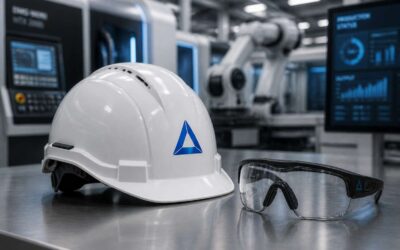
In South African facilities, the hard hat is no longer a passive shell. Sensor-integrated smart PPE now monitors core temperature, impact force, and air quality in real time! This data streams directly to supervisory dashboards, flagging fatigue before it leads to injury. Workers in cleaning crews receive alerts when toxic vapor levels rise, while managers track exposure histories without manual logs.
This convergence of wearables and industrial cleaning and safety equipment changes risk management. A vest that detects hazardous gas or a boot that measures slip resistance is not a gadget. It is a safeguard that transmits clear signals. As facilities adopt these tools, the boundary between worker and workstation blurs. The equipment becomes part of the safety conversation itself.


0 Comments