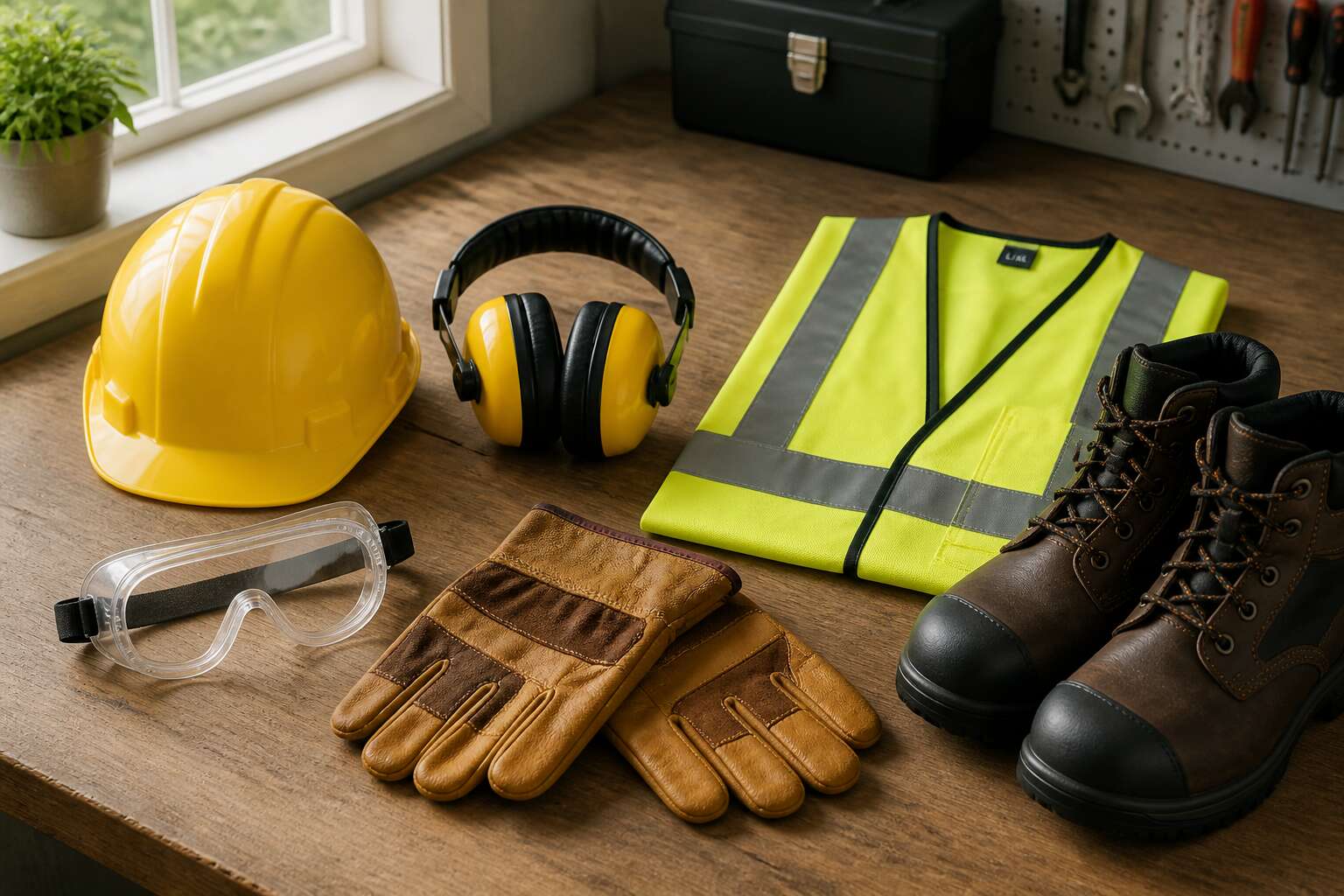
Personal Protective Equipment
Head Protection Options
Every second on site, a single falling object can permanently rewrite your shift. A comprehensive safety equipment list must treat head protection as a non-negotiable starting point, not a box to tick. South African workplaces, from Gauteng construction sites to Western Cape mining shafts, present wildly different hazards that demand distinct solutions.
Consider the practical options available:
- Climbing helmets with adjustable chin straps for work at height
- Full-brim hard hats that deflect falling debris and reduce sun exposure
- Vented industrial helmets for heat-stressed environments such as confined spaces
- Bump caps for low-clearance zones where impact with a fixed object is the primary risk
The right choice depends on your actual exposure, not just the industry standard. Ignoring this nuance turns a routine job into a gamble. Review your safety equipment list against the specific threats you face daily, because your next decision could be the one that matters most.
Eye and Face Protection
A single grinding spark in a Durban fabrication shop can embed itself in an eyeball. That is a five second event with permanent consequences. Any safety equipment list for South African workplaces must dedicate real attention to eye and face protection.
Protection must match the hazard:
- Safety glasses with polycarbonate lenses handle general impact.
- Sealed goggles defend against chemical splashes in labs and processing plants.
- Full face visors add a layer for grinding and cutting operations.
- Welding shields with auto darkening filters protect against arc flash.
Workers who wear prescription spectacles face a specific problem. Over spectacles goggles or clip on visors solve it without forcing a choice between seeing clearly and staying safe.
Respiratory Protection
Every breath in a dusty maize mill forces a healthy lung to filter particles it was never designed to clear. Silica, grain dust, welding fume; these are the contaminants that destroy lung capacity. Any safety equipment list must treat respiratory protection as a non negotiable component.
The hazard determines the filter:
- Disposable FFP2 masks handle light nuisance dust.
- Half face respirators with replaceable cartridges suit spray painting and chemical handling.
- Powered air purifying respirators suit long shifts in heavy dust.
- Supplied air systems are the only acceptable choice for confined spaces.
I have watched men leave a shift coughing while their filter sat unused in a pocket. A fit test ensures the seal actually holds. Facial hair breaks that seal. A clogged filter becomes a breathing obstacle.
Match the device to the contaminant, measuring exposure first. That is the difference between a token gesture and protection that works.
Hand and Arm Protection
A severed finger changes a worker’s life in under a second. Hand and arm injuries dominate incident reports in South African industry, yet most are preventable with the right gear. A practical safety equipment list includes gloves rated for the specific hazard, not a generic pair for every job. Leather palms handle rough material handling. Nitrile gloves resist oils and solvents. Cut resistant sleeves protect forearms during blade maintenance. Kevlar options suit high heat work.
I have watched operators discard gloves because they were too thick for fine adjustments. That moment of convenience costs fingers. Arm protection gets even less attention. Sleeves that extend past the wrist prevent sparks, dust, and debris from reaching exposed skin. A glove that stops at the wrist leaves the forearm open to injury.
Foot and Leg Protection
A boot that stops at the ankle leaves the shin exposed. The safety equipment list for lower limbs demands the same attention we give our hands. I have seen workers wear smooth soled shoes on wet steel, trusting grip that is not there.
Falling objects, punctures, and heat define the main risks. A dropped brick shatters a toe. A nail pierces through a thin sole. Welding sparks ignite cloth.
- Safety boots with reinforced toes
- Leather gaiters for molten splashes
- Shin guards for impact zones
Each item serves a specific function. A boot that resists compression does not stop chemical burns. That gap in protection explains why foot and leg gear must be specified separately.
Hearing Protection Gear
Hearing damage is permanent. The human ear does not regenerate, unlike skin or bone. South African mines and factories routinely produce noise above 85 decibels, the threshold for damage.
Protective hearing gear belongs on every safety equipment list. A proper safety equipment list pairs earplugs with earmuffs for the specific noise source. Foam earplugs expand inside the ear canal. Earmuffs seal around the entire ear. Neither works on the chin, a sight I have witnessed often.
Compliance is the real problem! A worker removes hearing protection to hear a colleague, then forgets to replace it. That minute matters. Electronic earmuffs amplify speech while blocking background noise.
- Disposable foam earplugs
- Reusable banded earplugs
- Electronic earmuffs with speech amplification
Hearing loss is silent, gradual, and final. A crushed toe demands attention immediately. A damaged cochlea does not. The first sign is usually a spouse complaining about the television volume.
Workplace and Construction Safety Gear
Fall Prevention and Arrest Systems
Falls cause one in five construction deaths in South Africa. A worker without a harness is a risk no supervisor should accept. Your safety equipment list must include three essential elements: anchors, full body harnesses, and connecting devices. I always tell crews to inspect webbing for UV damage and chemical wear. Check metal hooks for cracks and spring tension. Lanyards with shock absorbers require careful stowage to avoid false deployment.
- Anchor points must be rated for at least 22 kilonewtons.
- Harnesses need adjustable leg straps for a snug fit.
- Rope grabs should slide smoothly but lock under sudden force.
Positioning lanyards allow hands free work, while vertical lifelines protect climbers. This list ensures your safety during a fall.
High-Visibility Clothing
On a South African construction site, being invisible is not a superpower. It is a one way ticket to the emergency room. High visibility clothing turns workers into moving beacons, but only if the gear actually fits and stays clean. A dusty reflective vest reflects nothing.
Your safety equipment list should feature Class 2 or Class 3 garments. Fluorescent orange, lime yellow, and silver retroreflective tape are standard. The tape loses its magic after repeated washing, so replace it.
- Check for frayed straps.
- Verify that reflective stripes cover front, back, and sleeves.
- Confirm the fabric breathes in summer heat.
Lanyards and Harnesses
Webbing can look sound and still be ruined. A lanyard’s inner filaments snag and tear while the outer sheath keeps its shape. I once examined a harness that passed a casual glance yet had a dorsal ring ready to separate. That inspection reshaped my safety equipment list.
- Bend the webbing to expose hidden cuts.
- Inspect stitching around every load-bearing buckle.
- Run fingers along connectors for burrs or deformations.
Shock-absorbing lanyards expire after any fall, even a short drop. The energy absorber deforms permanently and cannot rebond. Harness sizing exerts more influence than brand names. A loose leg loop shifts your centre of gravity and converts a minor slip into a violent swing. South African ultraviolet radiation also degrades polyamide webbing. Store gear out of direct sunlight and never hang harnesses on sharp metal prongs!
Barriers, Barricades, and Warning Signs
In South Africa, construction sites record hundreds of preventable collisions each year due to missing barriers. One worker’s near miss with a reversing forklift changed my safety equipment list for good. Barriers, barricades, and warning signs create the primary separation between personnel and moving machinery.
Solid barriers block vehicle access. Portable pedestrian barriers guide foot traffic. Reflective warning signs remain visible in low light. A proper site layout requires each element to match the specific hazard.
- Jersey barriers for high impact zones
- Retractable belt stanchions for temporary paths
- Warning tape for low risk areas
Ignoring these components invites chaos. A safety equipment list without barriers leaves workers exposed to blind corners and reversing trucks. Inspect every sign for legibility and every barrier for structural integrity.
Bump Caps and Hard Hat Accessories
Statistically, one in five construction head injuries involves a worker who skipped the bump cap. Your safety equipment list should treat bump caps and hard hat accessories as separate line items, not afterthoughts. A bump cap shields against stationary obstacles like overhead pipes, while a hard hat handles falling objects. Accessories include chin straps, sweatbands, and reflective decals. In South Africa’s high heat, a sweatband is not luxury; it is productivity. Consider these add-ons:
- Chin straps for windy high rises
- LED clip lights for dusk shifts
- Cooling inserts for summer months
Without them, your safety equipment list remains incomplete. The right accessory turns a standard helmet into a tailored tool.
Emergency and First Aid Essentials
Comprehensive First Aid Kits
The quiet before an emergency carries no warning. When a blade slips or a scaffold groans, the first thing your hand reaches for is not a phone. It is the kit your safety equipment list promised. A comprehensive first aid kit must carry more than plasters and hope.
A long look inside tells the truth. Contents degrade, seals weaken, and sterile wrappers tear under South African heat and coastal damp. A kit that sits untouched for years cannot save anyone.
The essentials to inspect:
- Pressure dressings and haemostatic gauze
- Thermal blankets for shock
- Sterile saline and wound irrigation supplies
- A tourniquet with clear instructions
Every worker deserves to know exactly where the kit lives and what it holds.
Fire Extinguisher Types and Placement
A fire doubles in size every sixty seconds, so the first minute decides the outcome. When I walk a site, I check where the extinguishers live before I look at anything else!
Building your safety equipment list means matching the extinguisher to the hazard. Water units fail on electrical fires. Dry chemical powder works across most industrial settings, but foam beats it for flammable liquids.
1. Mount them within 10 metres of the hazard.
2. Keep them clear of exits, not blocking them.
3. Inspect pressure gauges monthly.
Placement decides whether a worker reaches the unit or retreats. A unit hidden behind a forklift is a decoration. Portable extinguishers only work when someone can grab them without walking into smoke. That placement rule belongs on your safety equipment list, not just on the purchase order.
Emergency Eyewash and Shower Stations
Chemical exposure is measured in seconds, not minutes. The eyes and skin absorb sodium hydroxide, sulfuric acid, or any other compound faster than a worker can run to a washroom. Emergency eyewash and shower stations are the only equipment that can flush those substances away quickly enough.
A station with adequate flow pushes contaminants out of the eye socket and off the skin. It also needs a controlled water temperature to prevent further injury. The surrounding floor must be dry and clear, because a slippery access route turns an emergency into a compound accident.
The full breakdown of station types, their capacities, and their servicing schedules belongs on the safety equipment list. One rusty unit on the far side of a warehouse is not protection. It is a liability. A workplace that treats these stations as critical infrastructure, not plumbing extras, gives its people a real chance to walk away unharmed.
Automated External Defibrillators
In South Africa, a sudden cardiac arrest can strike a worker without warning. An automated external defibrillator, or AED, resets the heart’s rhythm before paramedics arrive. Every minute without a shock drops survival chances by 10 percent. That makes the AED a critical entry on any safety equipment list.
These devices guide a layperson with voice prompts. They only shock when needed. An inactive AED is useless, so mount it in a visible, accessible spot with signs. Put it where everyone can see it!
- Check battery and electrode pad expiry monthly
- Listen for the audible alarm that signals a fault
Regular servicing keeps the device operational. Include it in the inspection schedule. A workplace cannot rely on a defibrillator that never gets checked.
Specialized and Job-Specific Equipment
Welding Protective Gear
Welding exposes workers to a unique mix of hazards that generic PPE cannot touch. In South Africa, the arc flash alone can reach temperatures above 3000°C, yet many sites still rely on standard cotton overalls. That is a dangerous gamble.
Specialised welding protective gear starts with the helmet, but the auto-darkening lens is only half the story. You also need flame-resistant jackets with high collar coverage, and gauntlet gloves that extend past the wrist. Leather aprons and spats protect the torso and ankles from molten sparks. Your safety equipment list should include a dedicated storage bag for this gear, because contamination from oil or grease ruins its protective properties.
- Auto-darkening welding helmets with UV/IR filtration
- FR jackets and bibs meeting SANS standards
- Aluminised heat-reflective sleeves for overhead work
Every item must be inspected before each shift. Cracks in the lens or frayed seams compromise the whole setup. I have seen too many welders skip the spats and pay the price.
Chemical Splash and Vapor Protection
Chemical splash and vapor hazards demand a different tier of defence. A standard hard hat and gloves will not stop a corrosive mist from seeping through porous fabrics. In South African processing plants, workers face substances that can compromise skin integrity within seconds. The safety equipment list must account for chemical-resistant coveralls, splash aprons, and vapour-barrier ensembles.
- Butyl or nitrile gloves with extended cuffs
- Face shields with chemical-resistant visors
- PVC or neoprene aprons
- Full-body suits for high-risk vapour exposure
Seams matter as much as fabric. A pinhole defect in a welded seam turns an impermeable suit into a liability. I have seen garments fail at the cuff junction more often than at the main panel. Swelling, discolouration, or stiffening all signal that the material has begun to break down.
Insulated Tools for Electrical Work
Electricity does not bargain. In South African plants, an arc flash can end a career in seconds. The safety equipment list for electrical work must include insulated tools with verified voltage ratings. Standard metal tools conduct current without warning. A coating of rubber on the handle is not enough. Every insulated tool carries a certification mark and a maximum voltage. Inspect the full length of the tool before use. A pinhole or crack turns protection into a liability.
Consider these tools for your kit:
- Insulated screwdrivers certified to IEC 60900
- Dielectric pliers and cutting tools
- Voltage-rated sockets and wrenches
Heat, oil, and ultraviolet light degrade insulation over time. Stiff handles or discoloured coatings signal failure. Replace any tool with compromised material. The difference between safe and deadly is a surface layer you cannot see through.



0 Comments