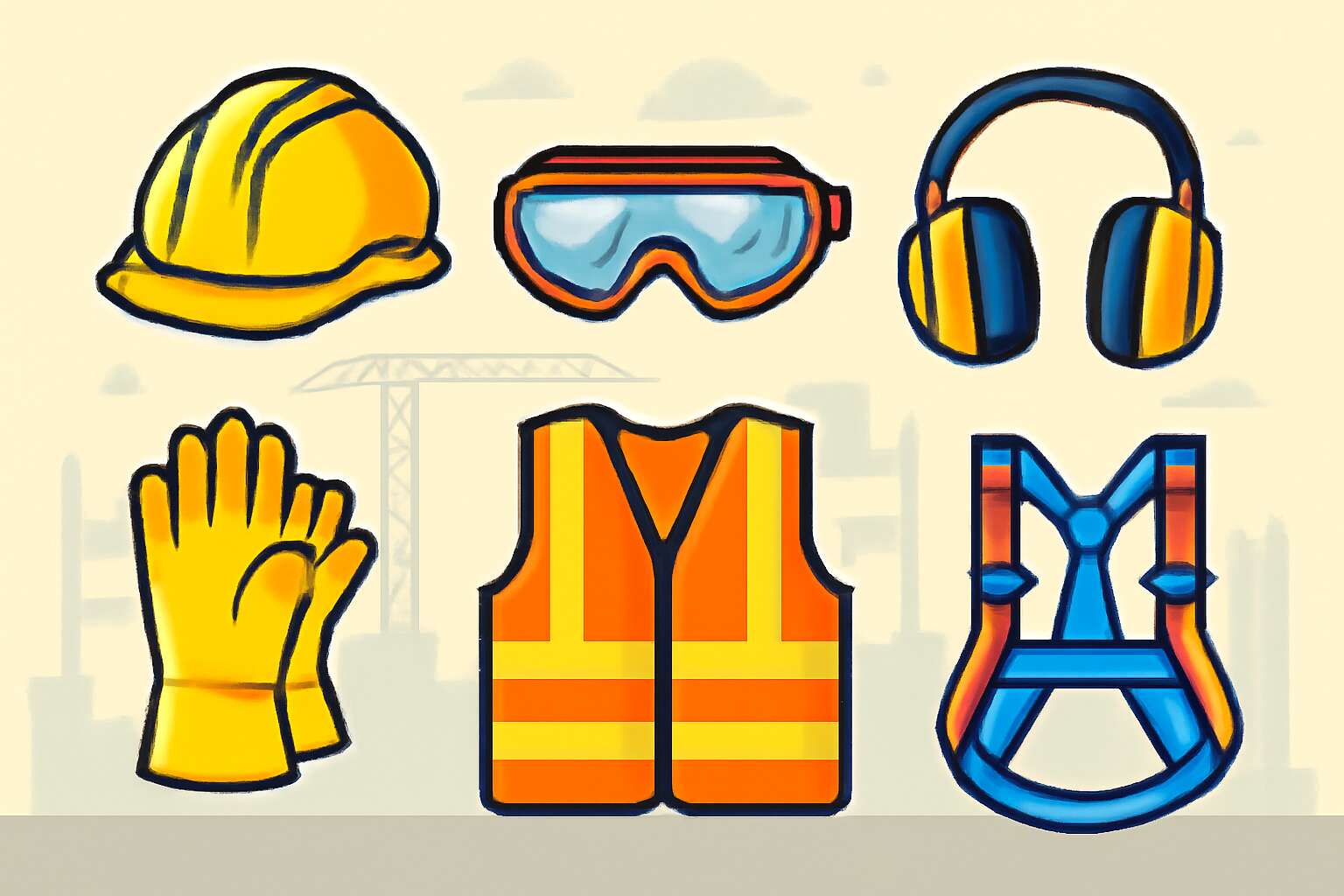
Safety Equipment Visuals and Vector Design
Foundational concepts of safety equipment graphics
Visuals save lives on site. In South Africa, a crisp safety visuals approach cuts confusion faster than lengthy manuals. The safety equipment vector communicates risk in an instant, turning complex gear into clear, shareable signals.
Foundational concepts of safety graphics hinge on clarity and consistency. Vector design relies on simple geometry, bold silhouettes, and sparse color to keep visuals legible at any scale.
- Consistent iconography across PPE and tools
- Color language aligned to hazard levels
- Scalability for print and digital use
These elements keep the safety visuals practical in busy sites, especially when multilingual teams must interpret gear at a glance. In SA contexts, icons for earmuffs, gloves, and helmets must be instantly recognizable, avoiding ambiguity.
When the right safety equipment vector is used, workplaces glow with clarity, and risk becomes a shared, understood concept!
Best practices for vector illustration of PPE
On South Africa’s bustling worksites, a single glance should guide action. A well-crafted safety equipment vector acts as a universal handshake across languages, turning crowded PPE racks into instant signals workers can trust at a distance.
Prioritize legibility over detail: use clean geometric silhouettes, consistent stroke weights, and high-contrast color pairs that map to hazard levels. Test the visuals at poster size and on digital devices, ensuring someone new to the site can recognise earmuffs, gloves, and helmets instantly.
- Consistent PPE iconography
- Bold silhouettes with clear negative space
- Color language tied to risk levels
- Accessible design for color vision
When these elements align, the safety visuals thrive—quietly steering action and reducing misinterpretation on even the busiest shifts.
Choosing color palettes for safety messaging
On South Africa’s busiest worksites, a single visible symbol can steer action faster than a whistle. Clear safety visuals cut miscommunication on site by up to 40%, turning a crowded PPE rack into instant signals. This is the essence of safety equipment vector—quietly decisive in any light.
When mapping color palettes for safety messaging, keep things restrained: a neutral base with two high-contrast accents that map to hazard levels. Test legibility on posters and screens, and plan for color-vision differences so no one misses a cue.
- Contrast-first pairing that remains legible in sunlight
- Limited hues to reduce cognitive load
- Color labels aligned with risk codes for quick recognition
Done right, the palette becomes a universal shorthand, reducing the time to identify gear and keeping teams moving with confidence—without the jargon and with a hint of flair.
Accessibility and legibility in safety icons
On South Africa’s busiest worksites, a single, legible symbol can steer action faster than a whistle. In safety equipment vector design, clarity isn’t optional—it’s a matter of life and efficiency. I’ve seen visuals cut miscommunication and speed decisions when every second counts. Bold visuals carry through glare and dust, quietly decisive in any light!
Accessibility in safety iconography is more than size; it demands contrast, simple shapes, and consistent cues that map to risk without confusion. Icons should read at distance and on screens, from crane decks to PPE racks, for a shared message at a glance.
- High-contrast outlines that read in bright sun
- Simplified silhouettes for at-a-glance recognition
- Consistent sizing and spacing across icons
- Color labels aligned with risk codes to avoid ambiguity
Handled with care, the palette and shapes become a universal shorthand—reducing time to identify gear and keeping teams moving with quiet flair.
Industry Applications of Safety Graphics
Workplace PPE illustration use cases
A robust safety equipment vector cuts near-miss incidents by up to 28% in high-risk environments, a statistic with quiet authority in South Africa’s busy mines and factories. When PPE and barriers are everywhere, ambiguity remains—the visuals speak instantly and keep teams aligned under pressure.
Across industries—mining, construction, manufacturing, logistics—visuals become a shared language. The safety equipment vector translates complex procedures into instant recognition, reducing missteps and boosting confidence on a crowded site from Cape Town to Gauteng. It’s not vanity; it’s moral clarity in motion.
Common on-site use cases include:
- Employee onboarding on mining sites
- Equipment labeling and manuals
- Hazard communications on plant floors
- Signage and displays in warehouses
In corridors and control rooms, the quiet geometry of a well-designed system invites trust, turning vigilance into habit.
Construction site safety icons
A robust safety equipment vector reduces near-miss incidents by up to 28% on high-risk sites, a statistic that lands with quiet authority in South Africa’s busy mines and factories! The visuals turn dense procedures into instant recognition, guiding actions even under pressure.
Industry applications span many environments, from signing in control rooms to wayfinding on sprawling sites. We see the vector supporting training, safety briefings, and routine inspections, becoming a shared language that aligns teams across locations.
- wayfinding and emergency egress on construction and mining sites
- hazard communications on plant floors and warehouses
- training modules for new hires and rotating staff
In this landscape, the vector acts as a constant companion, turning vigilance into habit and turning every corridor into a confident pathway from Cape Town to Gauteng.
Healthcare safety equipment visuals
On South Africa’s hospital floors, where precision is life, a safety equipment vector cuts through the noise and guides action in a heartbeat. A telling stat lingers: near-miss incidents can drop by up to 28% on high-risk sites when clear graphics steer behavior. In healthcare, this quiet prowess saves minutes and minds alike.
- hospital ward corridors and patient rooms
- operating theatres and sterile processing
- emergency departments and evacuation routes
- laboratories, imaging rooms, and PPE checkpoints
- elder care facilities within hospital campuses
Across training modules, infection-control briefings, and routine maintenance, these graphics become a shared language that unites teams from Cape Town to Gauteng. They turn vigilance into habit and render complex procedures legible in a single glance.
Industrial safety signage and compliance imagery
Factories pulse with precise choreography; a safety equipment vector translates risk into action at a glance. In South Africa’s industrial heartlands, crisp signage trims response times and boosts focus on the line.
Industrial safety signage and compliance imagery bridge complex protocols with everyday tasks, guiding crews through lockout routines, hazardous zones, and emergency exits. The visuals speak a universal language, reducing ambiguity across shifts and site unfamiliarity.
- Manufacturing floors
- Mining operations
- Warehousing and logistics
- Energy and utility plants
Across audits and onboarding, these graphics underwrite safety culture, letting minute-by-minute decisions align with policy without slowing momentum.
SEO and Marketing for Safety Graphics
Keyword strategy for safety equipment visual content
Southern light catches these visuals, and in SA’s digital workplaces, graphics that blend clarity with heart lift engagement by up to 80%, turning viewers into informed decision-makers.
SEO and marketing for safety graphics hinge on the quiet conversation between image and search. The phrase safety equipment vector should weave through alt text, captions, and page headings as naturally as breath, while keeping accessibility alive for screen readers and mobile skimmers.
To harmonize SEO with safety graphics, visuals should align with intent and the marketing narrative.
- Maintain consistent naming for vector assets across the site.
- Craft captions that reflect search intent while remaining reader-friendly.
- Structure pages so the visual narrative supports headings and body text.
In SA, where workplaces are vibrant and dynamic, your graphics become a beacon that speaks both to policy and possibility, a quietly radiant safety equipment vector guiding hands and eyes alike.
Optimizing image metadata and alt text
One striking stat hits straight to the gut: a single well-targeted image can lift engagement by up to 80% in SA’s bustling digital workplaces.
SEO and marketing for safety graphics hinge on the quiet conversation between image and search. Optimizing image metadata and alt text for a safety equipment vector makes that chat legible to search engines and inclusive for screen readers. Use natural language, describe the scene, the function, and the context, and thread the keyword in a way that feels effortless.
In South Africa, where bandwidth varies and mobile skimming is real, the narrative should glide across headings and body text with consistency—so that every image announces its purpose without shouting.
Creating shareable vector assets for branding
A single image can lift engagement by up to 80% in South Africa’s bustling digital workplaces, a stat that feels almost magical. In safety graphics, the conversation between image and search hinges on a guiding current—the safety equipment vector—that makes intent easy for both people and algorithms.
Across varying SA bandwidth, the narrative should glide through headings, alt text, and captions with quiet clarity. I watch campaigns travel from inbox to feed, buoyed by vector assets. Shareable vector assets become branding ambassadors—quiet, memorable, and easy to adapt for intranets, social feeds, or billboards without shouting.
Brand teams can unlock scale by treating vector assets as living branding tools—consistent, adaptable, and fast to deploy.
- Brand consistency across channels and formats
- Scalability that stays sharp on mobile and large displays
- Faster production cycles with easy customization
Production and Distribution of Safety Graphics
Vector formats and export settings
A crisp vector is the passport your safety graphics need from the workshop to the workplace. In today’s fast-moving environments, scalable assets cut deployment time and keep lines legible on mobile screens and billboards alike. Your safety equipment vector becomes the common language across PPE posters, site signage, and training modules.
Production and distribution hinge on choosing the right formats: SVG for web, AI or EPS for editors, and PDF for print, compatible with SA standards. Master files remain untouched for future edits, while export settings preserve colour consistency, correct scaling, and accessibility. Think viewBox alignment, fonts converted to outlines, and embedded colour profiles to avoid surprises at print.
To guide production and ensure flawless distribution, keep these considerations in mind:
- File formats and targets: SVG, AI/EPS, PDF
- Colour management: web colour (sRGB), print CMYK, embedded ICC
- Text handling: outlines for reliable rendering
- Metadata and licensing: credits and usage rights
File management and licensing for safety illustrations
In busy South Africa factories, up to 40% of safety posters go unread within the first week, a silent cost of cluttered channels. Production and distribution hinge on formats that print cleanly, export-ready licensing, and solid master files. A safety equipment vector travels from workshop to workplace, preserving colour, scale, and legibility across PPE posters, site signage, and training modules aligned with SA standards.
Master files should stay untouched for future edits, while export settings lock colour consistency and accessibility. Key considerations include viewBox alignment, fonts converted to outlines, embedded colour profiles, and robust licensing records.
- Licensing credits and usage rights
- Preservation of master files for edits
- Embedded metadata: creator, version, colour profiles
In South Africa’s distribution networks, clear licensing and file-management practices turn quick-turn graphics into safe, trusted visuals.
Integration with design systems and dashboards
In busy South Africa factories, up to 40% of safety posters go unread within the first week—the cost of cluttered channels is real. Production and distribution of safety graphics must ride the rails of robust design systems and live dashboards to stay on message.
When a safety equipment vector is wired into design tokens and asset pipelines, colour, scale and legibility survive from printer to projector. Central dashboards track status, version, and distribution reach, so teams know what’s live on site and what’s queued for updates.
- Design systems integration with tokens and components
- Automated export and validation pipelines
- Live distribution dashboards for playback across sites
That disciplined flow reduces clutter, speeds deployment, and keeps SA standards in sight, every time.
Quality control and feedback loops
Across busy South Africa factories, up to 40% of safety posters go unread within the first week—the cost of cluttered channels is real. Production and distribution of safety graphics relies on a rock-solid quality-control loop that preserves the safety equipment vector from print bed to projector. Tight preflight checks protect legibility, color fidelity, and regulatory alignment, turning throughput into traction rather than drift.
- Preflight alignment for color, contrast, and asset versioning
- Automated export with validation against design tokens and accessibility rules
- On-site playback checks and distribution logging to confirm what runs where
Feedback loops capture field notes, version changes, and performance metrics, enabling rapid, disciplined iteration across all sites.


0 Comments