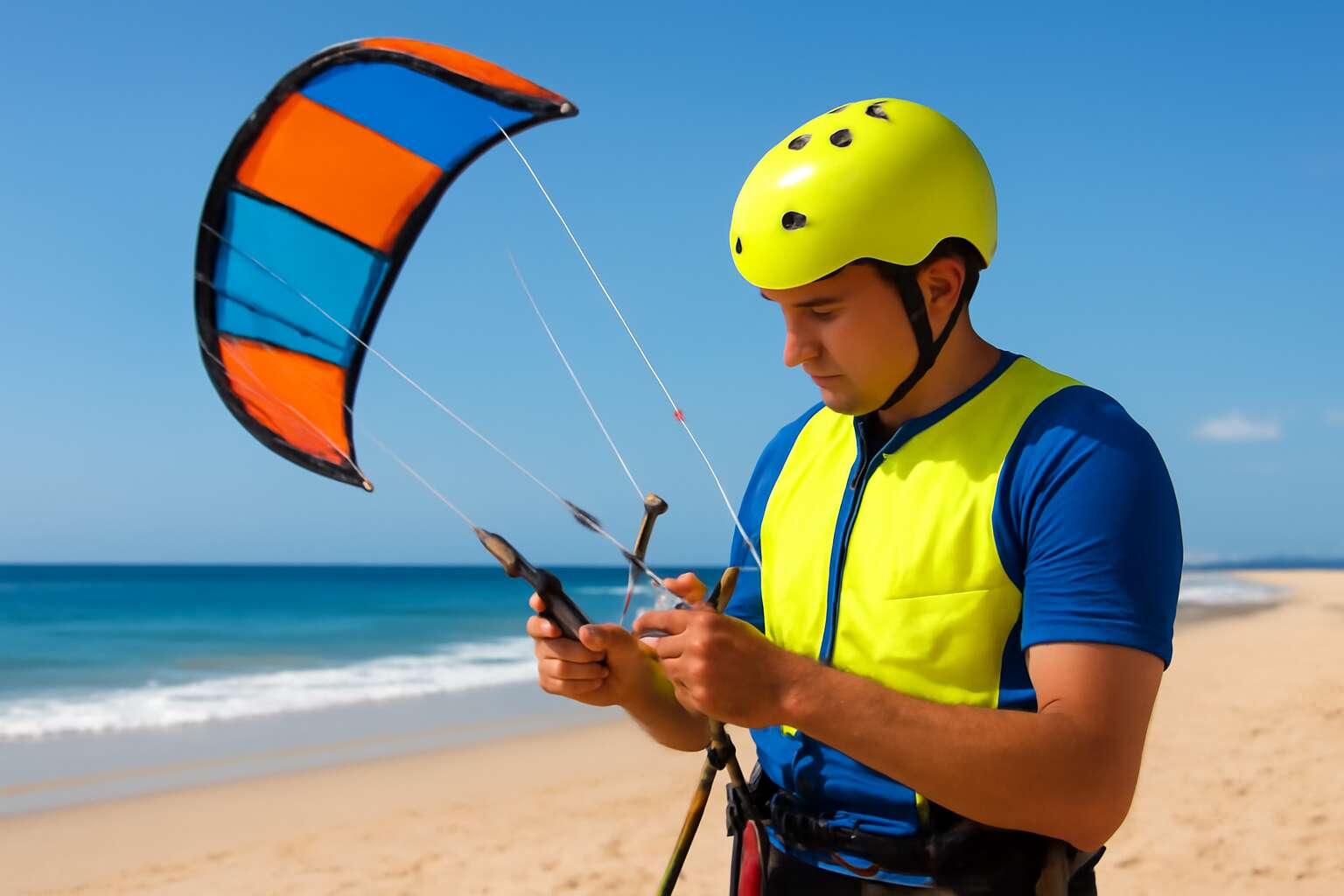
Essential kitesurfing safety gear for beginners
Personal flotation devices and buoyancy aids
Wind in the Cape can be a lively mentor, turning beginners into confident riders when safety comes first. In South Africa, kitesurfing safety equipment isn’t an afterthought—it’s your reliable partner on every gust. This gear helps keep the ride thrilling, not worrying about what-if moments.
For newcomers, Personal flotation devices and buoyancy aids are essential. A properly fitted PFD adds buoyancy and keeps the head above water, while buoyancy aids support core stability as you learn to ride the wind window.
- Personal flotation devices (PFDs): buoyant vests designed for water sports
- Inflatable PFDs: automatic or manual inflation for lightweight reassurance
- Buoyancy aids: buoyant belts or life jackets that stay comfortable through long sessions
Choosing the right kitesurfing safety equipment aligns with local conditions along the South African coast, where a blend of wind and swell demands mindful gear choices—letting the adventure unfold with confidence.
Helmet and head protection
On South Africa’s windy coast, helmet and head protection sit at the heart of kitesurfing safety equipment. A purpose-built water sports helmet cushions impacts from a fall, a stray board edge, or an uncooperative gust. Look for an impact-resistant outer shell, responsive EPS foam, and a snug, adjustable fit with a secure chin strap. Ventilation helps comfort on long sessions!
Coastal conditions vary from rocky shorelines to open beaches, so head protection matters in every session. Choose a helmet with CE certification and a design tailored for water sports, so it stays snug when you move through the wind window. When paired with the broader kit, it keeps the ride safer and the focus on the line and the landings.
Impact vests and protective padding
South Africa’s wind-woven coastlines demand gear that doesn’t quit. Kitesurfing safety equipment like impact vests and protective padding absorb jolts from a mis-timed pop or a rogue gust, keeping you in control as you dial in your stance and balance.
- Energy-absorbing foam with torso protection and flexible seams
- Adjustable closures and lightweight materials for a snug, secure fit
- Non-slip inner lining and quick-dry fabric to stay comfortable in salty spray
When paired with other kitesurfing safety equipment, this kit helps beginners push through early lessons with less drama and more focus on the line and landings. In SA, choose gear built for wet conditions and rugged shorelines, and you’ll ride safer from the first session.
Neoprene suits, rash guards, and thermal protection
On South Africa’s chilly dawns, warmth isn’t a luxury—it’s a lifebuoy. “Comfort is competence,” a veteran shaper once told me, and the wind keeps score on the water. In the realm of kitesurfing safety equipment, your base layer can be the quiet difference between a shaky start and a smooth ride. Neoprene suits, rash guards, and thermal protection aren’t flashy accessories; they’re steady guardians that keep you moving when the sea runs cold and bold!
- Neoprene suits provide insulation and flexibility for SA’s variable water temperatures.
- Rash guards protect skin from friction and sun while drying quickly between sessions.
- Thermal protection adds an extra layer of warmth for dawn patrols and shoulder-season days.
In SA, these elements anchor your safety framework, letting you ride with a touch more poise from the first session.
Gloves, booties, and grip-enhancing accessories
Two seconds can rewrite the ride’s tune; in kitesurfing, grip and warmth are as vital as wind. For beginners along South Africa’s chilly shores, gloves, booties, and grip-enhancing accessories form the quiet backbone of kitesurfing safety equipment. They turn tentative steps into poised glides, guarding skin and soles from icy spray and rough boards.
As dawn rises, choose glove warmth and dexterity that suit SA mornings, and booties with grippy, textured soles for sure footing. Consider this trio of essentials:
- Textured palm gloves that preserve tactile feedback on the bar and board
- Neoprene booties with sticky soles for reliable traction and warmth
- Grip-enhancing accessories such as deck pads or traction socks to anchor your stance
These elements weave into the broader tapestry of kitesurfing safety equipment, helping newcomers hold their line as the sea grows bold.
Protective gear and accessories for experienced riders
Advanced impact protection and padding options
On South Africa’s wind-swept coast, the line between triumph and tumble can vanish in a heartbeat. Advanced padding isn’t an indulgence; it’s velocity insurance. In SA, experienced riders report up to 40% fewer bruises when they pair layered padding with smart protection. When you invest in kitesurfing safety equipment, you’re choosing consistency over caution, season after season.
For the seasoned rider, flow matters as much as protection. Here are advanced options that stay flexible in and out of a harness:
- Flexible impact shorts with lightweight, crash-absorbing panels
- Back and rib guards engineered for water use and quick drying
- Low-profile chest guards that wick moisture while staying armor-thin
- Articulated knee and hip pads tuned for water starts and air-time landings
Pair these with proper fit and ventilation, and the body will thank you after a session—while the wind remains mercilessly perfect. No jargon, just practical armor letting riders ride with audacity!
Helmet compatibility with other safety gear
“Protection isn’t a fashion choice; it’s a daily negotiation with gravity,” a veteran SA rider notes. The wind howls and spray writes its rough sketch on gear, yet the quiet victory lies in a helmet that talks to the rest of your kit and stays put when you move through the chop with finesse.
Helmet compatibility with other gear matters more than most riders admit. Consider:
- Universal strap systems that play nice with neck braces and impact vests
- Low-profile shells that won’t snag on harness buckles or moisture-wicking liners
- Goggle and visor options that stay clear when salt spray hits
When your head protection talks to your padding, harness, and eyewear, the session flows with less friction and more audacity. And that, dear reader, is the essence of kitesurfing safety equipment.
Wrist, knee, and ankle protection considerations
Gravity loves a good rival, and in our coastal roars of SA wind, it wins unless your gear has a mind of its own. “Protection is the quiet partner who keeps your thunder intact,” a veteran rider once told me. kitesurfing safety equipment becomes poetry in motion when fitted well.
Experienced riders know wrists, knees, and ankles carry the load—literally. Look for wrist guards with solid support, knee pads that shield without restricting harness rotation, and ankle braces that play nicely with bindings. Salt spray and chop demand seals, snug straps, and breathable linings.
- Sturdy, low-profile shells that won’t snag on fins or lines
- Moisture-wicking inner fabrics for comfort in salt air
- Fully adjustable closures for a precise fit
- Saltwater-resistant buckles and reinforced seams
When these details align, sessions ride smoother through the chop, and the body’s whispers become confident shouts of balance and control.
Leash policies and board management gear
Seasoned riders know that kitesurfing safety equipment isn’t loud; it’s a quiet chorus that keeps balance when the sea roars. It threads resilience into every glide and cushions the wild poetry of wind and water. When gear aligns with intent, the session feels like a spell that actually works.
Leash policies and board management gear deserve a place in the back pocket of every rider’s mind. A compact toolkit—crafted for the salt and spray—supports smooth recoveries and tidy water starts.
- board-management leashes
- rapid-release harness points
- saltwater-grade buckles
These elements speak softly but carry the weight of safety, turning choppy horizons into galleries of confident motion.
Safety practices and gear maintenance
Inspection routines before each session
South Africa offers some of the most reliable winds along the coast, yet gear failure remains a surprisingly common source of preventable incidents. kitesurfing safety equipment is only as strong as the checks performed before launch—routine care saves time, money, and skin. A disciplined pre-session routine proves its value every season!
A pre-session mindset isn’t about gadgets alone; it’s about stewardship of the gear and respect for others in the lineup. Regular inspection routines, done with calm, keep equipment trustworthy and the water safer for everyone.
Maintenance habits translate to practical politics on the water: safer sessions, fewer surprises, and longer careers under South Africa’s winds.
Cleaning, drying, and storage best practices
South Africa’s coast teaches a stern lesson: safety begins long before you ride. “Care for your gear and the ocean becomes a partner, not a rival,” a veteran shaper once told me. kitesurfing safety equipment earns its trust through simple, deliberate maintenance—clean, dry, and stored with respect. A well-kept rig becomes a loyal companion, season after season, turning every session into a shared dance with the wind.
Between sessions, a quiet ritual saves time, money, and skin. Here are quick routines to keep equipment shipshape:
- Rinse gear with fresh water after saltwater use to remove salt and sand
- Wipe down with a microfiber cloth and let air-dry completely before packing
- Store in a cool, shaded place away from direct sun and heat
- Inspect seams, valves, and fasteners for wear or damage
Done consistently, this care regime reduces surprising failures and keeps riders focused on the thrill rather than the gear. Respect for maintenance is the quiet backbone of the kitesurfing safety equipment ethos that South Africa’s winds reward.
Repair kits and patching tips
South Africa’s coastline rewards bold wind sessions with unpredictable bursts; a torn seam can ruin the day. Safety practices extend beyond pre-ride checks into field maintenance, where a compact repair kit keeps kitesurfing safety equipment ready when the canopy shows its first signs of wear. With deliberate care, repairs restore performance and keep gear trustworthy, turning rough winds into a reliable dance with the sea.
- Ripstop nylon patches in various sizes
- Canopy-safe fabric glue or seam sealant
- Clear, flexible patch tape or polyurethane sealant
- Small scissors, craft knife, and fine sandpaper
- Spare valves and a valve tool
- Microfiber cloths and a compact repair binder
Patch with care: select patches that respect the fabric weave, keep the surface clean and dry, and press firmly to ensure even adhesion. These considerations protect kitesurfing safety equipment from wear and sunlight as it cures.
Spare parts and maintenance scheduling
South Africa’s coast hurls gusts that pop out of nowhere, lifting the water and the risk in the same breath. This is where kitesurfing safety equipment crosses from equipment into ethos. A disciplined approach—spare parts and maintenance scheduling—keeps gear field-ready when the canopy sighs.
- Spare parts inventory that matches your local conditions and session cadence
- A simple maintenance schedule that respects wear without becoming a burden
- Clear documentation of repairs and wear trends for quick field decisions
In practice, this quiet discipline turns volatile days into reliable movement, letting you read the sea with confidence rather than fear.
Weather, location, and rescue readiness gear
Visibility and signaling tools
On South Africa’s coast, sudden wind shifts between 20 and 25 knots are a normal calendar page, capable of turning a serene session into churning necessity. “The sea is a patient teacher,” a veteran rider often says, and weather literacy is the first line of defense.
Choose launch sites with steady fetch and clear exit routes; reef breaks near Cape Town or east coast lagoons demand respect for current and swell. Rescue readiness gear becomes part of the fabric of kitesurfing safety equipment when visibility narrows or a rider is separated.
- VHF radio
- Rescue throw bag
- Whistle
Visibility and signaling tools ensure communications survive dusk and spray. Pack a reflective flag, waterproof flashlight, and signaling mirror; a small glow-stick cascade can flood a pocket of beach with light, guiding rescuers when conversations fail. All of this sits at the heart of safety gear.
Weather monitoring gear and tide knowledge
In South Africa’s wind-swept coves, wind shifts of 20–25 knots are a familiar chorus, capable of turning a serene glide into a choppy test. Weather literacy sits at the heart of kitesurfing safety equipment.
- Barometer and anemometer for pressure and wind trends
- Tide charts and local current knowledge
- Reliable marine forecast apps with spot-specific wind cues
Locational awareness matters equally: select launches with steady fetch and clear exit routes; reef breaks near Cape Town or east coast lagoons demand respect for current and swell. Rescue readiness gear becomes part of the fabric when visibility narrows or a rider is separated; prepared crews read the situation and respond with practiced calm.
Self-rescue and buddy-rescue equipment
South Africa’s wind is a living thing, turning a calm glide into a test in minutes. In this theatre, kitesurfing safety equipment hinges on weather literacy—reading the day by how the air breathes, not by bravado. You measure risk in intuition and in the quiet cues that forewarn of gusts, lulls, and shifts.
Location is a second shield. Choose launches with clear ingress and egress, and map the currents as if tracing a living water map. In Cape Town’s reef-sculpted seas or the east coast lagoons, currents and swells rewrite the story from glide to grind in an instant.
Rescue readiness gear becomes muscle memory when visibility thins. Self-rescue and buddy-rescue equipment are not bonuses but prerequisites—call-and-response between rider and crew, a lifeline when the ocean speaks in low, dangerous tones.
- Self-rescue kit tailored for fast deployment
- Buddy-rescue tools to reach and assist a rider
- Communication and signaling devices for out-of-sight scenarios
Communication devices and emergency plans
Cape Town’s wind can flip from velvet to freight-train in minutes, and that violence of air is precisely why kitesurfing safety equipment hinges on weather literacy. I’ve learned to read the day by how the air breathes; intuition won’t save you when gusts surge and lulls slip away.
Location is a second shield: pick launches with clear ingress and egress and map currents as if tracing a living water map. In South Africa’s reef-sculpted shores or the east coast lagoons, the sea keeps rewriting the glide into a grind in an instant.
- VHF radio or satellite messenger
- Waterproof phone with GPS
- Whistle and reflective signaling
- Clear emergency plan: roles, muster points, exit routes
Rescue readiness gear sits alongside communication devices and emergency plans as the practical backbone of kitesurfing safety equipment. When visibility thins, a practiced call-and-response with the crew becomes second nature, turning potential chaos into coordinated clarity.
Buying guide and budget considerations for safety equipment
Certification standards and safety ratings
Smart buying starts before the first gust hits the coast. When it comes to kitesurfing safety equipment, you’re buying time and reliability, not just a flashy logo. In South Africa, where winds bite and salt spray lingers, a solid plan saves money and nerves.
Budget-wise, seek durability, modularity, and clear warranties. Weigh total costs—shipping, parts, and upkeep—against a sturdy setup that won’t quit after one season. Certification marks and independent safety ratings provide trustworthy guidance amid the hype.
- Certification marks (CE/UKCA) and ISO 9001 quality management
- Independent safety testing and field reliability data
- Availability of parts and local service support
- Transparent warranty terms and accessible return policies
Specific checks include ensuring the gear fits well, remains comfortable in salt wind, and can be serviced by trusted South African retailers without breaking the budget.
Cost-performance trade-offs and gear tiers
Cape winds carve sentences into the shoreline; on peak days, gusts sprint to 40 knots. In that theatre, every choice around gear earns its keep, and the right kit can turn risk into rhythm.
Buying choices hinge on cost-performance trade-offs and gear tiers. Your budget should prioritize kitesurfing safety equipment that lasts seasons.
- Entry-level tier: sturdy, modular base with reliable local support.
- Mid-range: better fabrics and improved service networks, balancing price and reliability.
- Premium: top materials, extended warranties, and readiness for the most demanding sessions.
In South Africa, I’ve learned to favor durability, repairability, and clear warranties over flashy logos—it saves money and nerves when salt spray bites back.
Where to shop and evaluating warranties
Across South Africa’s windy coastlines, durability pays dividends. Your approach to kitesurfing safety equipment should balance upfront cost with long-term reliability.
In SA, look for hands-on fit and swift warranty service:
- South African pro shops with in-house repair and local support
- Official brand outlets and authorized SA dealers
- Reputable online retailers serving South Africa with clear warranty policies
- Certified second-hand networks offering pre-inspection and return options
When evaluating warranties, seek clear coverage terms, robust brand backing, and a responsive service network capable of handling salt-sprayed sessions.

0 Comments