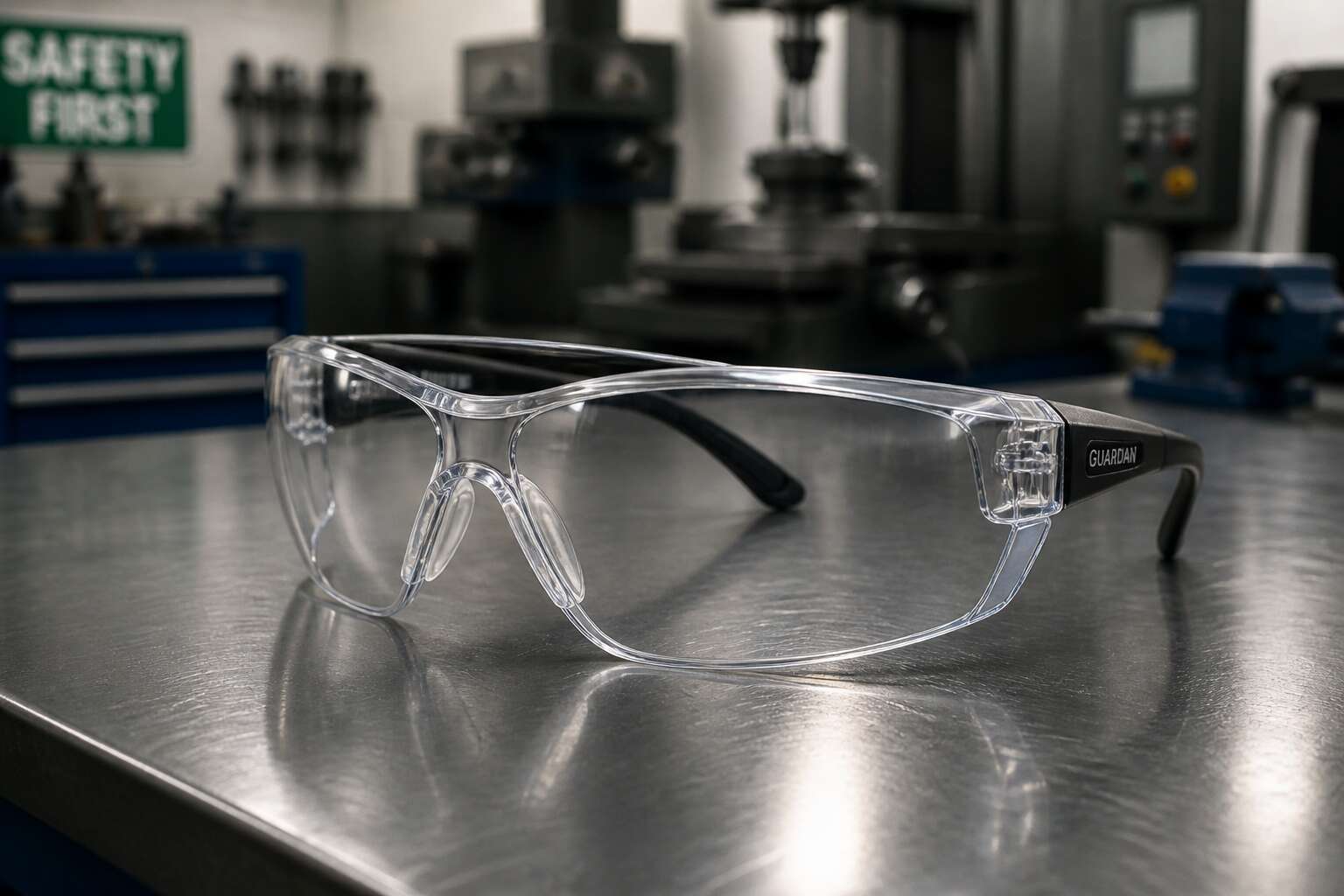
Understanding Protective Eyewear Standards
What Are ANSI Z87.1 Standards?
Three out of five eye injuries happen because workers skip proper eye protection. ANSI Z87.1 determines whether your ppe glasses can survive a high velocity impact. This standard evaluates lens strength, frame durability, and coverage area. It also tests optical clarity, ensuring your vision remains undistorted.
Consider what these tests actually simulate:
- Flying particles at 150 feet per second.
- Extreme temperature exposure.
- Dropping weights that mimic heavy tools.
Passing these thresholds means your eyewear delivers real, tested defence. A false sense of security can be more dangerous than no protection. The markings on the lens tell you exactly what was verified. Over time, even rigorous standards cannot prevent scratches or ageing, so inspect your equipment regularly.
European EN 166 Regulations
Nearly 80% of workers who suffer eye damage believe their protective gear was adequate. That belief often rests on a misunderstanding of what different safety certifications actually mean. The European standard, EN 166, takes a distinct approach compared to its American counterpart, focusing heavily on real world conditions rather than laboratory extremes alone.
Where ANSI Z87.1 tests for impact resistance with specific projectile speeds, EN 166 evaluates performance across a spectrum of scenarios, from molten metal splashes to fine dust particles. The standard uses a coding system stamped directly onto the lens or frame. These markings decode the specific protections offered, such as resistance to radiation, chemical droplets, or mechanical abrasion. For example, a marking like “1 F 3” means the lens offers the highest optical class, withstands low energy impact, and provides protection against liquid droplets.
The certification process for ppe glasses under EN 166 involves complete assembly testing, not just lens durability. This matters because frames can fail under stress even when the lenses remain intact. The level of protection is defined by a scale from low to very high impact energy.
– Low energy impact: a 0.25 kg steel ball at 45 m/s
– Medium energy impact: a 0.4 kg steel ball at 80 m/s
– High energy impact: a 0.5 kg steel ball at 120 m/s
South African workplaces often encounter mixed safety requirements, importing equipment from various regions. A pair of ppe glasses certified under EN 166 might display a CE mark and a manufacturer’s identification number. Understanding these markings helps you verify that the eyewear actually meets the required standard for your specific task. The difference between a barely compliant product and one that exceeds operational demands becomes apparent only when you read the codes carefully.
The optical class rating within EN 166 deserves attention. Class 1 offers the highest precision, suitable for sustained use and work requiring fine visual acuity. Class 3 allows more optical distortion, which is acceptable only for short term wear. Field of vision also factors into the assessment, ensuring the frames do not obstruct peripheral sight, a common issue with cheaper imported models.
Beyond the standard tests, EN 166 requires the manufacturer to maintain consistent quality during production. The standard addresses issues like ageing of materials, resistance to ignition, and corrosion. A pair of ppe glasses may pass initial tests but fail after months of exposure to UV light or cleaning chemicals. The regulation forces brands to consider the entire product lifecycle, not just the first week of use.
Whatever certification you choose, the marking on the lens is your contract with safety. Read it before you trust it.
Impact and Lens Marking Ratings
A lens marking is not a suggestion; it is a compact biography of the glass. In South Africa, where work sites mix imported equipment from many regions, these codes become the only reliable way to separate genuine protection from decorative plastic. The optical class rating (1, 2, or 3) tells you how clearly the lens renders the world. Class 1 offers near perfect clarity for sustained work. Class 2 allows minor distortion. Class 3 is best left for emergency cover only. The impact letter, whether F for low energy, B for medium, or A for high, reveals how much punishment the entire assembly survived.
Most people read the impact rating and stop there. They forget that a filter for liquid droplets or a scale symbol for abrasion resistance alters the suitbility of ppe glasses for a specific task. A grinding station demands high impact protection. A chemical lab requires droplet resistance. A dusty outdoor site needs surface durability. The codes address all of these.
Consider what the markings mean for the frame and not just the lens. EN 166 tests the whole assembly, so a bent frame or a loosened lens changes the rating. The standard forces manufacturers to consider how materials age under UV light and cleaning agents. A pair of ppe glasses that passes initial testing can still fail months later if the design ignores corrosion and material fatigue. That is why the marking includes a manufacturer’s ID and sometimes a year of manufacture. These small engravings serve as a trail of accountability.
Practical differences in the markings:
– A high impact rating does not guarantee chemical resistance;
– An optical class of 1 does not protect against molten metal;
– A CE mark indicates conformity, but you still need to verify the specific codes;
– The same frame can carry different codes depending on the lens fitted.
For procurement officers, the markings are the brief. For workers, they are the silent contract between the product and the person wearing it. Read them carefully, because the stamp is the only witness to the tests that took place before the glasses reached your hands.
High-Velocity vs. Basic Impact Testing
Some standards test a lens with a single, heavy blow. Others fire a small projectile at extreme speed. The difference matters more than most people realise. Basic impact testing drops a steel ball from a set height, which simulates a tool falling onto the lens. High velocity testing uses a 6mm projectile at over 160 kilometres per hour. That represents the type of hazard found near grinding wheels, chipping stations, and pneumatic tool operation.
The EN 166 standard for ppe glasses separates these two tests. A frame that stops a heavy, slow object might fail against a fast, small one. This distinction is not academic. In South African workshops, the difference between a glancing chip and a direct strike is often a matter of speed. Workers need ppe glasses that match the genuine kinetic energy of the task at hand.
Velocity changes everything. A drop test measures resistance to gravity and mass. A high speed test measures resistance to kinetic energy. These are different physical events entirely. The lens material, the frame hinge, and the lens retention system all behave differently under each condition. A lens might flex and absorb a slow impact, but shatter when the same energy arrives in a smaller, faster package.
The high velocity classification also covers extreme temperature testing. Lenses must perform at minus five degrees and at plus fifty five degrees. This matters for outdoor work on the Highveld in winter and in enclosed foundries during summer. Look for the specific impact letter on the frame. Do not assume that a generic safety spectacle offers high velocity protection. The mark is the only way to know which test the ppe glasses actually survived.
Choosing the Right Safety Eyewear for Different Work Environments
Chemical Splash Hazards and Sealed Goggles
A single drop of sulphuric acid does not care about your ANSI rating. It cares about finding your eye. For chemical splash hazards, standard ppe glasses are not enough. You need sealed goggles that create a barrier against liquids, vapours, and fine particulates.
The seal matters more than the lens. If the frame does not sit flush against your face, the protection is theoretical. Consider the environment: laboratories, battery rooms, and chemical plants each present different exposure levels. A splash-proof goggle with indirect ventilation suits most tasks, but full immersion work demands a non-ventilated model. Here is what to check before you trust a pair:
- Fit against the face, especially around the nose bridge
- Lens coating that resists fogging and chemical mist
- Compatibility with respirators or hard hats
Sealed goggles are not comfortable. Neither are most ppe glasses that actually work. Choose the discomfort over the alternative.
Impact-Resistant Options for Construction and Manufacturing
Every day, workers in South Africa’s construction and manufacturing sectors face an invisible battle against flying debris, dust storms, and stray sparks. The statistics are stark: a single missed particle can cause irreversible corneal damage. Basic safety spectacles offer a false sense of security when heavy grinding or machining is involved. This environment demands more than a simple lens; it requires a robust shield that prioritises optical clarity while maintaining structural integrity under force.
Choosing the right ppe glasses for these conditions is a matter of practical assessment. You need gear that fits snugly without fogging your vision during an eight-hour shift. Look for models with polycarbonate lenses, which provide superior impact resistance compared to standard glass or plastic. These materials are lighter, which reduces fatigue behind the ears and on the bridge of the nose. A wraparound design is non-negotiable, as it blocks particles that attempt to enter from the periphery.
The workplace itself dictates the specific features you should seek. Consider the primary hazards present in your daily routine, whether that involves concrete dust, metal shavings, or chemical splashes.
– Scratch-resistant coatings are essential for longevity when debris is abrasive.
– Anti-fog treatments are critical when moving between hot and cold zones.
– Adjustable temples guarantee a secure fit for different head shapes.
– UV protection is a bonus for those who work outdoors under the harsh African sun.
Ultimately, the best ppe glasses are the ones you actually wear consistently. A pair that feels cumbersome will end up on top of your head instead of shielding your eyes. Prioritise comfort and fit in your selection process, but never compromise on the protective rating. Ensure the model you choose carries the appropriate markings for impact resistance. The goal is to walk off the site exactly as you walked in, with your eyesight intact and your focus unbroken.
UV and Blue Light Protection for Outdoor and Screen-Based Work
The South African sun delivers intense ultraviolet radiation even on overcast days, which makes UV-rated ppe glasses essential for outdoor tasks like landscaping, road maintenance, or agricultural work. Lenses with UV400 protection block wavelengths up to 400 nanometres, shielding the cornea and lens from cumulative damage.
For those who spend hours before screens in control rooms, warehouses, or offices, blue light filtering deserves attention. A growing number of ppe glasses now incorporate blue light absorbers into the lens substrate, reducing eye fatigue caused by high-energy visible light. This feature matters when workers switch between indoor screen tasks and outdoor inspections.
Remember these points when selecting:
- Verify the UV400 marking on the lens.
- Check whether blue light filtration is built into the lens material itself.
- Consider photochromic lenses that adapt to both environments.
The right pair protects your vision across every shift, regardless of the light source.
Welding Eye Protection and Face Shields
The welding arc punishes unprotected eyes in ways that ordinary sunlight never will. It emits ultraviolet and infrared radiation alongside intense visible light, and standard ppe glasses simply cannot absorb that assault. Without a properly matched filter, welders often develop arc eye, a condition where the cornea becomes sunburned and feels like sand is grinding against it hours after work.
Shade numbers dictate the level of protection. A shade 10 lens suits most MIG and TIG tasks, while high current welding needs shade 12 or 14. Face shields with auto-darkening technology adjust this shade instantly, but the shield’s physical coverage matters just as much. It must block side glare and sparks from every angle.
Always wear ppe glasses beneath a face shield. That combination provides a backup layer when you lift the visor to inspect a weld, protecting your eyes from flying slag and metal fragments.
Prescription Safety Glasses for Everyday Wear
A single pair of ppe glasses rarely survives a week in a South African workshop without revealing its limits. The humid heat of coastal factories fogs lenses, while the dusty interiors of mining operations scratch them within days. Choosing the right safety eyewear means matching the frame and lens to the specific hazards of your floor, rather than grabbing the nearest shelf.
Prescription safety glasses for everyday wear alter that dynamic. Instead of layering ppe glasses over your normal spectacles, which creates pressure points and distortion, you get one pair that serves both purposes. The factors that influence this choice are straightforward:
- Lens material, since polycarbonate resists impact and blocks UV.
- Frame geometry, because a wraparound shape keeps particles out.
- Coating durability, as anti-scratch layers extend usable life.
For anyone who moves between a desk and a production line, prescription safety glasses offer a practical middle ground.
Key Features to Consider When Selecting Protective Eyewear
Anti-Fog and Moisture Control Coatings
Nothing wrecks a professional façade faster than fogged-up lenses. One step from an air-conditioned office into Durban’s humidity, and you are effectively blind. Anti-fog coatings on ppe glasses have evolved into sophisticated chemical layers, yet most workers still treat them as an afterthought!
The secret lies in how the coating manages moisture. Hydrophilic layers absorb condensation and spread it evenly, while hydrophobic layers bead water off entirely. For the South African climate, where heat and cold collide indoors, a hybrid coating offers the best compromise. Pair that with proper ventilation channels in the frame, and you avoid the dreaded halo effect.
Key features to examine:
– Whether the anti-fog treatment is permanent or applied as a consumable film
– The coating’s resistance to solvents and frequent wiping
– How the frame’s moisture drainage aligns with your typical tasks
Selecting ppe glasses with robust moisture control ensures you keep your eyes on the job, not on your own clouded lenses.
Scratch-Resistant Lens Treatments
Scratched lenses are not just an aesthetic issue. Every groove and gouge scatters light, creating visual noise that forces your eyes to work harder. A single deep scratch can compromise structural integrity too. That is a risk you cannot take when your ppe glasses are your last line of defence.
Modern scratch-resistant treatments use a hard coating with a silicon-based chemistry. These layers are measured by a Bayer test. A higher number means better abrasion resistance, but it does not guarantee performance. The coating can still delaminate if the substrate is not prepped properly.
Optical clarity depends on coating adhesion. A poorly applied layer will show interference patterns, a rainbow effect across the lens. That leads to eye strain.
– How many dip or spin cycles were used during application
– Whether the lens received a primer layer for bonding
– The manufacturer’s tolerance for temperature swings during curing
Ask your supplier for the coating’s hardness rating. Insist on seeing it in writing. Forging environments with silica dust or metal debris will punish a weak coating quickly. When you are selecting ppe glasses for your crew, treat the lens coating as seriously as the frame’s impact rating.
Frame Fit and Comfort for Extended Use
Frame fit and comfort often determine whether protective eyewear actually stays on. A worker who constantly removes their ppe glasses to adjust slipping frames is exposed to hazards during those vulnerable moments. Comfort is not a luxury feature; it is a fundamental safety requirement for extended wear.
The best frames distribute weight evenly across the nose bridge and behind the ears. Polycarbonate or nylon frames offer flexibility without sacrificing durability. Look for adjustable nose pads and temple arms that can be fine-tuned to an individual face shape. For long shifts, consider these key fit factors:
– Weight distribution and overall balance
– Adjustable nose bridge and temple tension
– Grip features on the nose and ear pieces
– Sufficient clearance for prescription lenses underneath
Extended wear also demands ventilation. Frames with integrated airflow channels prevent fogging and reduce pressure points that cause headaches. Cushioned brow guards and soft-touch ear grips minimise irritation during repetitive motion tasks.
A proper fit should allow movement without slippage, even when bending or turning your head rapidly. If the ppe glasses leave red marks or require constant readjustment, the sizing is wrong. Remember that facial measurements vary, so trial fittings across your team should be a standard part of procurement. The right frame becomes invisible to the wearer, which means it is always working. Getting this wrong leads to non-compliance, so treat the fit with the same seriousness as the lens impact rating.
Wraparound Coverage and Peripheral Protection
Peripheral threats often arrive without warning. A ricocheted chip or a windblown particle misses your front shield but hits the side of your eye. Wraparound ppe glasses curve the lens around your face, locking the eye socket into a protective shell.
That curve maintains your field of view. You keep working without turning your head to compensate. The design sits close to the brow, cheekbone, and temple, leaving no open corridor for impact or UV exposure.
- One-piece curved lenses eliminate side gaps
- Temple arms that hug without squeezing
- Indirect ventilation for airflow and droplet blocking
In South Africa, outdoor roles face dust, wind, and bright sun. Wraparound ppe glasses cut glare from the edges and stop fragments that bounce. Test them with your respirator to confirm the seal holds!
Ventilation and Airflow Design
Six out of ten workers admit to skipping eye protection because fogged lenses force them to stop and clean constantly. That pause is not just wasted time, it is the moment when you lift your glasses and expose your eyes to a stray particle. Ventilation design determines whether your ppe glasses become a tool or a burden.
The airflow system inside a frame creates a microclimate. Sealed lenses trap sweat vapor and hot breath. Your body heats the air inside, condensation forms, and you lose sight of the work in front of you. Proper ventilation channels route that moisture away from the optical center without sacrificing the seal against dust and impact.
Manufacturers engineer vents along the brow and temple to exploit natural air pressure. As you move, air pushes through these channels and keeps the lens clear. The result is continuous visibility during long shifts on the factory floor or the open veld.
– Vent placement above the brow prevents sweat runoff from entering.
– Side slots allow cross breezes without exposing the orbital rim.
– Channel depth controls rate of airflow, balancing anti-fog properties with droplet resistance.
A frame that breathes correctly also reduces heat buildup. Your face stays cooler, and you forget the glasses are there. South African conditions, from the Highveld to the coast, demand eyewear that adapts. The best ppe glasses for the job turn airflow into an invisible feature that simply works. Someone who buys on lens strength alone often ends up with gear that fogs at the worst possible moment. Think about your environment, the humidity, the pace of your tasks, and choose the ventilation that matches the reality of your work.
Maintenance and Care for Long-Lasting Eye Protection
Proper Cleaning Methods and Approved Solutions
PPE glasses endure harsh conditions on South African worksites. Dust from the Highveld, salt spray from coastal harbours, and relentless sun all leave their mark on lenses. A scratched or smudged lens distorts vision, and distorted vision leads to mistakes on the job.
The good news is that proper maintenance extends the life of ppe glasses significantly. Warm water and a drop of mild dish soap remove grime effectively. Avoid harsh chemicals like acetone or window cleaners, as these strip protective coatings from the lens surface.
- Commercial lens cleaning sprays made specifically for safety eyewear
- Isopropyl alcohol wipes at moderate concentrations
Microfibre cloths are safer than shirt sleeves or paper towels. Always rinse lenses before wiping to dislodge abrasive particles. This simple habit prevents micro-scratches that gradually compromise clarity and comfort during long shifts.
When to Replace or Repair Damaged Eyewear
A pair of safety glasses easily stores in a pocket and can be worn for years, but the true test is how they meet the blows of a typical day. Workers carry ppe glasses from a baking bakkie cab to a wet grinding bay, then leave them on a greasy workbench. This routine leads to deformation of the frame and micro-fractures that are visible only after wiping. That scapel hairline crack often causes the seal to break and leaves you, the very second fix is needed.
Regular inspections are not just about looking for scratches. A lens may look fine from the front, but the frame can lose its grip on the edges. Push gently on the temple. If the hinge gives, the pressure of a falling chip will create a gap. The following signs mean the unit has finished its duty:
- Cracked or crazed lens material
- Worn or broken threads around the side shield
- Tears in the strap or soft seating where it rests on the nose
Replacement is simpler than repair. The frame dimensions matter; a scratched lens is more often a trigger for replacement than a fixed hinge. Do not pull one piece from your old ppe glasses and fit it into a different brand, because impact design is specific. Spend the small amount on a new pair and keep your line of sight clear.
Storage Habits That Prevent Damage
The average pair of ppe glasses is subjected to more abuse than a toolbox. Tossing them into a shared locker or leaving them on a dashboard creates a cycle of premature failure. Heat from a closed cab warps the frame, while the weight of other equipment compresses the temples. The result is a pair that shifts on the bridge exactly when you need it to stay put.
Storage habits are the quiet determinants of longevity. A hard case is the baseline, but placement matters equally. Leaving the case near a solvent station invites chemical vapours to degrade the lens coating. Keep the case in a clean, dedicated drawer or a sealed pocket of your carry bag. This practice preserves the optical clarity and ensures the ppe glasses are ready for the first task of the morning.
Consider the environment where the glasses rest during breaks. A dusty windowsill or a damp toolbox shelf introduces abrasive particles and moisture. These elements seep into the hinge mechanism and accelerate wear. A routine for storage should be as disciplined as the safety protocol itself.
– Use a microfiber pouch for temporary placement, not just cleaning.
– Store away from direct sunlight and extreme cold.
– Keep the lenses facing upward to prevent scratches from debris.
– Never hang them from the rear-view mirror or a machine lever.
A well-maintained pair of ppe glasses offers years of service, but only with deliberate care. The frame’s structural integrity relies on consistent, gentle handling. By adopting a strict storage discipline, you reduce the frequency of replacement and maintain an unobstructed view of the job.
Routine Inspection Steps for Workplace Compliance
Routine inspection is the quiet discipline that separates reliable ppe glasses from a liability. Before each shift, run your fingers along the frame to feel for hairline cracks. Hold the lenses up to a light source to spot delamination. These flaws compromise impact protection long before they become visible to the naked eye. A ten second check costs nothing. A failed inspection costs a worker’s sight.
Workplace compliance demands more than good intentions. It requires documentation. A simple inspection log with dates and observations creates a traceable record for safety audits. It also reveals wear patterns. If the same pair of ppe glasses shows hinge looseness every three months, that tells you something about the work environment.
Common inspection points:
– Temple tension and hinge tightness
– Lens coating integrity and optical clarity
– Nose pad alignment and grip
A loose temple alters the fit. It lets the glasses slip at the exact moment you need them. Fix minor issues when you spot them. Do not wait for a scheduled audit to catch a preventable failure.
Common Mistakes and Misconceptions About Safety Eyewear
Using Regular Sunglasses as a Substitute
South Africa has some of the harshest sunlight in the world, and we still see workers wearing fashion shades on site. Your weekend shades are not ppe glasses, no matter how expensive. Dark tint does not mean impact resistant! Regular lenses often shatter on impact, an alarming outcome when you are grinding or drilling.
- That ‘polarised’ means ‘safety rated.’
- That any scratch-resistant coating equals shockproof.
- That a $5 knockoff from the petrol station will do the same job as certified equipment.
Each of these is a safety myth with self-deception attached. Designer branding means little. Without an impact rating, they are simply expensive sunglasses. The markings matter more than the vibe.
Sharing Eyewear and Its Hygiene Risks
That “one-size-fits-all” approach to eye protection is a dangerous fallacy, particularly regarding hygiene. When you grab a pair of shared ppe glasses from a communal bin on a busy site, you are not just borrowing vision aids; you are potentially inheriting whatever biological material the previous user left behind. The warm, humid environment between the lens and your eye is a perfect culture medium for bacteria, including staphylococcus and various pathogens responsible for conjunctivitis.
Consider the reality of a large construction or manufacturing operation. A single worker might remove their glasses to wipe sweat from their brow, adjust a hard hat, or rub a tired eye. Each contact transfers oils, microbes, and debris. When those ppe glasses are returned to a common storage area without proper sanitization, they become a vector for contamination. This risk multiplies exponentially when we consider an outbreak scenario; one infected individual can compromise an entire crew’s health, leading to absenteeism and costly project delays.
Proper protocol dictates that eye protection should be assigned to a single individual whenever possible. If sharing is unavoidable, the units must be thoroughly cleaned and disinfected before each change of hands. This is not merely a recommendation but a baseline safety measure. The following common oversights significantly elevate the risk of cross-contamination:
– Storing ppe glasses in pockets or toolboxes without a protective hard case, exposing lenses to dirt and abrasive particles that can cause micro-scratches where germs thrive.
– Relying on a quick wipe with a dirty t-shirt or a rag soaked in solvents that can degrade the lens coating.
– Using personal saliva to clean lenses when no water is available, directly introducing oral bacteria to the eye area.
– Failing to inspect the nose pads and temples, which are the areas that come into direct contact with the skin and accumulate the most sebum and sweat.
The line between a safe work environment and a biohazard is often drawn by these small, seemingly insignificant habits. Hygiene must be treated as a tangible part of personal protective equipment. Ignoring the condition of the eyewear, or its history, undermines its function. A clean lens is a compliant lens, and a compliant lens, one that meets ANSI Z87.1 standards, offers the impact and splash protection required for the job. However, even the most durable frame fails to protect the wearer if it introduces an infection that impairs vision and health. Maintaining stringent hygiene protocols is just as critical as selecting the correct lens shade or impact rating for your specific task.
Over-Tightening Frames and Adjusting Incorrectly
Tightening your ppe glasses until they pinch is a common error. That tension creates headaches and distracts from the task. The frame’s job is to stay put, not to leave red marks on your temples. Another mistake is bending the arms or nose bridge without proper technique. Over-engineering a fit often compromises the lens alignment. A slight tilt can reduce coverage and allow debris to enter from above. Adjustments require patience and small movements. If you force the frame, you risk stress fractures.
The right fit for ppe glasses feels like a gentle grip, not a vice. Here are frequent adjustment failures:
- Forcing the temples inward to squeeze the head.
- Twisting the nose bridge to fix a slide instead of adjusting the pads.
- Ignoring the field of view until it is already distorted.
Test the pressure by shaking your head gently. The glasses should remain stable without digging in. Use a mirror or ask a colleague for symmetry checks. A misaligned frame is a hazard, especially under South Africa’s intense glare.
Ignoring Cracks or Scratches on Lenses
A scratched lens is never merely a cosmetic blemish. That hazy film over your vision, often dismissed as a minor annoyance, slowly corrodes your situational awareness. During a simple equipment check, a worker might wipe a smudged shield and notice a deep gouge, yet choose to soldier on because the ppe glasses still sit comfortably on their face. What they fail to register is how that scratch scatters incoming light. It creates a halo effect around overhead lamps and turns the sharp edge of a steel beam into a blurred silhouette. The eye then strains to compensate, causing fatigue that creeps up long before the shift ends.
Many make the mistake of swapping out cracked frames for new lenses only, or they tape a fractured arm in a Sigmasave moment of frustration. This approach is fundamentally flawed, as the integrity of the entire unit is compromised.
A crack, even a hairline one, is a structural surrender. It means the material has reached its breaking point, and the next glancing blow, the one that might just be a glancing deflect in normal conditions, becomes the moment of shatter. This misconception is understandable, as the pressure to maintain productivity is relentless. But the cost of replacement is negligible compared to the medical report from an eye injury. When a lens gives way, it is rarely a clean break; it is typically a fragmentation event. Relying on compromised eyewear turns a routine task into a gamble with your optic nerve. In the harsh South African sun, that micro-abrasion also creates a glare that masks hazards in your peripheral vision. So remember, a scratched shield is a shield that has already failed its primary duty.


0 Comments