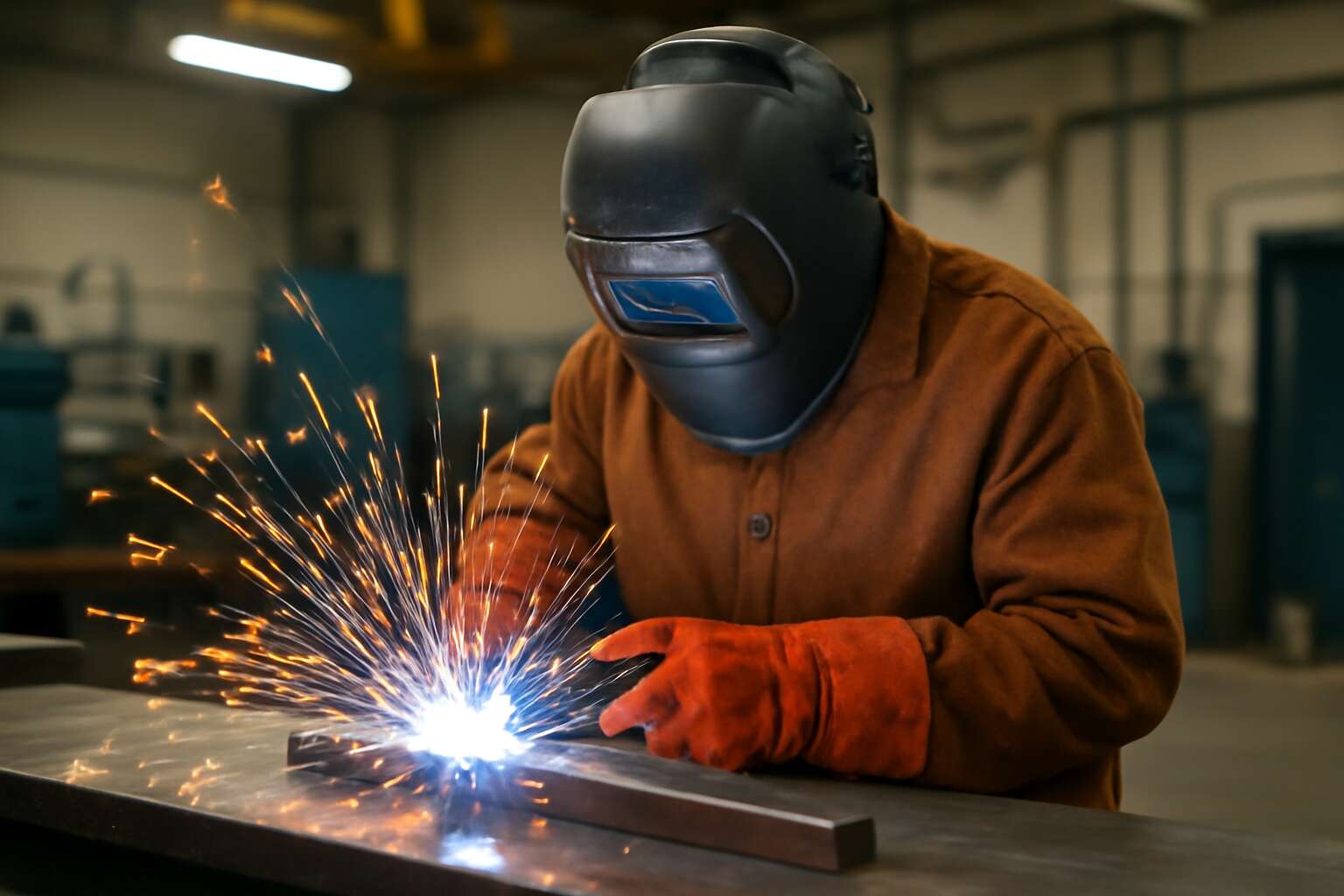
Welding PPE and safety gear overview
Helmet and face protection: welding helmets, auto-darkening filters, and shield selection
Sparks fly and focus sharpens—the helmet is your first line of defense. In South Africa’s busy workshops, up to 70% of eye injuries are preventable with proper protection. This spark-born truth is part of the safety equipment used in welding.
Your welding helmet and face shield guard more than a look; they shape the whole arc of your work. An auto-darkening filter switches in under 0.1 seconds, shielding your eyes while you move. Shield selection, shade numbers, and comfort all cohere into safe, steady craftsmanship.
- Auto-darkening filter with rapid switching
- Shade range typically 9–13 for common processes
- Grind-mode and sensitivity controls for versatile work
- Ergonomic headband and fit for all-day wear
For South African users, look for SABS-approved garments and helmets that feel secure and balanced, letting you focus on the weld rather than your gear.
Eye protection essentials: safety glasses and standard face shields
In South Africa’s busy workshops, up to 70% of eye injuries are preventable with proper protection. Sparks may dance like tiny fireflies, but a steady shield keeps them from writing a dangerous story on your pupils. The eye is a lantern; guard it with quiet, constant care.
Eye protection essentials: safety glasses and standard face shields are the first line after your helmet. Choose lenses with impact resistance, anti-fog coatings, and side shields that watch your periphery as you work.
- safety glasses
- standard face shields
In the broader canopy of safety equipment used in welding, eye protection anchors focus and prevents accidents as you glide along the arc.
Hearing protection for welding environments: earmuffs and plugs
Sound in a weld bay is the forge of focus and the thief of calm. A single sharp crack can chase away concentration long after the arc has cooled; a veteran foreman warned to protect hearing as one protects craft. In South Africa’s bustling workshops, quiet ears are an asset as sharp as steel.
Hearing protection for welding environments: earmuffs and plugs guard the rhythm of work, letting the operator hear commands and alarms while staying safe. These elements are the backbone of the safety equipment used in welding.
- Earmuffs: full-coverage attenuation with adjustable fit for long shifts.
- Ear plugs: foam or silicone, comfortable and reusable where possible.
In South African shops, durability and hygiene define dependable protection, and compatibility with other PPE keeps the workshop’s pulse steady.
Protective clothing: flame-resistant jackets, aprons, and sleeves
That first bright arc? It’s not just heat—it’s a reminder that every shift is a story your clothing is telling. A veteran foreman once said, “What you wear at the bench is your first line of defense.” The truth lands hard in South Africa’s busy workshops, where air hangs heavy and risk lingers.
Protective clothing—flame-resistant jackets, aprons, and sleeves—forms the front line of defense, guarding skin from radiant heat and stray sparks. Materials like FR cotton or treated leather resist ignition while staying comfortable through long hours. In practice, these garments pair with gloves, boots, and regular inspection to maintain their protective character.
- Flame-resistant jackets
- Protective aprons
- Arm sleeves
South Africa’s shops lean on durable, easy-to-clean PPE that survives dusty conditions and sweaty summers. Look for seams that won’t unravel, reinforced cuffs, and sizing that accommodates gloves and respirators. Safety equipment used in welding keeps the craft intact as the arc returns.
Hand protection: welding gloves, materials, and grip considerations
A hand is a trusted tool; the right safety equipment used in welding doesn’t just shield skin—it preserves control when arcs flare and metal sings. Grip, texture, and fit become the quiet sentinels of a safe, steady weld, especially in South Africa’s bustling workshops where heat hangs heavy and attention never rests!
Welding gloves vary by job: heavy cowhide for brute force, supple goatskin for fine work, and aluminized options for radiant-heated tasks. Look for reinforced palms, heat-resistant stitching, and cuffs that seal the wrist to keep sparks out and grip steady.
- Materials: cowhide leather, goatskin, or aluminized blends
- Grip and seams: textured palms, reinforced stitching
- Fit: snug fingers, comfortable wrists, room for under-gloves
In dusty, sweaty South African conditions, breathability and durability matter—gloves that dry fast and polish easily stand the test of long shifts. Regular inspection preserves the hand’s loyalty to the tool.
Eye, face, and head protection standards and selection
Safety standards and certifications for welding headgear
“Your helmet is your first line of defense,” a South African welder once said. Eye, face, and head protection standards aren’t mere recommendations on SA job sites—they’re mandatory baselines. When headgear carries reputable certifications, you know it has passed impact and optical tests, glare filtering, and shade stability under heat and sparks. That equals real protection in safety equipment used in welding.
- EN 166 for eye protection performance and impact resistance
- EN 169/EN 170 for welding and UV/IR filter classes
- EN 175 for compatibility of headgear with eye protection
- ANSI Z87.1 and SABS marks for region-specific compliance
When selecting welding headgear, read the shade range (usually 9–13), optical class (1 is best), and switch time. Ensure it bears a CE or SABS mark for SA compliance. This is part of safety equipment used in welding—clear, certified protection, not guesswork.
Choosing lens shade, viewport size, and optical clarity
Eye protection stands as the first line of defense in the furnace-lit theatre of arc and ember. “Your eyes are the map of your craft,” a seasoned South African welder once said, and the shield proves it. Eye, face, and head protection isn’t mere ornament on SA job sites—it’s the quiet guarantee that sparks become stories rather than injuries. When headgear bears trusted marks—EN 166, EN 169/170, EN 175, and ANSI Z87.1 or SABS—the wearer breathes easier.
Choosing lenses is a patient art: shade range, viewport, and optical clarity. Most helmets offer shade 9–13; optical class 1 marks the clearest view; switch time should be swift as the arc begins. A generous viewport reduces eye fatigue and keeps colours true. This is safety equipment used in welding—built to endure heat and glare.
- Shade range and optical class
- Viewport size and distortion-free clarity
- Switch time and glare resilience
Maintenance, inspection, and replacement schedules for PPE
South Africa’s workshops know that a single misstep can dim a life’s work. Eye, face, and head protection standards and selection maintenance, inspection, and replacement schedules for PPE are the quiet backbone of the craft. When helmets bear EN 166, EN 169/170, EN 175, or ANSI Z87.1 or SABS marks, wearers breathe easier. Under constant heat and glare, safety equipment used in welding isn’t mere gear—it’s the map that keeps the story bright.
- Regular inspection: check for cracks, distortions, or loosened straps.
- Lens and visor care: clean with proper solution, replace scratched lenses immediately.
- Storage and handling: store away from heat, UV exposure, and chemicals.
- Record-keeping: log inspections, replacements, and certification dates.
Beyond the paperwork, a routine of eye and head protection maintenance becomes second nature, and that discipline translates into confident, clear work in the SA sun.
Auto-darkening filter benefits and considerations
Safety isn’t a luxury; it’s a lens through which craftsmen see clearly while sparks dance. In the welding bay, eye and head protection standards guide what you wear—think EN 166 for eye protection, EN 169/170 auto-darkening filters, and ANSI Z87.1 or SABS marks, all of which signal trustworthiness. When safety equipment used in welding is chosen with those marks, confidence follows the arc.
Auto-darkening filters (ADF) in helmets deliver instant darkness, preserving situational awareness and reducing lens swap fatigue. They adapt to different welding intensities and let the eye focus on the weld rather than the glare.
- Rapid darkness transition improves reaction time and reduces exposure.
- Customizable shade, delay, and sensitivity make them versatile across processes.
- Optical clarity and helmet compatibility matter as much as the seal.
In the SA sun, choosing a dependable ADF is as crucial as a solid glove—without it, even the best arc loses its edge.
Compatibility of eye gear with respirators and other PPE
<pProtection is the quiet partner of craft, and in the welding bay it keeps the spark from becoming regret. A veteran welder once said, "Your eyes deserve as much shield as your hands deserve flame." Eye and head protection standards shape every decision about fit, seal, and field of view. The safety equipment used in welding must harmonize with respirators and other PPE, letting you focus on the arc rather than glare.
- Low-profile frames that sit comfortably under respirator seals.
- Anti-fog lenses with a wide viewport for peripheral awareness.
- Adjustable straps and a contoured nose bridge for a secure seal.
- Compatibility with hard hats, earmuffs, and face shields to avoid interference.
<pIn the South African workshop, eye gear that respects standards while weaving seamless PPE harmony keeps workers confident under the sun and steady at the shield. The right fit is a quiet ally, turning hazardous glare into practiced precision.
Respiratory protection and ventilation in welding
Respiratory protection options: disposable masks, elastomeric respirators, PAPRs
Breathing easy on the shop floor isn’t optional—it’s part of staying sharp. In a welding environment, the air you inhale matters as much as the arc you lay down. Respiratory protection is a cornerstone of safety equipment used in welding, and the best choice depends on the fumes, the duration, and the space you’re working in.
Here are the options to consider:
- Disposable masks
- Elastomeric respirators
- PAPRs
In my experience, good ventilation is as essential as a shield. Ventilation reduces fumes and keeps the air breathable between sessions, helping the whole crew stay on task without distraction.
Selecting filters and cartridges for welding fumes
Breathing easy on the shop floor isn’t optional—it’s part of staying sharp. In welding, the air you inhale matters as much as the arc you lay down. Selecting filters and cartridges is a pillar of safety equipment used in welding, and the best choice depends on fumes, the duration, and the space you’re working in, especially in South Africa’s bustling workshops. In my experience across SA sites, a well-matched cartridge is more valuable than a shiny helmet.
Good ventilation is as essential as a shield. It reduces fumes and keeps the air breathable between sessions, letting the crew stay focused rather than coughing between beads. In SA, airflow can swing with weather and layout, so pair general ventilation with local exhaust to keep the atmosphere calm and clear.
- P100 particulate filters for welding fumes
- Organic vapor cartridges for solvents and ozone
- Combination filters that cover particulates and gases for mixed fumes
Local exhaust ventilation and fume extraction systems
Breathing space is as crucial as the arc you lay down. In South Africa’s bustling workshops, the air you inhale shapes focus, stamina, and precision.
Local exhaust ventilation and fume extraction systems are not afterthoughts; they are the frontline defense of safety equipment used in welding. Capture at the source, position hoods near the arc, and ensure ducting carries fumes away from the welder and into filtration or safe exhaust. A well-designed system reduces exposure during long shifts and keeps the atmosphere calm between beads.
Key components that make this flow meaningful include:
- Capture hoods and adjustable arms that stay close to the arc
- Durable ductwork, fans, and backward-curved blades tuned to your workload
- Filtration stages and monitoring to verify air quality in real time
Fit testing, seal checks, and maintenance of respirators
Welding fumes are classified by IARC as possibly carcinogenic to humans, and in South Africa’s bustling workshops that air often carries the weight of a long shift. The safety equipment used in welding can be as decisive as the arc you lay down. A well-fitting respirator is a shield that isn’t optional—it’s essential for the day’s work and the years to come.
Respiratory protection hinges on more than a mask. Fit testing ensures the facepiece seals when you move; seal checks catch drift from talking or bending. Routine maintenance—regular inspection and proper storage—keeps elastomeric and disposable options ready for those long shifts.
In a rural workshop, where the kettle hisses and the rain taps the tin roof, breath becomes clearer when ventilation partners with PPE. The right gear turns fumes from a fear into a focus, letting you finish the job with pride.
Ventilation setup for small and large workshop spaces
Respiratory protection and ventilation are the unsung co-stars of every weld. The right gear turns a smoky room into a manageable space, letting you focus on the arc instead of the air you breathe. In a South African workshop, the safety equipment used in welding isn’t optional—it’s the difference between a productive shift and a long, coughing memory.
- Compact, mobile extraction
- Fixed, ducted ventilation
Ventilation setups vary with space: in tight benches, portable extractors and placed exhausts scrub the air; in larger workshops, fixed ducted systems and high-capacity air movers keep the shop fresh. A well-chosen mix pairs with respirators for personal protection, while room airflow carries fumes away without stealing heat from your arc.
Think of these air rails—the synergy of ventilation and the safety equipment used in welding—as quiet guardians that keep you focused, even when rain taps the tin and the kettle sighs in the corner.
Hand and arm protection for welders
Glove types by process: MIG, TIG, stick, and hot work
Gloves are more than protection; they are a tactile shield, keeping feel and grip steady as sparks dance. For welders, the right glove choice turns heat into control and accident into routine. This is part of the safety equipment used in welding, shaping how you sense the arc and protect the hands.
Glove types by process vary by dexterity and heat.
- MIG: flexible cowhide gloves with a 4–6 inch gauntlet for wrist protection.
- TIG: thin, dexterous leather for fingertip feel; 6–8 inch gauntlet to shield the lower forearm.
- Stick: heavier leather, thicker palm, reinforced seams for durability against spatter.
- Hot work: aluminized or heat-resistant gloves with extended cuffs and secure closures.
Always inspect gloves for wear, keep them dry, and replace any damaged pair. A comfortable, well-fitted glove sustains grip and technique through long shifts in South Africa’s workshops, where sparks sing and accuracy matters.
Arm protection: sleeves, gauntlets, and forearm protection
Arm protection is the quiet guardian in welding, turning heat into control and misstep into memory. Sleeves, gauntlets, and forearm guards extend protection beyond the glove, catching embers before they bite and dampening spatter that travels along the lower arm. In South Africa’s bustling workshops, the right arm protection shapes safety into routine, pairing a precise fit with durable materials to keep every arc steady and your grip unwavering.
Key attributes to consider:
- Coverage that shields from wrist to forearm with secure closures, so protection stays in place as sleeves shift.
- Materials built for heat resistance and durability, such as treated leather or aluminized fabrics that resist spatter.
- An ergonomic design with reinforced seams and contoured cuffs that allow natural movement without binding.
When these elements come together, arm protection becomes a natural extension of technique—a reliable companion through long shifts where sparks sing and precision matters.
Thermal protection: burn risk and cooling strategies
Heat clings to the forearm, a stubborn companion in South Africa’s workshops, where sparks braid the air. Hand and arm protection act as a quiet translator, turning reckless heat into measured control and turning risk into routine, with sleeves, gauntlets, and forearm guards standing watch beyond the glove. Sparks test the seam!
In the spectrum of safety equipment used in welding, coverage from wrist to forearm with secure closures, heat-resistant materials such as treated leather or aluminized fabrics, and an ergonomic design with reinforced seams and contoured cuffs shape resilient protection that moves with the body.
Thermal protection against burn risk sits alongside cooling strategies—breathable liners and reflective fabrics that deflect radiant heat, and an easy, comfortable fit that preserves dexterity through long shifts.
Jewelry and accessories safety around welding
In the realm of safety equipment used in welding, hand and arm protection isn’t an afterthought. Sparks skim the forearms and even small jewelry can heat up or snag, so jewelry and loose accessories are banished from the shielded zone. The emphasis falls on sleeves, gauntlets, and forearm guards that move with the welder while keeping heat and sparks at bay.
- Remove rings, watches, bracelets, and necklaces before setup.
- Tuck long sleeves and secure cuffs to prevent snagging.
- Avoid wearing loose chains, bracelets, or dangling earrings near the arc.
In South African workshops, prioritising hand and arm protection and jewelry safety around welding highlights the value of safety equipment used in welding.
Footing, electrical safety, and fire protection in welding
Foot protection: welding boots and non-slip soles
Footing on the workshop floor is a first line of defense. Foot protection: welding boots and non-slip soles are non-negotiable, turning jittery steps into controlled precision. I’ve seen a slip become a near miss and learned to treat these boots as part of the safety equipment used in welding.
Electrical safety demands dry feet, steady grounding, and mindful cord management. I insist on insulating mats where metal meets moisture and a clear lockout procedure that respects the power still in the arc.
- Grounding integrity and arc-flash awareness
- Cord and plug condition
- Dry environment and flammable-liquid controls
Fire protection flows from housekeeping and readiness: spark guards, extinguishers, and a fire watch when welding near heat sources. A tidy bench, clear exits, and routine drills shorten response times and limit damage. In my shop, safety equipment used in welding isn’t rhetoric—it’s rhythm.
Fire safety equipment: extinguishers, blankets, and spark guards
Footing on the workshop floor is the first line of defense. Solid welding boots with non-slip soles keep jittery steps from turning into missteps. I treat footing as more than footwear—it’s the bedrock that steadies every arc and keeps focus sharp.
- Grounding integrity and arc-flash awareness
- Cord and plug condition
- Dry environment and flammable-liquid controls
Electrical safety demands dry feet, steady grounding, and mindful cord management. I lay insulating mats where metal meets moisture and maintain a clear lockout procedure that respects the power still in the arc. The safety equipment used in welding becomes a quiet choreography of routine checks.
Fire protection flows from housekeeping and readiness: spark guards, extinguishers, and a fire watch when welding near heat sources. A tidy bench, clear exits, and routine drills shorten response times and limit damage. In my shop, safety isn’t rhetoric—it’s rhythm.
Electrical safety: grounding, arc flash awareness, and lockout/tagout basics
Footing isn’t glamorous, but it’s the foundation of every clean arc. A dry floor, tidy workspace, and a stable stance keep your balance when the heat is on. I treat footing as more than footwear—it’s the bedrock that steadies every weld and keeps focus sharp.
- Keep the floor dry and free of oil
- Maintain a slip-resistant, stable stance
- Use insulating mats where moisture is present
Electrical safety hinges on grounding integrity, arc-flash awareness, and lockout/tagout basics. I check grounding points in SA workshops, cord condition, and keep dry environments away from live metals. All of this falls under safety equipment used in welding and keeps the arc under control.
Fire protection flows from housekeeping and readiness: spark guards, extinguishers, and a fire watch when welding near heat sources. A tidy bench, clear exits, and routine drills shorten response times and limit damage. This is no-nonsense safety equipment used in welding.
Worksite organization and housekeeping to prevent accidents
Footing isn’t glamorous, but it keeps you upright when the heat is on! A dry floor, slip-resistant stance, and insulating mats guard balance and footing on the shop floor. This is part of the safety equipment used in welding.
- Keep the floor dry and free of oil
- Maintain a slip-resistant, stable stance
- Use insulating mats where moisture is present
Electrical safety hinges on grounding integrity, arc flash awareness, and lockout/tagout basics. Grounding points, cord condition, and dry environments away from live metals are essential in any South African workshop.
Fire protection flows from housekeeping and readiness: spark guards, extinguishers, and a fire watch when welding near heat sources. A tidy bench, clear exits, and routine drills shorten response times and limit damage.

0 Comments