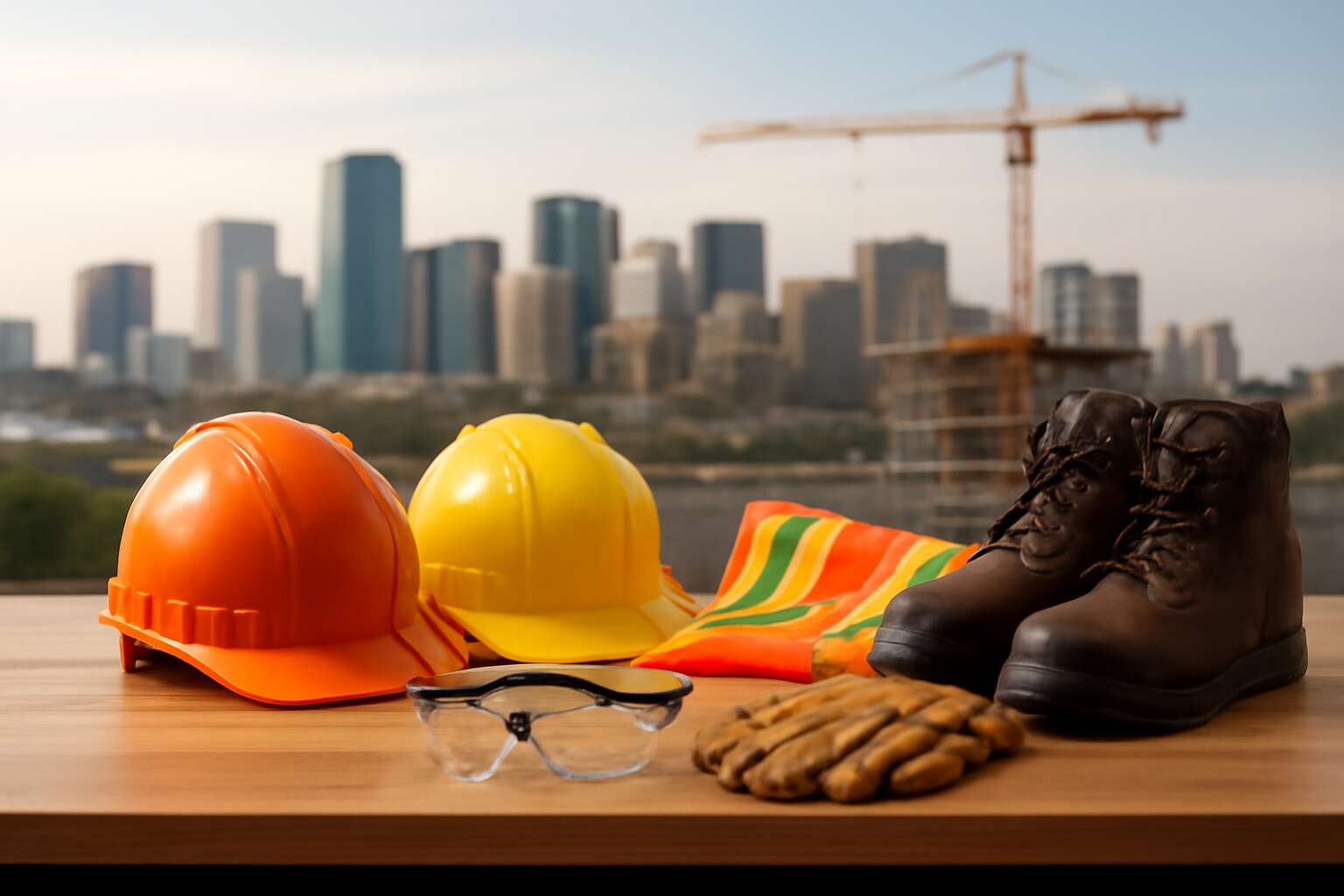
Safety Equipment Landscape in Edmonton
PPE Categories in Edmonton
Edmonton’s work sites wake to frost and full-face masks, where safety is a daily rhythm rather than a checkbox. A seasoned foreman once said, “Safety is the gear you notice only when it’s missing.” That truth guides our view of the safety equipment edmonton landscape.
In Edmonton, PPE categories shape daily choices, balancing protection with practicality. Here are the core groups many sites rely on to keep projects on track:
- Respiratory protection
- Eye, face and head protection
- Hearing protection
- Hand and foot protection
Across South Africa and Edmonton alike, the human side of safety matters most—fit, comfort, and trust in the gear that stands between workers and risk.
Industrial Safety Gear for Edmonton Worksites
Edmonton’s mornings arrive with a frost that reminds us the day can turn on a dime, unless the safety equipment edmonton is already in place. “Fit matters more than flair,” a veteran foreman likes to say, and his crew nods as the door seals shut against the cold. Across this city—and even in South Africa’s warmer climes—the human element remains center stage: gear that works is gear workers trust.
On the ground, the landscape favors equipment that breathes, moves, and lasts. Consider these essentials that survive Edmonton’s shifts:
- Climate-responsive design that protects without hindering
- Maintenance-ready setups with clear inspection trails
The lesson is simple: the best gear isn’t a showroom novelty but long-term reliability, backed by local service networks that speak your language and respect the weather.
Regulations and Standards in Alberta
Edmonton’s safety landscape rests on more than gear. Alberta’s Occupational Health and Safety Act and the OHS Code set the baseline for PPE and workplace protection. For safety equipment edmonton, compliance means hazard-led selection, proper fit, and documented training—no showroom flourish. Inspect and maintain equipment to prove you meet the standard, because regulators expect a living program, not a one-off purchase. For South Africa readers, the Alberta approach mirrors a hazard-based mindset familiar back home.
Key anchors in this landscape include:
- Regulatory framework: OHSA and the OHS Code
- Standards influence: CSA- and industry-led PPE norms
- Local service networks that keep gear compliant and available
- Clear enforcement and penalties that encourage ongoing vigilance
Edmonton’s rules translate into durable, dependable gear that survives the shift and the season.
Supplier and Store Options in Edmonton
“Protective gear is only as good as the support behind it,” a local safety officer says. Edmonton’s safety equipment landscape blends rugged gear with ongoing service, turning a purchase into a living program that stays ready between shifts.
For readers in South Africa, safety equipment edmonton mirrors a hazard-led mindset familiar back home. Edmonton stores and suppliers group gear by risk, offer proper fit, and back it with fitting, inspection, and training.
Here’s what the landscape offers:
- Authorized dealers with CSA-aligned PPE and industrial safety gear
- In-house fitting, inspection, and repair services
- Rugged inventory and local availability for quick turnarounds
When you source locally, you get durable gear that holds up under Edmonton’s shifts and seasons, backed by service commitments and clear procurement paths.
Choosing and Sourcing Safety Equipment in Edmonton
Assessing PPE Needs for Your Industry
Edmonton sites pulse with activity, and a single well-chosen piece of PPE can rewrite a shift. A local safety survey shows injuries drop by 38% when PPE needs match actual tasks and environments. Choosing and sourcing safety equipment edmonton begins with a clear picture of the workflow, the hazards, and the realities workers face. With that map, procurement becomes a confident voyage rather than a guess in the wind.
Assessing PPE needs for your industry shapes every sourcing decision. For safety equipment edmonton, translate risk into gear, fit, and training rather than catalog numbers alone. Whether in South Africa or Edmonton, the approach remains the same—start with a risk-based assessment.
- Hazard identification and exposure profiling, guided by worker input.
- PPE fit, usability, and comfort within the typical workday.
- Supplier reliability, product verification, and training support in Edmonton environments.
Where to Buy PPE in Edmonton Local Suppliers and Online Options
That 38% drop in injuries when PPE aligns with actual tasks isn’t a number—it’s a signal. In choosing and sourcing safety equipment edmonton, the narrative shifts from cataloging gear to mapping risk across a shift. Edmonton sites demand gear that fits real workflows, endures the cold, glare, and dust, and respects the hands that work through them. The hunt becomes a quiet partnership: gear that matches tasks, fits workers, and travels with reliable suppliers who understand the local rhythm!
Where to buy becomes strategic—consider these anchors:
- Local suppliers with on-site fitting and aftercare
- Online options with clear data, fast delivery, flexible returns
- Verifications and training support from Edmonton-area distributors
Across SA and Edmonton, the same sourcing philosophy endures: risk-informed, worker-centric choices guided by dependable partners.
Safety Equipment Sizing and Fit for Alberta Jobsites
That 38% drop in injuries when PPE aligns with tasks isn’t just a statistic—it’s a signal for daily decisions. Choosing and sourcing safety equipment Edmonton means reading the shift, not the catalog. Gear must fit real workflows and endure Alberta’s chill, glare, and dust.
Sizing and fit aren’t afterthoughts; they’re the hinge on safety. Bulk layers, cold air, and gloves that slip disrupt grip and response. Seek modular pieces that move with you.
Consider:
- Measure over typical work layers, not bare skin
- Check compatibility with respirators and head protection
- Favor adjustable straps for winter PPE
In Edmonton, your sourcing circle matters. Local suppliers with on-site fitting and aftercare, plus online options with clear data and fast delivery, form a resilient supply chain. Pairing dependable partners with the right gear invites safety equipment edmonton along with your crews!
Budgeting and Cost Effectiveness of Protective Gear
Budgeting for safety equipment edmonton isn’t merely a price tag; it’s a commitment to reliability on frosty mornings and in glare-heavy afternoons. When upfront costs reflect long-term durability, maintenance, and dependable service, crews move with steadier rhythm and fewer interruptions across Alberta job sites.
Smart budgeting shifts focus from quick purchases to total value. Consider these touchpoints:
- Total cost of ownership over the gear lifecycle
- Warranty, service networks, and availability of replacement parts
- Delivery timelines and compatibility with existing safety ecosystems
Across South Africa, the procurement ethos mirrors Edmonton’s: clear expectations and dependable aftercare make the purchase a shared culture—one that steadies performance, trust, and morale across the workforce.
Maintenance and Lifecycle of Safety Equipment
Edmonton crews report that equipment downtime can shave 15% off daily productivity—a punchy reminder that choosing safety gear is a strategic investment, not a mere price tag. When you source safety equipment edmonton, you’re purchasing reliability, not just gear.
Maintenance and lifecycle decisions matter. Select pieces with proven durability and straightforward maintenance schedules, and ensure easy access to replacements. Consider these factors:
- Compatibility with your existing safety ecosystems
- Warranty, service networks, and replacement parts
- Delivery timelines and local support in Alberta
Long-term sourcing means cultivating relationships with trusted suppliers, balancing cost with dependable aftercare, and planning for obsolescence—so Edmonton sites stay safe, efficient, and compliant.
Safety Gear for Construction and Industrial Sectors in Edmonton
Core PPE for Construction Helmets Eye and Respiratory Protection
Edmonton’s work sites hum with winter gusts and summer glare, and industry data shows up to 60% fewer injuries when PPE is used correctly. Safety equipment edmonton isn’t a product line—it’s a pact between craft and care, especially in construction and heavy industry. Core PPE for construction begins with helmets, eye and respiratory protection that survive Alberta’s demanding shifts.
Core PPE for construction includes these essentials on every site:
- Hard hats that are CSA-certified and kept in good condition
- Eye protection: ANSI/ISEA Z87.1 or CSA Z94.3 compliant
- Respiratory protection appropriate to dust, fumes, or vapors
- Hearing protection for high-noise environments
- High-visibility garments and sturdy gloves
- Safety boots with slip-resistant soles
For South African project teams venturing into international builds, these principles translate well; the emphasis on fit and durability keeps protective layers effective when work is heavy.
Fall Protection and Harness Systems on High-Risk Sites
Edmonton’s job sites test grit and gear alike, and safety equipment edmonton is a shared vow to protect every climber and grinder. Fall protection and harness systems on high-risk sites fuse engineering with human care, turning sheer heights into measured steps. In a city that swings from icy mornings to late-afternoon glare, dependable protection isn’t optional—it’s the baseline. Even South African project teams venturing into international builds will notice the same discipline in Edmonton: gear that fits, lasts, and speaks to respect on the scaffold.
Consider these essentials for robust fall protection:
- Full-body fall arrest harness sized to the wearer and compliant with CSA/EN standards
- Shock-absorbing lanyards and self-retracting lifelines for dynamic work
- Anchor points, connectors, and rescue plans to enable rapid response
Hearing Protection and Noise Control Measures
Edmonton construction sites often pulse around 85 dB during peak shifts—a daily drumbeat that can erode hearing over time. Hearing protection isn’t a luxury; it’s a first line of safety, embedded in every task and decision. This discipline resonates from South Africa to Edmonton, and safety equipment edmonton shines when this shield meets the steel and stone of the city.
Choose protection that fits and breathes with the wearer:
- Foam or silicone earplugs for comfort and discreet carry
- Over-ear earmuffs with high NRR for steady shielding
- Electronic, level-dependent protectors for dynamic environments
Pair protection with regular hearing checks, fit testing, and noise monitoring—so the roar of Edmonton’s workdays never drowns the quiet of safety. This is safety equipment edmonton in action.
Electrical and Arc Flash Safety Equipment Essentials
“Safety isn’t a rule—it’s the rhythm you hear when a workshop hums and sparks kiss metal,” a veteran Edmonton foreman often says. On construction sites, arc flashes demand respect and the right gear—before power is unleashed, and with every task in view. In the Edmonton backdrop, the proper equipment keeps the day from turning dramatic.
Key components of Electrical and Arc Flash Safety Equipment Essentials:
- Arc-rated hard hats with integrated face shields
- Flame-resistant coveralls or arc-rated outerwear
- Insulated, voltage-rated gloves with leather protectors
- Dielectric boots and insulated tools
On every site, safety equipment edmonton becomes more than gear; it is a ritual of readiness on every site. For readers in South Africa, the principle travels well—equip, train, monitor, and respect the electrical edge.
Occupational Health and Compliance in Edmonton
Alberta Workplace Safety Regulations and Employer Responsibilities
“Safety is a choice we make every shift,” a crisp truth you hear echoing through Edmonton’s workplaces as Alberta’s safety regulations take root. These rules frame health as a daily duty, not an annual audit, and they remind us that compliance is a shared responsibility.
Occupational health in this setting blends policy with people. Employers champion a culture that balances risk with care, ensuring environments where hazards are understood, monitoring stays vigilant, and records speak to accountability. Compliance goes beyond form—it’s a living system that welcomes questions, audits, and ongoing improvement.
When teams seek safety equipment edmonton, they discover more than gear: they encounter a joined-up approach where equipment, training, and ethics align. The result is a workforce equipped to protect itself and its neighbors, even as standards evolve beneath the surface of every workday.
Training and Competency Programs for Workers
Edmonton job sites prove that safe work is built, not guessed. When training threads through daily practice, teams notice steady momentum and fewer near-misses. “Safety isn’t a moment; it’s a method,” a foreman once told me, and the truth lands with quiet power.
Occupational health hinges on clear competency paths: onboarding that sets expectations, hands-on coaching, and regular checks that verify skill and judgment. You’ll find bite-sized modules, practical drills, and leadership oversight that keeps learning honest and current. It’s not a ritual; it’s a living system where safety equipment edmonton becomes a familiar partner in every task.
- Structured onboarding with role-specific safety objectives
- Regular competency checks and practical drills
- Timely refresher sessions aligned to standards
Across borders, including South Africa, the principle holds: training, hands-on practice, and accountability shape a resilient workforce that protects workers, neighbours, and safety equipment edmonton becomes part of everyday caution.
Recordkeeping Audits and Incident Reporting
Rigorous incident reporting can cut workplace injuries by up to 30 percent, a figure that lands hard on any site. Occupational Health and Compliance in Edmonton hinges on clear recordkeeping that turns data into action—especially when safety equipment edmonton is part of the audit trail!
Edmonton recordkeeping audits cover the full arc: near-misses, investigations, corrective actions, and closure verification. Incident reporting isn’t a one-off task; it fuels continuous improvement and keeps equipment trustworthy on every shift.
- Incident logs and investigation outcomes
- Maintenance and calibration of equipment
- Corrective actions and closure verification
- Training completion tied to incidents
Across borders, including South Africa, accountability and timely reporting protect workers and neighbours, turning Edmonton practices into a shared caution where equipment stays central to daily operations.
Certification and Renewal for Safety Equipment
In Edmonton’s dynamic job sites, certification and renewal for safety equipment edmonton isn’t a luxury—it’s the steady heartbeat of compliance. Studies show that well-maintained programs slash incidents by as much as 30 percent, a figure that lands with gravity on every project. When renewal is part of the ritual, gear remains trustworthy across shifts and seasons.
Occupational Health and Compliance in Edmonton hinges on ongoing verification, airtight records, and timely renewals that mirror current rules. Certification isn’t a single exam; it’s a living covenant that binds workers, supervisors, and the gear guarding daily courage. For South Africa’s workplaces, Edmonton’s cadence offers a blueprint where renewal cycles align with equipment lifecycles, keeping standards fresh and competency sharp.
- Certification timelines and renewal milestones
- Competency assessments and refresher modules
- Documentation and regulatory alignment

0 Comments