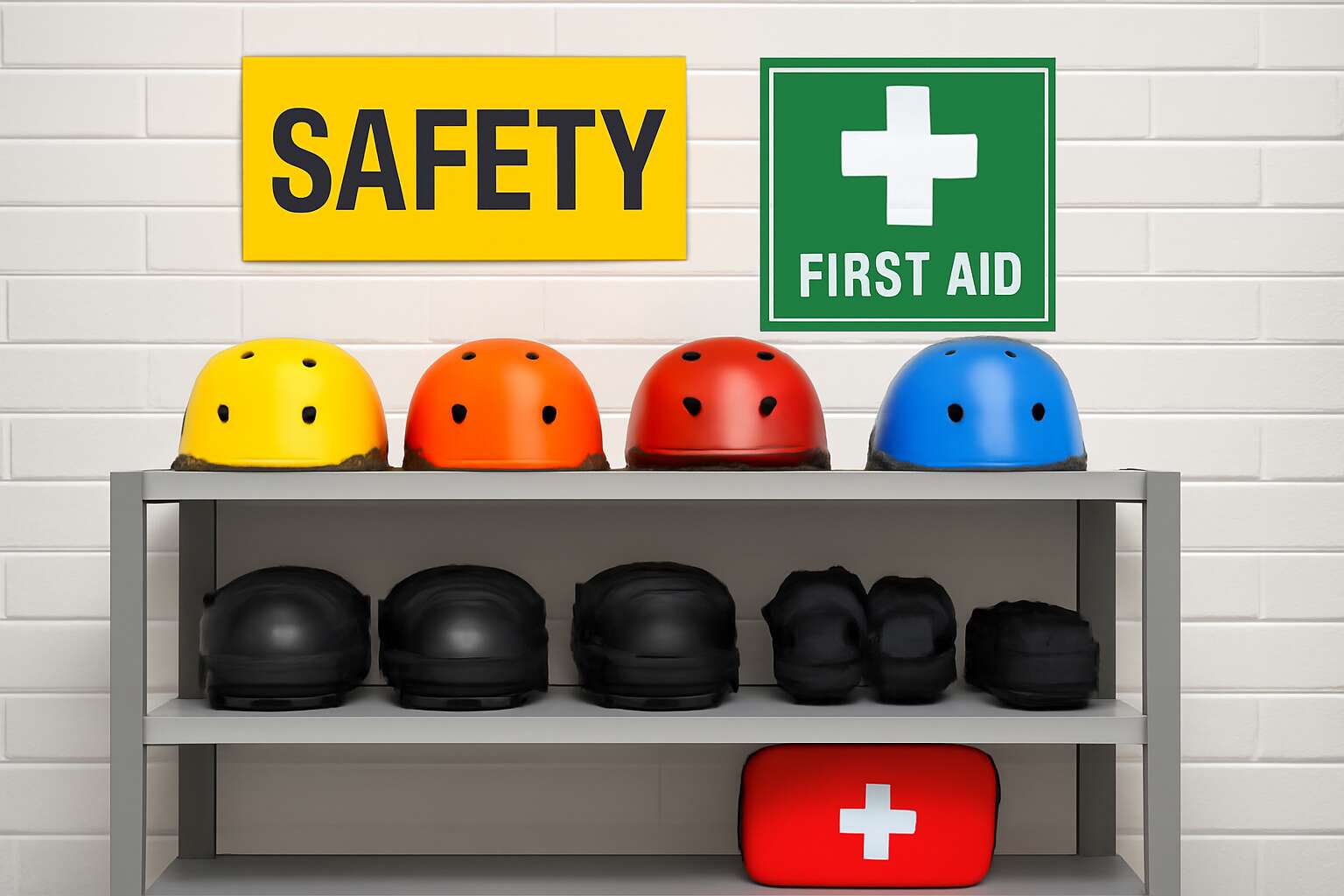
Safety Equipment Essentials for Gyms
Personal protective gear for gym workouts
“Safety isn’t a sideline; it’s the main lift,” a veteran SA gym coach likes to quip. In South Africa’s fitness spaces, the safety equipment gym you wear acts as a quiet contract with your body—ambition paired with prudent restraint. Personal protective gear for gym workouts isn’t mere flair; it’s the kind of elegance that keeps joints intact for years of lively training.
Key pieces include:
- Lifting belt for spine support
- Wrist wraps for added stability
- Knee sleeves for warmth and support
- Grippy training shoes with a firm heel
- Chalk or gloves for secure grip
In South Africa, adopting this safety equipment gym mindset signals professionalism and care for fellow gym-goers; it’s the cultivated courtesy that keeps workouts crisp and communities respectful.
Impact protection and matting solutions
In a world of roaring treadmills and clanging irons, a safe floor is the gym’s silent advocate, absorbing shock and guiding your stance through every set. In South Africa’s studios and gyms, impact protection isn’t an afterthought—it’s a promise you keep with your joints and with your fellow lifters. When mats roll out smartly and padding covers hazard zones, the room feels calmer, more confident, more professional. This is the essence of safety equipment gym mindset: a graceful shield that lets ambition rise without reckless risk.
Matting solutions that truly perform blend physics with feel.
- Interlocking rubber mats for heavy lifts
- High-density EVA mats for floor work
- Rolled rubber flooring for versatile zones
- Anti-slip tiles with clean edges
These ground choices turn risk into routine, supporting a respectful, high-standard training culture across SA gyms.
Inspection routines and maintenance checks
A silent risk sits beneath every treadmill and lifting platform—until routine checks bring it to heel. In a safety equipment gym, the difference between a great session and a preventable accident is cadence: daily, weekly, and monthly maintenance that stays quietly at work. When floors, mats, and machines are kept in line, confidence rises and training becomes rituals of precision.
- Daily visual checks of flooring, mats, cables, and attachments for wear, damage, or loose edges.
- Functional verification of safety systems, alarms, lighting, and clear egress routes.
- Weekly assessment of surface integrity and cleanliness to prevent trip hazards.
- Monthly audit of safety devices (fire extinguishers, AEDs) and signage, ensuring unblocked access.
- Documentation through a maintenance log, capturing date, action, and responsible staff member.
In this culture of care, SA gyms protect momentum and people alike—this is the essence of the safety equipment gym mindset.
Emergency readiness and first aid equipment
Twenty seconds can decide life in an emergency. In a gym powered by safety equipment, that tempo guides every choice—from staff readiness to the layout of the kit. Quick access to first aid gear and an AED means a trained response happens before the chaos, calm, precise, and practical!
- Automated External Defibrillator (AED) with current batteries and pads
- Comprehensive first aid kit with bandages, antiseptics, trauma dressings, and gloves
- Emergency signage, clear exit routes, and a printed medical incident protocol
- Oxygen delivery or pocket-mask resuscitation equipment
Having these elements in place turns a gym into a rapid-response environment. In South Africa, fitness communities expect ready and reliable care, because momentum thrives where help is at hand. This is the safety equipment gym.
Signage, floor markings, and safety protocols
In South Africa, a quick response can be the difference between a scare and a save—clear signage slashes incident response time by up to 40%. A gym run with precision is a safety equipment gym: every sign, stripe, and protocol is designed to keep people moving safely.
Signage is glare-free, color-coded, and at eye level along exits. Floor markings map traffic flow, splitting space into warm-up and training zones, and guiding equipment. Safety protocols—posted and rehearsed—tell staff and members what to do in a crisis.
- Clear, high-contrast signage positioned at doors and high-traffic zones
- Floor markings that delineate warm-up areas, equipment zones, and egress paths
- Printed emergency procedures and contact numbers posted on walls
With these essentials in place, facilities in SA deliver calm, swift responses that protect members and staff alike. The right signage, markings, and protocols turn every workout into a safer routine.
Personal Protective Gear and Injury Prevention
Weightlifting supports and protective gear
In small-town gyms across South Africa, a telling stat travels fast: injuries drop when people respect PPE as daily gear rather than rare equipment. Strength is earned, not endured through pain, and safety equipment gym culture is the quiet partner to every hard lift.
I’ve seen farmers and factory workers alike stop chalk-dusted mornings to check wraps and belts, because injury prevention is as loyal as a dog at harvest. Personal protective gear and practical training support steady shoulders, mindful spines, and longer lifespans in the gym.
- Lifting belt
- Wrist wraps
- Knee sleeves
- Chalk and sturdy footwear
That mindset—woven from a safety equipment gym ethos—quietly travels from the mats to the field, inviting dignity to every rep and respect for the body you’ve built.
Joint protection and mobility aids
In South Africa’s gym halls, a quiet stat travels faster than a sprinting barbell: injuries shrink when PPE is worn as daily armor rather than a once-off check. The safety equipment gym ethos turns every warm-up into a vow to the body you’ve built and the work you deserve.
Personal protective gear and injury prevention hinge on protecting joints and sustaining mobility. Wrist wraps, knee sleeves, and supportive braces are the quiet sentinels of a solid session; mobility aids and adaptive tools keep shoulders and spines resilient, even after heavy reps and long shifts.
- joint wraps and tape
- mobility rollers and resistance bands
- ergonomic footwear and ankle supports
From field to forge, the care travels with the lifter, turning every rep into a testament to stewardship—safety equipment gym culture shaping durability, dignity, and longevity in the sport.
Footwear and grip for safe training
Footing is fate in the heat of a rep. The quiet guard of footwear—your daily armour—sets the tempo for every lift. In a safety equipment gym, the right shoes and grip transform risk into ritual, turning slips into focus and power into control.
Footwear choice reads your training like a map: flat soles for stability, snug fit to anchor the foot, and ankle support when the weight climbs or the next rep dawns. Grip is a pact with the floor that keeps shoulders square and spine aligned.
- Non-slip outsole with deep tread for solid traction
- Flat or slightly raised heel to support stable squats and presses
- Reinforced ankle collar or high-top design for lateral moves
Under arena lights, every step becomes a story of traction, trust, and longevity—the unspoken vow of souls who train with care in a safety equipment gym.
Cardio and high intensity safety accessories
In South Africa’s gyms, 75% of cardio injuries are preventable with the right gear—proof that preparation outpaces peril. A safety equipment gym treats protection as a partner, guiding every sprint, lift, and breath with quiet, unwavering resolve.
Personal protective gear for cardio and high-intensity sessions acts as an invisible shield: breathable sleeves, wrist supports, mouthguards when classes collide, and dependable heart-rate monitors that stay close, charting tempo without distraction. They turn risk into rhythm.
- Heart-rate monitors with adjustable straps
- Non-slip gloves or grips for sweat-heavy movements
- Cushioned mats and shock-absorbing flooring
- Safety lanyards and emergency stops on cardio machines
In this realm, injury prevention becomes a quiet rite that binds speed and safety within this world.
Injury prevention education and cues
In SA gyms, safety equipment gym is the quiet partner that keeps pace safe. A regional insight reveals 75% of cardio injuries are preventable when protection is respected and gear is worn as part of the routine. Personal protective gear becomes an invisible shield, guiding every sprint, every lift, every measured breath with steady, almost ceremonial resolve!
Injury prevention education and cues turn knowledge into instinct, shaping how athletes read the room and respond to subtle shifts in tempo or posture. In this world, prevention is not nagging advice but a shared language—an awareness that transforms risk into rhythm and keeps the momentum of progress unbroken.
Gym Equipment Safety and Maintenance
Routine inspection for machines and free weights
One loose bolt can rewrite a workout into a cautionary tale. In every South African gym, safety equipment gym standards are upheld not with bravado but with a rhythm of routine checks that honor the lifeblood of the machines. The weight stack gleams, the treadmills hum, and behind that shine lies a vow: equipment will perform safely, every session and season.
Maintenance is less a task and more a trust, a covenant between muscle, metal, and those who care for them. Routine inspection of machines and free weights focuses on listening for abnormal sounds, watching for misalignment, and noticing wear before it becomes a problem. When something glints or feels off, a professional assessment preserves performance and safety.
That attentiveness is what elevates a safety equipment gym from a venue of exertion to a sanctuary of durable strength—where progress is celebrated, and every rep is framed by responsible care.
Preventive maintenance schedules and documentation
South Africa’s gyms pulse with a culture of proactive care. In a safety equipment gym, preventive maintenance is not a chore but the quiet engine behind every rep. A local audit shows clear maintenance schedules reduce unexpected downtime and elevate member confidence, turning every session into a ritual of reliability rather than risk. From treadmills to weight stacks, routine care keeps performance pristine.
Craft a maintenance calendar: daily checks by staff, weekly lubrication, monthly drive-system and cable reviews, and annual professional inspections. A compact list keeps every record honest and accessible:
- Maintenance log with date, task, and technician
- Asset tag, model, and serial numbers
- Next due date and reminder system
- Calibration and load-testing certificates
Safe loading practices and capacity awareness
In a safety equipment gym, every rep is a quiet oath to reliability. Across South Africa’s fitness spaces, the floorboards echo with disciplined care and precise weight psychology—where form meets function and every cue of risk is acknowledged before it becomes injury. A well-tuned rack earns trust, turning sweat into a clean, confident lift.
Safe loading practices and capacity awareness keep momentum safe:
- Respect the machine’s rated weight and user capacity
- Inspect cables, pulleys, and racks for wear before use
- Use collars and clamps, never hand-load moving plates
- Distribute loads evenly; don’t mix free weights with incompatible equipment
Clear signage and a robust maintenance cadence translate caution into confidence, letting every member lift with grace rather than grind. When the gym speaks in measured limits, the dream of progress remains luminous and real.
Hardware safety: locks, pins, and stops
In a safety equipment gym, the locking pins and stops are the quiet sentries that keep ambition from tipping into mayhem. The clang of a pin snapping into place, the steady grip of a collar, the promise of a stop that won’t budge — these are the small rituals that build trust under load. South Africa’s training spaces know that hardware integrity translates into confidence on every rep.
- Locking pins should seat fully, resist bending, and be rated for the load in use.
- Collars and clamps keep plates from drifting, maintaining stack integrity.
- Stops and safeties engage with predictable resistance to arrest movement safely.
That blend of robust hardware and a culture of care marks the boundary between routine training and elite discipline.
Equipment life cycle planning and replacement guidelines
Every rep in a safety equipment gym begins long before the first plate finds its track. In South Africa’s gyms, a clear equipment life-cycle plan can slash downtime by roughly a third and keep athletes safer. When you map how long a rack, bar, or pin should last—and when it should be retired—you turn risk into routine and worry into confidence.
- Establish a formal lifecycle schedule by category (plates, bars, racks, cables) with expected lifespans and when to consider replacement
- Document maintenance cadence and wear observations, keeping a living log
- Plan budgets aligned with procurement cycles so aging gear is retired before fatigue or failure
Out here, durability is a daily trust. Thoughtful planning and timely replacement keep communities strong and lifting—one safe session at a time.
Cleaning and sanitization protocols for safety equipment
In a safety equipment gym, cleanliness is a quiet, nonnegotiable partner of strength—an unseen guardian that keeps gears singing and grip steady. A frontline study finds that gyms enforcing strict cleaning protocols experience significantly less downtime and safer sessions, turning every rep into a pledge of endurance and care. Fresh air and bright surfaces invite confidence.
- Daily wipe-down with EPA-registered disinfectant on bars, pins, collars, and benches.
- Color-coded microfiber cloths prevent cross-contamination between zones.
- Sanitize high-touch surfaces between users: plates, straps, and touchscreens.
- Ensure proper contact time and allow air-drying for effective sanitation.
- Schedule weekly deep-cleans for cables, pulleys, upholstery, and frames.
Keep a living sanitation log and rotate products to maintain a hygienic rhythm across the gym.
Facility Safety and Compliance
Safety signage, floor markings, and lighting standards
“Bright light reveals risk before it injures,” a facilities manager once observed. In a safety equipment gym, lighting isn’t decorative; it’s a live safety feature that sharpens awareness and speeds instinctive responses. Clear signage, precise floor markings, and robust lighting standards converge to guide every rep and every passerby, turning potential hazards into visible, navigable space. Here, safety becomes a shared reflex, not a checklist.
Facility safety signage must convey immediate meaning—high-contrast colors, durable materials, multilingual accessibility reflecting South Africa’s diverse users.
- Exit routes clearly marked with arrows
- Hazard zones and pedestrian corridors floor-marked
- Emergency lighting and consistent luminance across zones
Floor markings should align with traffic flow and equipment layout, guiding users to safe standpoints and supervised pathways. Lighting standards call for even distribution, glare control, and reliable backup power to keep every corner seen and safe.
Emergency response planning and drills
In a climate where rapid response saves lives, emergency response planning is the gym’s quiet cornerstone. South Africa’s workplaces demand versatility, multilingual communications, and reliable back-up systems. In a safety equipment gym, drills turn reflex into routine, and safety becomes a shared responsibility rather than a checklist.
- Regular drills with pre-briefs and post-drill debriefs
- Clearly marked exit routes and assembly points
- Defined staff roles for evacuation, first aid, and communications
- Coordination with local emergency services and clear reporting protocols
Documentation, audit trails, and periodic reviews keep the plan alive, ensuring every corner of the facility remains compliant and prepared. Even after hours and during peak usage, the discipline of drills sustains confidence.
Compliance with industry standards and certifications
“Compliance is not a burden; it’s the warranty on every lift,” a veteran safety officer once said, and in South Africa’s gyms that warranty is tested by sweat and discipline alike. The dance of performance and protection is choreographed through standards, certifications, and honest reporting—turning safety into a shared instinct rather than a token checkbox.
Facilities in South Africa align with respected frameworks that blend local compliance with international assurance.
- ISO 45001 for occupational health and safety management
- ISO 9001 for quality management
- CE marking and regional certifications where applicable
In a safety equipment gym, rigorous documentation, independent audits, and periodic reviews keep the standard alive, turning compliance into a living habit rather than a one-off declaration. Certificates and maintenance records become quiet testimonials to the shared discipline that underpins every workout.
Incident reporting and hazard communication
On the gym floor, a whistle rings true only when the whisper of reporting follows it. In a safety equipment gym, incident reporting and hazard communication are not afterthoughts but the first line of defense. Transparent channels empower staff and members to flag risks before they sprout into injuries, turning every mishap into a taught lesson. In South Africa, this culture translates into steadier training and a shared, living sense of responsibility.
A robust framework might include:
- Near-miss logging with quick corrective-action tracking
- Hazard briefings and visible action boards for all shifts
- Formal investigations that close the loop with preventive measures
Records of responses become quiet testimonials to discipline. Well-documented actions feed training, adjust routines, and keep the safety culture alive long after the workout ends.
Accessibility and evacuation routes
“Visibility in safety isn’t optional—it’s oxygen for the brain,” a South African safety officer likes to say. In a safety equipment gym, facility safety and compliance are the first line of defense, turning every workout into a shared commitment to well-being.
Facility safety and compliance accessibility hinge on evacuation routes that are obvious, accessible, and continuously maintained. Think clearly marked exits, constant lighting, and unobstructed paths that guide members and staff to muster points with confidence.
- Clearly marked, illuminated evacuation routes free of clutter
- Ramps or lifts ensuring wheelchair access to exits
- Audible alarms and visible indicators for all occupants
- Regular, documented evacuation drills with debriefs
- Strategically placed first-aid and communication points
These elements keep the facility compliant with evolving safety norms and cement a calm, capable atmosphere long after the workout ends.

0 Comments