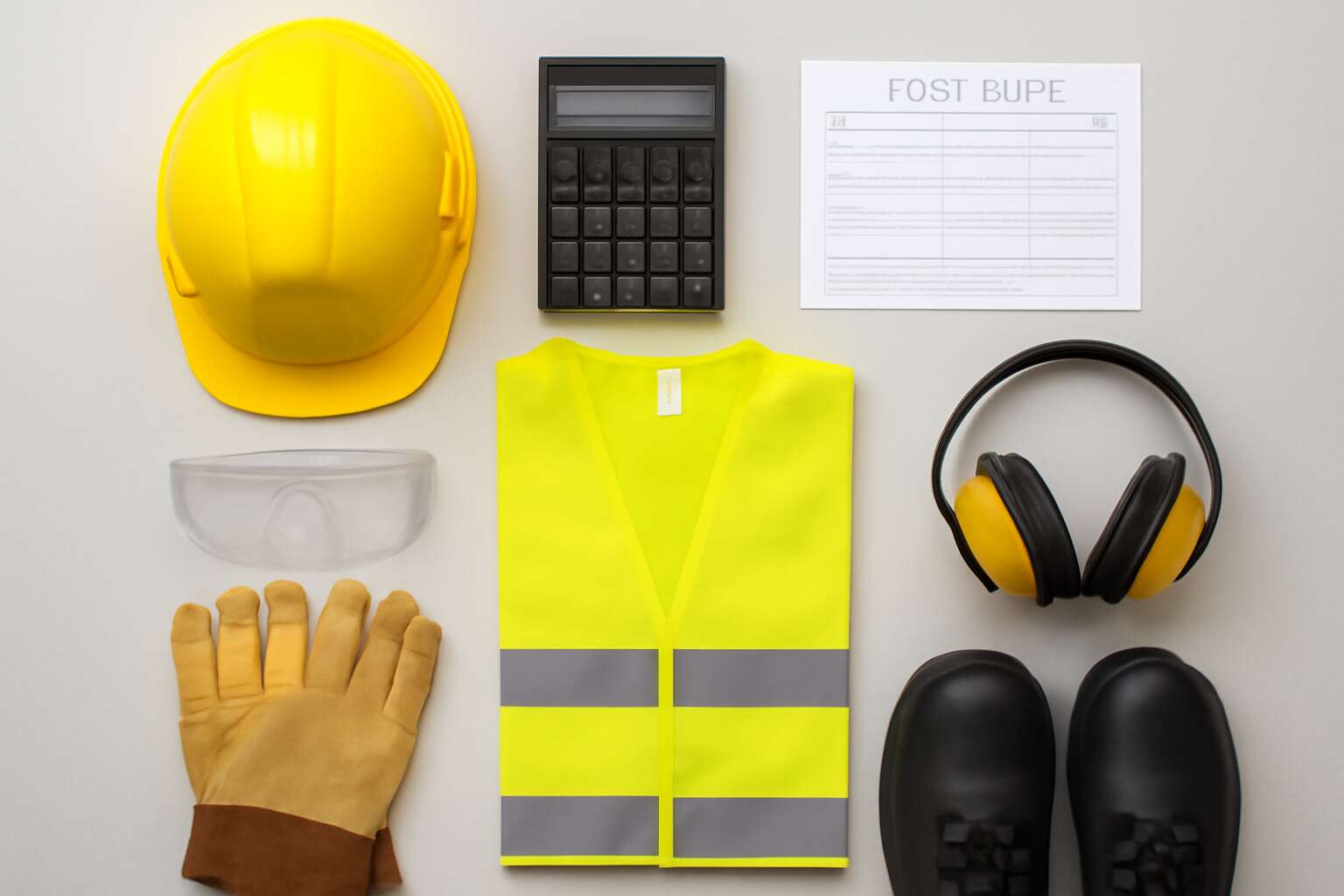
Understanding safety equipment GST rate basics
What is GST and how it applies to safety equipment
South Africa spends a surprising amount on safety gear each year, and the biggest cost comes from misreading the safety equipment gst rate. A sharp, little-known stat suggests GST clarity can trim procurement headaches by up to 25%, turning compliance from a dull ledger line into a smart business move. The moment you grasp the basics, the rest feels less like a minefield and more like a well-lit workshop.
GST, the local cousin to VAT in many other lands, generally applies to most safety gear unless a specific exemption exists. In practice, the rate lands on an order based on classification, invoicing terms, and whether items are imported or domestically procured. When applied correctly, the safety equipment gst rate is straightforward, but misclassification invites delays and costs.
- Classification matters: PPE vs consumables
- Invoicing: GST-inclusive vs GST-exclusive
- Import rules: duties vs exemptions
Key components of the GST rate structure for PPE and safety gear
A sharp stat shows GST clarity can trim procurement headaches by up to 25%. Understanding the safety equipment gst rate basics helps transform risky orders into straightforward buys. Think of three levers—classification, invoicing terms, and import status—as the core wrench in the box!
For PPE and safety gear, the rate follows practical rules: the item’s category, whether GST is quoted inclusive or exclusive, and whether it’s imported or bought locally. Correct calibration saves time and avoids costly delays.
- Classification affects the rate you apply.
- Invoicing terms set GST visibility.
- Import status can shift duties.
Determining taxable value and GST rates by product category
That sharp stat is a punchy reminder: GST clarity can trim procurement headaches by up to 25%. Understanding safety equipment gst rate basics helps turn risky orders into straightforward buys. The taxable value isn’t just the price tag—it often includes freight, insurance, and handling, unless GST-inclusive quotes are offered. In South Africa, the item category your PPE falls into guides the rate, so classification matters more than you might expect.
Three levers act as the core wrench in the box:
- Classification affects the rate you apply.
- Invoicing terms set GST visibility.
- Import status can shift duties.
Common exemptions and notifications related to safety gear
Procurement teams report up to 25% fewer headaches when GST classifications for PPE are nailed. Understanding safety equipment gst rate basics helps turn risky orders into straightforward buys. In South Africa, misclassifying PPE can inflate costs and trigger delays, but many buyers trim headaches with clear GST interpretation. Classification and invoicing visibility shape the final price, whether you’re importing or sourcing locally.
Common exemptions and notifications you may encounter include:
- Exports and international shipments can be zero-rated for GST purposes.
- Supplies to certain government or health bodies may be exempt or relief-rated.
- Import status—whether PPE is brought in for resale, use, or OEM can alter GST treatment.
- Notifications about rate changes and transitional rules from the tax authority may affect pricing.
These nuances remind buyers that the safety equipment gst rate isn’t static—it evolves with policy. Classification and notifications are where the practical work happens, shaping margins and procurement narratives!
Impact of GST on pricing and procurement of safety equipment
In South Africa, the ledger breathes differently when GST is understood. The safety equipment gst rate acts as a compass in the night, guiding prices and contracts through the fog. From my experience, read rightly, a cautious buyer turns risky orders into steady, straightforward buys!
From my experience, pricing and procurement hinge on clarity. The following levers shape margins and flow:
- Classification accuracy to avoid overpayment
- Import status considerations for resale, use, or OEM
- Vigilance on rate changes and transitional rules
Classification and invoicing clarity shape the final price, whether you source locally or import. The GST climate remains a living shadow, ever shifting with policy.
Safety equipment categories and their GST classifications
Personal protective equipment PPE and protective gear GST rates
Protecting people is serious business, but that doesn’t mean the topic can’t be crisp. The safety equipment gst rate typically follows the standard VAT approach for PPE, shaping cost and compliance in equal measure. Clarity here prevents budget gymnastics when invoices land on desks across South Africa.
Safety equipment categories break into PPE and protective gear, with each class sporting its own GST classification in practice. Here are common PPE examples to anchor the idea:
- Eye protection
- Head protection
- Hearing protection
- Respiratory protection
- Hand protection
- Foot protection
Protective gear covers items like fall-arrest systems and high-visibility clothing. Tax treatment considers use, labeling, and regulatory scope rather than looks. The result? a clearer path through the tax terrain, with fewer surprises when procurement budgets roll in.
Safety signs, barriers, and visibility equipment GST considerations
Safety signs, barriers, and visibility equipment aren’t the glamorous heroes of the shop floor, yet they keep audits, invoices, and workers on the straight and narrow. The safety equipment gst rate follows the standard VAT-style framework here, with classification driven by use and regulatory scope rather than aesthetics. Clarity on this front prevents budget gymnastics as procurement budgets land across South Africa!
- Safety signs and wayfinding markings
- Barriers and crowd-control devices
- High-visibility clothing and reflective PPE
GST considerations rely on labeling and regulatory scope, not looks, ensuring a smoother billing path and fewer surprises when invoices roll in.
Industrial safety equipment like helmets, gloves, and boots GST rate
Safety equipment categories form an unseen lattice beneath daily operations, demanding respect. Industrial gear—from helmets and gloves to boots and eye protection—translates risk into enforceable standards and budget lines!
GST classification for this equipment hinges on use and regulatory scope, not aesthetics. The safety equipment gst rate follows the same VAT-style logic, aligning invoices with standards, certifications, and the product’s purpose on site.
- Helmets and head protection
- Gloves and hand protection
- Boots and foot protection
- Eye and hearing protection
These categories keep procurement predictable and audits sane, since the taxonomy mirrors safety intent rather than brand appeal.
Respiratory and hearing protection GST category
“Safety is not a slogan; it’s a system that starts with the right gear.” In South Africa, the costs of neglect echo in downtime and injuries, giving the safety equipment gst rate real meaning for procurement teams.
Respiratory and hearing protection sit in distinct GST category lanes, guided by use and regulatory scope rather than aesthetics.
- Respiratory protection: masks, disposable respirators, air-purifying respirators
- Hearing protection: earplugs, earmuffs, specialized noise-reduction devices
By aligning purchases with these tax-classifications, procurement remains predictable and compliant, while teams stay focused on safety outcomes rather than budget surprises—an essential facet of the GST framework.
Fall protection equipment and harnesses GST classification
“Safety is a system, not a slogan,” a supervisor once observed, and that truth lands hard when life-saving gear falls under the safety equipment gst rate. Fall protection equipment and harnesses sit in their own GST classification lane, defined by use-case—construction, rope access, or industrial maintenance—rather than by appearance.
Within this framework, the core items demand attention:
- Harnesses
- Lanyards
- Anchor points
These components anchor safety plans to real-world procurement decisions.
Choosing the right classification keeps procurement predictable and compliant, aligning budget with safety outcomes rather than surprises, a small discipline with big payoffs.
Fire safety equipment GST treatment
In South Africa, the tax ledger keeps safety gear aligned with risk rather than flash. The safety equipment gst rate channels procurement budgets toward real safety outcomes, especially for fire safety setups that demand fast, reliable deployment.
Fire safety equipment GST treatment hinges on use-case rather than appearance. Fire safety equipment sits in its own classification tier—defined by purpose and risk management—so procurement reflects actual protection needs.
- Fire extinguishers
- Fire blankets
- Smoke and heat detectors
- Fire alarms and notification devices
- Emergency escape lighting
The flow from design to purchase becomes clearer when classifications are understood—driving predictable pricing and smarter stocking decisions.
How to identify the correct GST rate for safety equipment
Using HS codes and product descriptions to classify GST
A shipment’s fate can hinge on a single line of tax code. “Tax codes are maps; misread one signpost and the route shifts,” declares a seasoned compliance voice. In South Africa, the safety equipment gst rate rides on accurate HS codes and crisp product descriptions.
- Check the HS code in the customs tariff and align it with the product description
- Validate that the described features match the code’s scope to avoid drift
- Confirm the GST classification with SARS guidance or current notices from suppliers
When classification is precise, the safety equipment gst rate becomes predictable, reducing pricing volatility and procurement risk.
Role of GST council notifications and amendments on PPE
A single misread line can tilt a shipment’s tax by hundreds of rand—the kind of slip that keeps compliance teams awake at night. In South Africa, the science of classification hinges on the correct HS code and a crisp product description.
To identify the correct rate, align the HS code in the customs tariff with the product description and validate that described features stay within the code’s scope to avoid drift.
Role of GST council notifications and amendments on PPE remains a moving target, with updates flowing through notices that reshape PPE categorization.
When classification is precise, the safety equipment gst rate becomes predictable, reducing pricing volatility and procurement risk.
Exemption codes and the reverse charge mechanism for safety gear
Shadows gather where single misread HS code drags a shipment into tax limbo. I watch the ledger sigh as the description and tariff must align, or the safety equipment gst rate shifts like a gust of wind through warehouse. In South Africa, the craft of classification hinges on precision and a wary eye for detail.
To identify the correct rate, look past fancy nomenclature and compare the customs tariff line with the product’s features in plain terms. If the description strays from the code’s scope, drift threatens pricing. Exemption codes whisper when PPE falls under carve-outs; the balance hinges on policy notices.
When the reverse charge mechanism visits the ledger for safety gear, we see the buyer assuming the tax obligation in lieu of the supplier. This haunting dynamic can keep margins intact—or ruin them—depending on how exemptions and council notifications are read against the rate!
Compliance, invoicing, and input tax credit for safety equipment
Invoicing requirements and tax invoice details for safety equipment
Compliance in the workshop is a quiet discipline; one misfiled invoice can cost more than a safety drill, and every line is a pledge to safety and accountability. The safety equipment gst rate influences pricing, invoicing, and what you can reclaim, so the trail remains tidy. In South Africa, a PPE tax invoice should spell out the supplier’s name and address, the date, and a clear description that matches the quoted price—kept simple, transparent, auditable.
To ensure the invoice carries all required details, include the following fields:
- Invoice number and date
- Supplier name, address, and VAT number
- Customer name and VAT number (where applicable)
- Description of safety equipment and quantity
- Unit price, line total, and VAT amount
- Total amount payable and payment terms
With proper documentation, you can claim input tax credit on safety equipment used in your taxable activities, supporting compliance, cash flow, and a culture of responsible procurement.
Input tax credit eligibility for PPE purchases
Compliance is the quiet guardian of your PPE program, and a sharp edge to keep audits at bay. The safety equipment gst rate shapes pricing, invoicing, and what you can reclaim, so each quote feels like a shield and every line item a pledge to accountability. “Compliance is cash in the bank,” a seasoned safety lead once told me.
Key invoicing details ensure the trail stays auditable:
- Invoice number and date
- Supplier name, address, and VAT number
- Customer name and VAT number (where applicable)
- Description of equipment and quantity
- Unit price, line total, and VAT amount
- Total amount payable and payment terms
With proper documentation, input tax credit eligibility for PPE purchases becomes smoother, supporting compliance, cash flow, and responsible procurement in taxable activities — a practical edge I’ve witnessed time and again.
Documentation and audit readiness for GST on safety equipment
Compliance is the quiet guardian of your PPE program, a sharp edge that keeps audits at bay. The safety equipment gst rate shapes pricing and what you can reclaim, so each quote is a shield and every line item a pledge to accountability. “Compliance is cash in the bank,” a safety lead once told me.
Key invoicing details keep the trail auditable:
- Invoice number and date
- Supplier name, address, and VAT number
- Customer name and VAT number (where applicable)
- Description of equipment and quantity
- Unit price, line total, and VAT amount
- Total amount payable and payment terms
With proper documentation, input tax credit eligibility for PPE purchases becomes smoother, supporting compliance and procurement in taxable activities — a practical edge I’ve witnessed time and again. Understanding the safety equipment gst rate helps ensure every claim lines up with the ledger.
RCM applicability for import and interstate transactions involving PPE
Compliance is the quiet guardian guarding PPE budgets; the safety equipment gst rate shapes what can be reclaimed and how quotes stand as shields. In the SA landscape, proper invoicing and records keep auditors at bay, even as cross-border PPE transactions shimmer in the background.
- Compliance anchors: accurate invoice numbers, dates, supplier and customer details, and a clear description of PPE.
- RCM considerations: for import and certain cross-border PPE flows, reverse-charge-like obligations may apply and must align with the ledger.
- Input tax credit eligibility: documented PPE purchases ready for reclaim when compliant invoices exist and appropriate tax treatment is captured.
When documentation keeps pace with procurement, the framework becomes a dependable compass for audits and accounting alike.
Industry-specific considerations and FAQs on safety equipment GST rate
Construction, manufacturing, and healthcare sector scenarios
In South Africa’s perilous industries, a single misfit glove can ground a site. The safety equipment gst rate conversation isn’t merely number-crunching; it’s about keeping critical work moving and workers safe. When we compare construction, manufacturing, and healthcare scenarios, the tax framework behaves like a quiet sentinel—guiding procurement choices and price expectations without stalling projects.
Industry-specific realities shape how GST-like rules land on PPE. Construction battles with fall-arrest gear and high-visibility basics; manufacturing relies on bulk orders for lines and workshop safety; healthcare demands a blend of staff and patient protection. Each setting amplifies the importance of accurate product descriptions and consistent supplier messaging.
- How does safety equipment gst rate apply across sectors? It hinges on item category and current notices.
- Do bulk PPE orders change tax treatment? The rate stays item-based; pricing may shift.
- What should buyers watch in practice? Ensure product descriptions match PPE categories.
Frequently asked questions about safety gear GST rates
In South Africa’s perilous job sites, a single mislabelled glove can ground a shift; the safety equipment gst rate acts like a quiet sentinel, guiding procurement without stalling work. Industry realities—construction’s fall-arrest basics, manufacturing’s bulk-order rhythms, and healthcare’s patient-protection standards—shape how PPE lands on price tags. Accurate product descriptions and consistent supplier messaging become lifelines, helping tradespeople keep moving while champions of safety keep watch over every seam and strap.
Frequently asked questions arise from practical needs rather than jargon. Here are quick references to keep decisions steady:
- What determines the GST rate for safety equipment across sectors?
- Do bulk PPE orders change how GST is applied?
- What product descriptions help ensure correct GST categorization?
- Which documentation supports tax treatment and input tax credits for PPE purchases?
Case studies: real-world GST rate determinations for PPE
Across South Africa’s hazardous job sites, mislabelled PPE can waste up to 15% of procurement time. The safety equipment gst rate acts as a quiet sentinel, guiding decisions without grinding operations to a halt.
Industry realities shape how PPE lands on price tags: construction leans on fall-arrest basics, manufacturing moves bulk orders, and healthcare guards patient safety. Clear product descriptions keep GST classification steady and invoices readable.
Case studies offer real-world GST rate determinations for PPE.
- Construction: bulk PPE orders test consistency of safety equipment gst rate across invoices.
- Healthcare: category-driven classifications protect patient safety and aid accurate GST tagging.
- Import/RCM: HS codes guide GST treatment on cross-border PPE shipments.
FAQs spring from field needs rather than jargon; questions about what determines GST classifications, whether bulk orders shift the math, and which documents support tax treatment keep decisions moving.



0 Comments