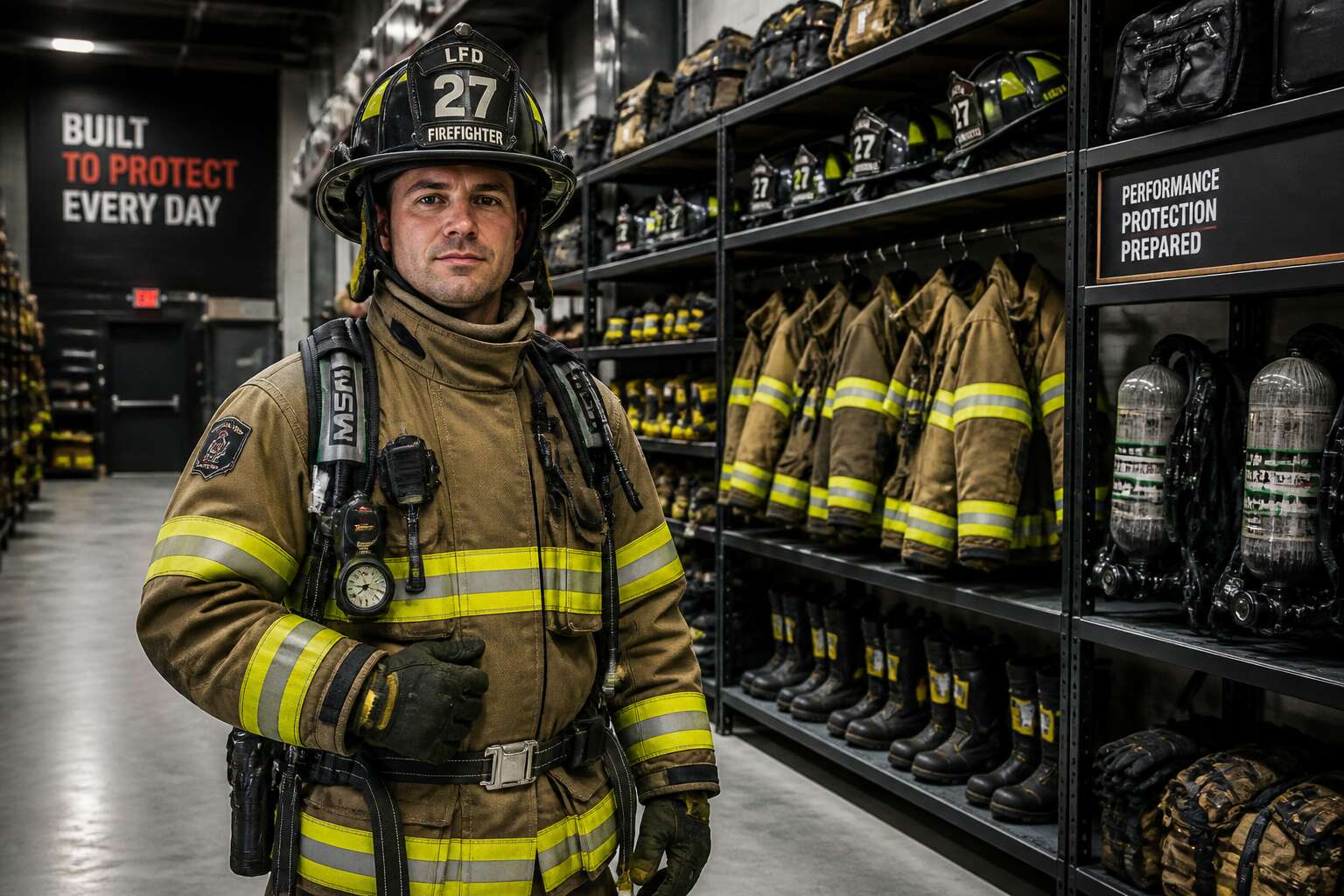
Identifying Reliable Firefighting PPE Manufacturers
Key Characteristics of Trusted Manufacturers
When the veld fires sweep across Mpumalanga, a firefighter’s turnout gear is all that stands between them and the heat. Choosing firefighting ppe suppliers deserves more scrutiny than a price list. The best manufacturers reveal themselves through observable habits.
They test beyond minimum standards in heat chambers that mimic real infernos. They inspect every seam and reflective stripe with a finickiness bordering on obsession. They maintain local stock so replacements arrive in days, not months. They keep communication open with crews who wear their equipment in the field. These suppliers share a few traits:
- They publish their testing certificates openly.
- They track each garment batch by serial number.
- They respond to defect reports without defensiveness.
Reliability is a quiet thing. It shows up in small consistent choices, made long before an emergency. The firefighting ppe suppliers who earn trust year after year treat every order like it might save a life, because it might.
Red Flags to Avoid When Sourcing Gear
Red flags appear early in the sourcing process. A supplier who cannot state the exact fabric composition of their turnout gear should raise immediate concern. The garments you rely on are only as good as the specifications behind them.
Low bids that undercut the market by a wide margin demand caution. Quality gear costs what it costs. In South Africa, delivery times reveal a great deal. Firefighting ppe suppliers without local warehousing may leave your crew waiting while the veld burns.
Be wary of these signs:
- Incomplete material specifications on quotation documents
- Quotes that sidestep SANS or SABS compliance details
- No physical stock held on the African continent
- Little or no post-delivery service commitment
Firefighting ppe suppliers who evade direct questions often have something to hide. Reliability rests on transparency, not persuasive sales calls.
The Role of Domestic vs. International Suppliers
When sourcing gear in South Africa, the distinction between domestic and international firefighting ppe suppliers matters more than the label on the box. Local manufacturers answer to SANS standards that international firms may only pay lip service to. A supplier based in Johannesburg or Durban can send a technician to your station within a day. That same technician understands the realities of a summer veld fire.
International suppliers bring economies of scale and access to cutting edge materials. Yet those advantages vanish if the integration with local protocols fails. Domestic firms often source raw materials from the same global market, then assemble garments with local climate and fit in mind. The choice is not about patriotism. It is about accountability.
- Check whether the supplier offers in person fit testing sessions
- Ask about service centers on the African continent
Reliable firefighting ppe suppliers demonstrate their commitment through physical presence, not glossy brochures. A local anchor provides clarity when shipments delay or seams fail under pressure.
Leveraging Industry Networks for Recommendations
In the firefighting community, reputations travel quickly. When I need to identify reliable firefighting ppe suppliers, I start by asking the crews who wear the gear daily. Their experiences outweigh any specification sheet!
Industry networks extend beyond formal associations. Turnout gear technicians, repair shops, and training academies observe which manufacturers stand behind their products. They see warranty claims, replacement timelines, and after hours support firsthand.
A list of useful questions surfaces during these conversations:
- Who responded quickly when you needed replacement parts?
- Which manufacturer’s sizing charts matched real bodies?
- How long did certifications take to arrive?
The answers arrive with specifics. A supplier who solves a boot problem in Mpumalanga earns trust faster than one who collects awards abroad.
Understanding Regulatory Standards for Firefighter PPE
Deciphering NFPA 1971 Compliance
NFPA 1971 does not offer a static checklist. It codifies test methods for thermal resistance, liquid penetration, and structural durability. For firefighting ppe suppliers, compliance means navigating third party certification audits while maintaining traceable records across every production batch. The 2020 edition introduced stricter particulate blocking requirements, which forced many manufacturers to reengineer their fabric laminates.
Certified gear must pass both initial and recurring testing. In my experience, the quietest failures occur at seam junctions or closure systems, not the outer shell material.
- Thermal protective performance (TPP) testing
- Total heat loss (THL) measurements
- Vapor barrier integrity checks
Each revision reshapes how firefighting ppe suppliers prioritize material choices. A supplier who cannot clearly explain their testing sequence likely lacks the disciplined workflow needed for compliant turnout gear.
EN Standards for International Suppliers
International suppliers often pivot to EN standards when selling into South Africa or the broader African market. EN 469 governs structural firefighting ensembles, and it differs from NFPA 1971 in several meaningful ways. For example, EN 469 groups protection levels into two performance categories. That changes how firefighting ppe suppliers balance breathability against thermal resistance.
I have watched procurement teams struggle with spec sheets from Europe because EN testing requires a different interpretation. Heat transmission tests still measure thermal protective performance, but the pass criteria vary by level.
If you evaluate international suppliers, ask for their EN test reports. Specifically:
- Check which EN classification they claim.
- Verify the stated heat flux and radiant heat results.
- Confirm the manufacturer performed tests on finished garments, not just fabric samples.
EN standards also mandate a unique marking system that records batch numbers and care codes. This traceability is essential for South African departments that manage equipment across multiple stations.
The Importance of Third-Party Testing and Certification
Each year, firefighting ppe suppliers enter the South African market with certificates that look identical. The real difference lies in who performed the tests and how often. Third-party certification puts a neutral laboratory between the manufacturer and your station.
Independent auditors sample finished coats, trousers, and helmets from production lines. They retest at intervals, catching drift in materials that self-reports might miss. A certified ensemble holds its performance over years of heat, humidity, and sweat.
- Compare the certification body’s scope against your local climate.
- Check whether the certificate lists batch numbers and expiration dates.
- Ask for the full test report, not just the summary page.
Firefighting ppe suppliers who welcome third-party audits usually provide transparent documentation. Those who hesitate reveal a gap between marketing and reality. That gap has direct consequences for thermal protection and moisture barriers. It influences whether a turnout coat performs when it must.
Keeping Up with Updates and Recalls
Standards shift while nobody watches. A revision rolls out, a batch number changes, and suddenly the gear in your bay belongs to an older generation. Firefighting ppe suppliers who treat compliance as a static checkbox are courting disaster.
The SANS 10400 framework and NFPA 1971 revisions both undergo periodic amendment. A helmet certified in 2019 may not meet the thermal impact requirements of 2025. That gap quietly widens until a supplier or procurement officer reads the updated standard and measures existing gear against it.
Recall notices travel through official channels first. The certification body issues them, the national regulator echoes them, and then the whispers start in station kitchens. Firefighting ppe suppliers who monitor these alerts respond faster than those who wait for word to trickle down. The difference between a proactive recall and a reactive one is measured in lives, not weeks.
Evaluating Specialized Firefighting PPE Product Lines
Structural Firefighting Ensembles: Key Components
A soaked structural ensemble gains thirty pounds, altering a firefighter’s balance and stride. That reality should guide your evaluation of product lines from firefighting ppe suppliers. Inspect the stitching, reinforcement placement, and compression response rather than the glossy claims.
The moisture barrier and thermal liner carry the true burden. A failing barrier turns heat into steam, and a compressed liner loses its insulating air. Evaluate these components directly!
- Outer shell with tear resistance for rough roof drags
- Moisture barrier that survives industrial laundering
- Thermal liner with stable loft under repeated use
- Wristlet and collar tapes that seal without binding
Each component reveals a supplier’s engineering philosophy. A short collar reduces weight but exposes the neck to heat, while an overbuilt liner adds protection and reduces dexterity. Those tradeoffs define your fireground reality.
Wildland Firefighting PPE Suppliers and Needs
Veld fires in South Africa consume roughly three million hectares each year. That scale requires wildland gear engineered for mobility, not structure entry. Structural coats trap heat and weight; wildland lines need breathable fabrics and low-profile designs. When I evaluate firefighting ppe suppliers for veld fire crews, I look for flame-resistant materials that shed embers and lightweight layers that resist snagging. The right supplier adjusts patterns for the Karoo’s thorn bushes and the Cape’s steep slopes.
Consider what matters for a working firefighter in the field:
- Smaller collar profiles that don’t catch on tools
- Ventilation panels placed where sweat pools
- Reinforced knees and elbows for ground contact
That attention to regional terrain separates a genuine partner from a catalog reseller. Querying suppliers about local field testing tells you more than any brochure ever will.
Technical Rescue and Proximity Gear
Technical rescue and proximity gear expose the limits of ordinary firefighting ppe suppliers. Handlers pulling victims from trench collapses or working near radiant heat need more than flame resistance. They need joint articulation that survives repetitive impact and reflective layers that hold under extreme temperatures.
- Moisture barriers that resist punctures from jagged debris
- Heat sealed cuffs and collars that survive repeated flexing
- Field trial data from environments similar to the Karoo or Highveld
Proximity gear often fails at the seams, not the fabric. A supplier that cannot explain their reinforcement processes is a risk. I trust manufacturers who share failure data, not just certification sheets.
Accessories: Helmets, Boots, and Gloves
Helmets, boots, and gloves deliver the raw sensory input. A firefighter reads heat through their fingers, feels stability through their soles, and trusts their skull protection without conscious thought. When evaluating specialized accessories, the margins matter more than the flashy features.
Firefighting ppe suppliers often push lightweight materials, but weight reduction means nothing if the helmet shifts during a search. Check the ratchet system. Test the grip of the boot sole on wet steel. Run your fingers along the glove’s palm leather for weak spots.
Consider these evaluation checkpoints:
- Heat-affected zones where stitching meets the shell
- Reinforced toe caps that survive repeated kneeling
- Wrist straps that lock tight without cutting circulation
The gear remembers. A glove that fails on one call will fail again. Trust your instinct, but verify every seam, especially when firefighting ppe suppliers present their standard sales pitch.
Advanced Materials Used in Modern PPE
One firefighter’s thermal exposure during a typical interior attack reaches temperatures above 200 degrees Celsius, and the advanced materials in their gear must absorb that heat without breaking down. Firefighting ppe suppliers are turning to polymer blends that delay thermal conductivity while maintaining flexibility.
The critical components include outer shells woven from polybenzimidazole fibers, moisture barriers made of expanded polytetrafluoroethylene, and thermal liners that resist compression. Each layer serves a distinct function during structural firefighting operations.
When evaluating product lines, firefighting ppe suppliers should provide:
- Thermal protective performance ratings for each composite layer
- Data on tensile strength after repeated laundering cycles
- Evidence of moisture vapour transmission, which affects heat stress
In South Africa, the interplay between direct sunlight, high ambient temperatures, and structural fire conditions places unique demands on these systems.
Balancing Budget, Quality, and Lifecycle Costs
Total Cost of Ownership for Firefighter PPE
Budget sheets rarely tell the truth about firefighting gear. The real cost hides in repairs, early replacements, and the quiet failure of a thermal liner after years of hard use. A department in Gauteng discovered this after choosing the lowest bid, only to replace the entire ensemble within four years. That is why firefighting ppe suppliers who offer transparent lifecycle data deserve closer attention.
Total cost of ownership includes several overlooked factors:
- Repair frequency and local service availability
- Cleaning cycles and their effect on barrier performance
- Expected service life under South African conditions
A higher upfront price often delivers a lower annual cost per firefighter. The trick is comparing suppliers on the full picture, not the first invoice.
Balancing Durability with Comfort and Mobility
Firefighting ensembles in South Africa typically weigh more than 20 kilograms, and each additional kilogram cuts a firefighter’s work capacity by roughly ten percent! The budget rarely accounts for this physiological cost.
Firefighting ppe suppliers must balance protection against comfort and mobility without inflating the lifecycle price. A suit that resists abrasion often restricts shoulder reach, leaving crews fatigued before the door is even forced.
- Stiff outer shells that limit neck rotation during search
- Moisture barriers that trap heat, accelerating dehydration
- Heavy reinforcements that slow stair climbing
The cheapest quote rarely aligns with the true cost per hour of use.
Warranty Options and Post-Purchase Support
In South Africa, the lowest tender price often hides the most expensive reality. A suit that fails after eighteen months costs more per fireground hour than a premium ensemble that lasts five years. Firefighting ppe suppliers who stand behind their product with real warranties demonstrate confidence in their materials and stitching.
Ask about turnaround times for repairs, availability of replacement components, and whether the supplier stocks local spares. A supplier who disappears after delivery leaves crews with dead weight.
- Thermal degradation and chemical exposure coverage vary widely between suppliers
- Repair logistics within South Africa determine downtime for damaged gear
- Batch-specific cut and abrasion test results reveal quality consistency
Post-purchase support includes inspection training and reconditioning services that extend gear life beyond the initial warranty window. The real cost calculation begins after the invoice clears.
Building a Strategic Partnership with Your PPE Supplier
Navigating Bulk Purchasing and Consortia Agreements
Most fire departments buy PPE reactively. That approach fails when a supplier’s production line backs up for sixteen weeks. Firefighting ppe suppliers offer tiered pricing, but those tiers only benefit buyers who understand their consumption patterns. Bulk purchasing demands precise forecasting. Order too much and you tie up capital. Order too little and you compromise safety.
A strategic partnership means sharing your department’s operational profile so the supplier can anticipate needs. Experienced firefighting ppe suppliers adjust production schedules based on your data. Strong agreements include:
- Fixed pricing windows against raw material cost spikes
- Guaranteed stock for high turnover items like gloves and hoods
- Joint training on fit and maintenance
Consortia agreements standardise equipment across brigades, simplifying interoperability during mutual aid responses.
The Role of Custom Fitting and Sizing Programs
A firefighter’s gear that shifts a few millimetres during a rescue is a hazard. Custom fitting programs adapt standard ensembles to each individual’s measurements. Firefighting ppe suppliers who prioritise this do more than measure chest and inseam. They examine posture, range of motion, and how straps interact with breathing apparatus. This level of detail reduces hot spots and improves thermal protection.
A good sizing program should include:
- Body scanning with regular re-assessments
- Testing in full turnout over structural gear
- Sizing adjustments for different seasons
But these programs only work when both sides treat them as ongoing conversations. I’ve seen suppliers vanish after delivery, and the consequences are always the same. A supplier who checks in after six months is one you can trust for the long haul.
Training Services Offered by Suppliers
Equipment alone cannot save a life. Training turns gear into capability. Firefighting ppe suppliers who offer robust training services become true partners in your safety. They understand that a helmet or coat only performs when the wearer knows its limits.
A strategic partnership with your supplier means ongoing education, not a one-time handover. Look for suppliers who return to the station for drills, demonstrate proper donning procedures, and explain the science behind each layer. This commitment builds muscle memory and trust.
Consider these training services leading suppliers provide:
1. Live burn simulations with full ensemble
2. Equipment inspection and maintenance workshops
3. Rapid Intervention Team training with PPE
4. Annual refreshers aligned with local regulations
Firefighting ppe suppliers who invest in your crew’s education reduce injury rates and extend gear life. They see the relationship as a shared mission. When a supplier asks to visit your station, say yes. That conversation may save a life.
Lead Times, Inventory Management, and Storage Solutions
Lead times define your preparedness. Firefighting ppe suppliers who commit to a delivery date become part of your operational rhythm. Slow responses force stations to stretch aging gear beyond its safe limits, and that compromises trust.
Inventory management requires honesty. Your partner should track usage patterns and predict seasonal demands. Storage solutions matter equally because flat spaces accelerate material breakdown. Consider these approaches:
- Hanging gear in ventilated compartments
- Rotating stock to avoid compression damage
- Monitoring humidity levels in storage rooms

0 Comments