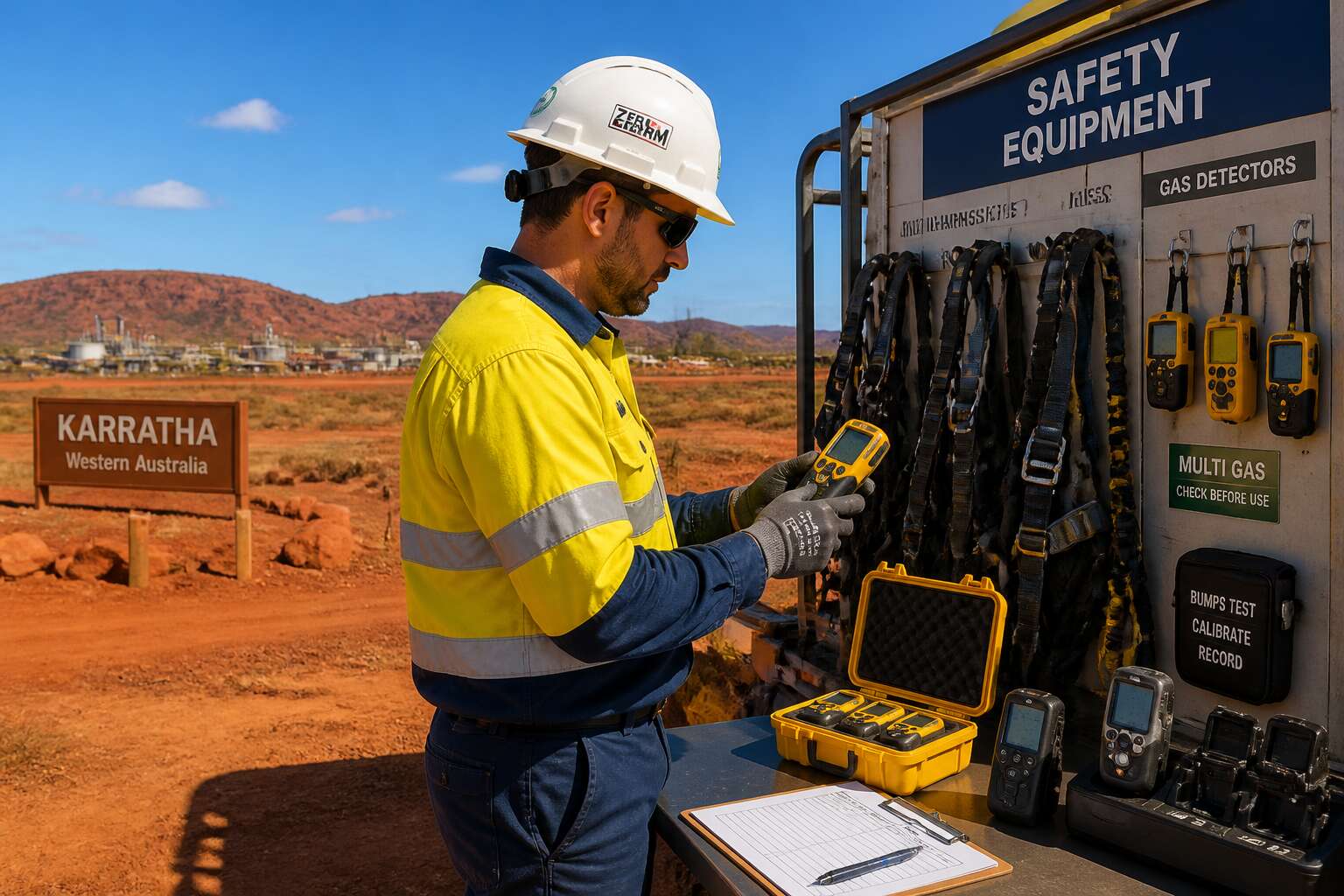
Understanding Karratha’s Industrial Environment
Key Industries and Operational Risks
In the remote, sun-scorched expanse of Western Australia’s Pilbara region, Karratha functions as a nerve center for heavy industry. With a population swelled by fly-in, fly-out workers, the city’s rhythm is dictated by the export of iron ore and liquefied natural gas. This creates an economy where innovation is measured against the unforgiving reality of operational risk, and where downtime is not an option. The sheer scale of machinery and the proximity of human hands to moving steel set a baseline of danger that is rarely seen outside of mining jurisdiction.
The operational risks here are not solely mechanical. Heat stress is a persistent concern, as is the isolation from tertiary medical facilities. When you consider the combination of volatile hydrocarbons, massive earthmoving equipment, and corrosive marine environments, the margin for error becomes incredibly thin. This is precisely why the procurement of precise, high-grade safety equipment Karratta operations depend on is not a matter of compliance, but a core component of survival.
Beyond the initial hazards, the logistical matrix of the region introduces its own complexities:
– The tyranny of distance slows down the supply of replacement parts.
– Rotational workforces create challenges in consistent, high-level training.
– Cyclone seasons can disrupt supply chains and necessitate emergency preparedness.
– Cultural diversity on site demands clear, multilingual safety communication.
These factors mean that a robust safety strategy must account for the physical environment and the delicate interplay of human factors under duress. The equipment worn by a technician in Karratha must therefore be more durable, more reliable, and more comfortable than standard issue, ensuring that the final layer of defense remains intact when the temperature soars and the pressure mounts.
Climate and Environmental Challenges for Safety Gear
The Pilbara sun does not negotiate; it pounds! For anyone relying on safety equipment Karratha workers wear daily, heat is the first obstacle. It dictates fabric breathability and seal durability. Gear designed for milder climates stiffens within weeks, losing elasticity and protection.
Salt air from the Indian Ocean ruins zippers and buckles. Fine red dust clogs ventilation ports and scratches visors. Cyclone humidity creates condensation inside sealed containers and harnesses. These conditions are normal.
That reality forces a different approach to procurement. For example:
- UV degradation shortens the life of plastic components.
- Salt spray corrodes reflective strips.
- Abrasive dust wears down friction points.
Buying safety equipment Karratha operations need means choosing products engineered for this harsh reality.
Common Workplace Injury Profiles in the Pilbara
Shift rosters run long. Isolation is constant. In Karratha’s industrial zones, workers operate crushers, haul trucks, and overhead cranes within arm’s reach of each other. Fatigue and monotony lead to lapses. When a lapse happens, the body pays first.
Statistics from Pilbara resource sites show that soft tissue damage accounts for over half of all recorded incidents. Sprains, torn rotator cuffs, and lower back trauma dominate the injury register. Crush wounds and fractures from falls make up the rest. I have watched crews tape their wrists before a shift, knowing where the day will hurt.
- Hand and finger entrapment during maintenance
- Struck-by incidents with swinging loads
- Slips on oily walkways
- Repetitive strain from vibrating tools
These injuries all move through the same chain: hazard, contact, damage. The safety equipment Karratha operators depend on breaks that chain before it completes. Gloves that resist abrasion, boots with steel toes, and harnesses with proper load ratings perform one job. They do not prevent the hazard. They reduce the consequence.
Why Site-Specific Risk Assessments Matter
Karratha’s industrial environment defies generalisation. The ore body changes, so do the machines and the people who operate them. What works at one site can fail catastrophically at another. This is why site-specific risk assessments form the backbone of every safety decision.
I have walked through plants where the hazard map on the wall bore no resemblance to the floor. The assessment must be born from that floor, not from a template. It must account for the specific angles, the particular pressures, the exact spacing of equipment.
- Where hands reach into moving parts
- How loads swing during rigging
- When visibility drops around blind corners
Each data point tells you which items of safety equipment karratha workers truly need. Without that information, protective gear is only guesswork dressed in high visibility.
Essential Personal Protective Equipment for Local Workforces
Head, Eye, and Respiratory Protection
In the Pilbara’s relentless glare, your eyes and lungs face a daily assault. I’ve seen too many workers dismiss gritty dust as harmless, until it isn’t. Proper safety equipment karratha demands more than a hard hat on a hook.
For head protection, the helmet is non-negotiable. It guards against falling tools and low beams. But the fit matters. A loose shell shifts, reducing its impact absorption.
Eye and respiratory gear work together. Safety glasses with side shields block windblown particles. For hazardous dust and fumes, respirators are essential. Options vary by exposure:
- Disposable masks for nuisance dust
- Half-face respirators with replaceable cartridges
- Full-face models for high contaminant levels
Each choice hinges on the task. I’ve seen workers avoid respirators because they feel heavy, yet the alternative is a burning chest on the drive home.
Hand, Foot, and Fall-Protection Solutions
Your hands are your livelihood, yet I’ve watched workers strip off gloves to gain dexterity, then pay for it with cuts and punctures. Heavy-duty gloves with cut resistant layers address that risk. For feet, steel capped boots shield against dropped loads and sharp debris. However, the most unforgiving failure happens at height.
Fall protection demands a system, not a single item. The components include:
- Full body harnesses that distribute force across the pelvis and shoulders
- Lanyards with shock absorbers for short falls
- Self retracting lifelines for vertical mobility
Each element of safety equipment karratha needs meticulous inspection, because a frayed strap can undo a week of caution. I’ve seen a man trust a weathered buckle without a second glance, and that neglect haunts me. Every stitch, every clip, every anchor point can betray a moment of inattention. This is not bureaucracy; it is survival.
Specialised Equipment for Marine and Mining Sites
A missing radio beacon turned a routine repair into a search. That is why local workforces cannot rely on generic kits. For marine sites, immersion suits and personal locator beacons are lifelines, not accessories. Mining operations demand flame resistant overalls and proximity detection systems that stop vehicles before they reach a worker. Safety equipment karratha must match the exact hazard profile of each shift.
I have stood on a jetty where the only thing between a crew and hypothermia was a sealed dry suit. Specialised gear changes outcomes. The essentials for remote workforces include:
- High visibility clothing with reflective trim for dusty nights
- Insulated dielectric boots for electrical exposure
- Emergency oxygen units for confined spaces
Check every zipper, strap, and seal. A corroded clasp can fail when the sea throws its worst.
Selecting Materials for Heat and Dust Resistance
Temperatures here can climb past 45 degrees before a dust storm flips the sky to brown. Fabric choices matter more than logos. For safety equipment karratha, material selection drives how a garment stands up to heat and airborne grit. Breathable cotton is comfortable but absorbs moisture and becomes heavy. Nylon resists tearing, but it can trap heat. The smartest local workforces choose hybrids and layered systems.
Consider these traits when choosing gear:
- moisture wicking that does not collapse in humidity
- closed-cell weaves that block dust without losing airflow
- taped seams that survive constant abrasion
A rough patch of crushed ore can shred a sleeve in one shift. I learned that watching a spark jump from a frayed cuff. The right fabric prevents that, and the wrong one fails quietly. That is why safety equipment karratha needs to be tested here, under this sun, with this dust.
Compliance Standards and Safety Regulations in Western Australia
Understanding WHS Legislation and Duties
The Work Health and Safety Act 2020 obliges every WA employer to eliminate risks so far as reasonably practicable. It demands an inventory of hazards and a plan of action. This is where the procurement of safety equipment karratha must be justified by evidence, not habit.
A misstep is treating compliance as a checklist. Inspectors see through that quickly. The hierarchy of controls requires elimination first, then substitution, engineering controls, administrative measures and finally personal protective equipment.
- Identify the hazard before selecting gear.
- Document the assessment and your reasons.
- Train workers in correct use and care.
- Review the selection annually or after incidents.
Officers owe a separate duty of due diligence. They must verify safety systems function as intended. When disputes arise, the regulator examines records, training logs and maintenance schedules. A robust defence rests on showing that safety equipment karratha sites were supplied, inspected and used per the law.
AS/NZS Standards for Protective Equipment
Western Australia’s enforcement regime pulls AS/NZS standards directly into legal obligations. A hard hat that lacks the AS/NZS 1801 marking is a direct contravention, one an inspector can cite on the spot. This is where procurement of safety equipment karratha stops resembling a simple shopping decision.
Standards for protective equipment cover far more than impact resistance.
- They specify test methods and pass/fail criteria.
- They set labelling and traceability requirements.
- They define maintenance and disposal intervals.
When a regulator audits your site, the physical product matters as much as the paperwork behind it. I have seen audits stall over grey-market gear that carried no compliance mark. Every item of safety equipment karratha needs a verifiable audit trail back to its original certification.
That attention to detail separates a defensible program from a decorative one.
Site Audits, Certification, and Record-Keeping
An auditor can end a site visit in thirty seconds. One hard hat with a missing compliance mark, and the entire safety program falls under suspicion. The paperwork behind that hat matters as much as the shell.
Every item of safety equipment karratha must carry a verifiable trail. Certification documents, test reports, and maintenance logs need to line up with the physical gear found on site. Auditors focus on these elements:
– Certification marks that match the AS/NZS standard
– Test certificates tied to the specific batch number
– Maintenance records showing inspection intervals
– Disposal logs for outdated or damaged equipment
Record keeping begins before the gear arrives. If the product and paper trail diverge, the audit stalls. A site with aligned records stands defensible. A site with gaps starts from zero.
Managing Equipment Inspection and Replacement Schedules
Western Australia’s safety regulations are exacting once safety equipment karratha leaves the warehouse. The WHS Act 2020 puts the burden on the person conducting a business or undertaking to verify each item stays fit for duty. Practical inspection schedules determine whether compliance survives the punishing Pilbara environment.
Hard hats degrade through UV exposure, heat, and chemical contact. Harnesses accumulate micro-tears invisible until they fail. A manufacturer’s expiry date marks only the final boundary. Storage conditions in Karratha accelerate ageing, so gear kept in a ute tray under direct sun demands replacement far sooner than identical units stored indoors.
Inspection triggers include:
- Any impact or drop from height
- Chemical or fuel exposure
- Six-month intervals for fall-arrest equipment
When a harness fails inspection, it gets cut and discarded. That is the standard, no exceptions!
Sourcing and Maintaining Safety Supplies in Karratha
Choosing Local Suppliers vs. Online Procurement
Local supply shops in Karratha know your name, your site, and your failures. Online procurement, meanwhile, offers tempting prices and a frictionless checkout. The challenge is that safety equipment needs to arrive intact, certified, and on time. A delayed filter from Perth can shut down a whole rotation.
- Lead times for replacement filters and harnesses.
- After sales service for compliance checks and reissues.
- Bulk discounts versus freight charges.
Sourcing and maintaining safety equipment karratha calls for weighing these trade-offs. Local suppliers repair and recalibrate gear on site. Online platforms reduce the transaction to a parcel drop. A hybrid model often works, but only if you manage shelf life and batch records yourself.
Stock Management for Remote and FIFO Operations
Stock management for FIFO rotations is where safety equipment karratha operations often stumble. A crew change brings new workers, new expectations, and fresh eyes on old inventory. If the register doesn’t match the shelf, the site loses trust and momentum.
Remote sites that source safety equipment karratha need a live system tracking every item from arrival to disposal. Batch numbers, manufacture dates, and inspection intervals belong in one place. Heat and dust accelerate wear, so gear stored in a hot container degrades faster than the date suggests. A visual check alone won’t catch micro-fractures in a harness or a filter that’s absorbed moisture.
A weekly cycle keeps the system honest:
Check expiry dates on every item in storage.
Confirm batch records match what’s physically in hand.
Move damaged or expired gear into a quarantine bin immediately.
That routine keeps the next rotation ready from day one.
Cleaning, Storage, and Lifespan of PPE
Heat, dust, and saltwater can cut a harness’s service life in half before the date on the tag expires. For safety equipment karratha operations, degradation starts the moment gear comes out of the box. Salt from coastal work crystallises in webbing fibres, while dust acts as an abrasive on lanyard connectors.
Storage matters just as much. Gear left in direct sunlight suffers UV degradation, weakening polymers faster than regular use. A cool, shaded rack with airflow prevents mildew. Each worker should have their own marked locker, so equipment is not shared or misplaced between rotations.
- Wash harnesses with mild soap and fresh water, never solvents.
- Dry items slowly away from heat sources.
- Inspect for stiffness, discolouration, or worn stitching after every clean.
Replacement should happen when inspection reveals doubt, not when the calendar says so. For safety equipment karratha operations, consistent cleaning and correct storage extend the life of gear and protect the people who wear it.
Bulk Ordering Strategies and Lead-Time Planning
Bulk ordering of safety equipment karratha depends on accurate usage data and practical storage limits. Quarterly orders reduce freight costs and invoice processing time. They also require confidence in demand forecasts. Overstocking ties up capital; understocking leaves crews exposed. A consumption log per site sharpens predictions.
When sourcing safety equipment karratha, lead times matter more than the supplier’s quoted dispatch date. Freight from Perth to Karratha can take a week, and port congestion or wet season closures add days. Imported items include customs clearance time. We add 20% to the estimated lead time.
- Usage data from the last two quarters.
- Adjustments for planned shutdowns or new projects.
- Order consolidation before peak season begins.
This sequence keeps the supply chain resilient while preventing expired gear from piling up in storage.
Ensuring Fit, Comfort, and Worker Buy-In
Most workers do not refuse PPE because they are careless. They refuse because it does not fit. Workers in Karratha who cannot move freely in gloves, or whose glasses fog up, will find workarounds. The best safety equipment karratha can offer is worthless if it sits in the crib room.
Comfort drives compliance more than any training module. A harness that bites into shoulders gets loosened. A dust mask that seals poorly gets pulled down between inspections. We treat comfort surveys with the same weight as inspection checklists.
- Run fitting sessions during onboarding.
- Let workers test gear across a full shift.
- Log discomfort reports as safety observations.
Buy-in is not a motivational problem. It is a design problem. When we adjust the sizing, padding, or ventilation of safety equipment karratha sites rely on, we see fewer ad hoc modifications. The quiet measure is daily wear, not audit counts.
Building a Proactive Safety Culture in Remote Teams
Induction and Ongoing Training Approaches
Remote induction cannot rely on a slide deck. New workers need to see, touch, and test the exact safety equipment karratha sites provide, long before they step onto the dusty floor. A buddy system, paired with documented competency checks, turns abstract policy into muscle memory.
Ongoing training should follow the same practical rhythm. Short, frequent toolbox talks outperform annual refreshers, especially when they address real incidents that occurred in the past fortnight. To keep this effective, rotate the format:
– simulate a equipment failure scenario
– review near miss reports from the previous shift
– have workers demonstrate donning and doffing procedures
– discuss why a specific item was replaced early
Each session closes by confirming that the safety equipment karratha available matches the task at hand. This embeds accountability, not just compliance, into the daily flow.
Encouraging Reporting and Hazard Identification
Silence on a remote site rarely means peace. It often means someone noticed a torn strap and chose to wait. That wait becomes a near miss. Building a proactive safety culture removes the penalty for speaking up. Workers need to see hazard reports trigger action, not blame.
Encourage reporting at every shift handover. Reward specific observations. When a worker flags damaged equipment, respond within the hour! This shows the safety equipment karratha teams use is monitored, not ignored.
To sharpen hazard identification, watch for:
- Unexpected heat or dust buildup
- Unusual wear on straps or seals
- Changes in equipment handling
Each trigger is a chance to correct before failure.
Incident Response and Emergency Preparedness
When an emergency hits, hesitation costs time. Teams that rehearse responses move faster than those who rely on memory alone. A proactive safety culture places the safety equipment karratha workers need within arm’s reach and ensures every person can use it under stress. Remote sites also need a clear chain of command for incidents. The first responder stabilises, the second calls for help, and the third checks for secondary hazards.
Rehearse these steps every week:
– Assign roles before any work begins
– Test communication devices at shift change
– Verify emergency exits and assembly points
Incident response improves when people practise without warning. Emergency preparedness becomes part of daily life when each inspection feeds into the next. Trust grows because the system works.
Leveraging Technology and Wearables
The gap between a safe crew and a lucky one shows up when the routine changes. Wearable devices now track heart rate, skin temperature, and movement in real time, alerting before heat stress or fatigue becomes visible. I have seen supervisors catch a problem on a dashboard before the worker felt it.
This shifts safety from a reaction to a live process. Smart helmets detect impacts, and lone-worker monitors trigger a response when someone stops moving.
A wearable safety layer typically includes:
- Biometric sensors for heart rate and body temperature
- Proximity alerts for vehicle and plant interactions
- Fatigue detection using blink rate or head position
- GPS tracking for remote workers
The safety equipment karratha teams choose must integrate with these systems. Devices only work when the surrounding gear supports them. A worker wearing gloves that lack cut resistance is still exposed. The culture improves when technology confirms what the equipment already promises.
Continuous Improvement Through Safety Committees
Building a proactive safety culture in remote teams starts with the daily rhythm of observation. When workers trust that every near miss carries weight, reporting becomes a habit. The safety equipment karratha operators rely on must be part of that conversation, not an afterthought. I have seen silence on a site mean the same thing as a hazard.
Safety committees drive continuous improvement by turning individual experience into shared knowledge. A worker who spots a frayed harness or a cracked visor gives the whole crew a reason to pause. The committee reviews those reports, then acts:
– Schedule targeted toolbox talks for recurring issues
– Assign ownership for corrective actions
– Review incident trends before they become patterns
The committee must have authority to change procedures. Without that power, meetings become formalities. With it, remote teams build a system that improves on its own terms.
Case Studies and Lessons from Pilbara Sites
One Pilbara site discovered that safety equipment karratha crews used during pre-start checks absorbed morning humidity and stayed damp for hours, even in summer. The webbing degraded from the inside. After switching to sealed storage lockers, harness failure reports dropped by a third within months.
A nearby mine learned a different lesson. Workers avoided respirators because fine red dust clogged the exhalation valves. The site introduced a midday rinse station and fitted valve covers, turning noncompliance into a practical fix.
Observations that surfaced across multiple sites:
- Equipment failures cluster around shift changes and extreme temperature swings
- Workers modify gear in ways that void certification if nobody listens
- Manufacturer estimates rarely account for Pilbara dust loads
I have seen this pattern repeat. A proactive safety culture only holds when the gear itself earns daily trust.


0 Comments