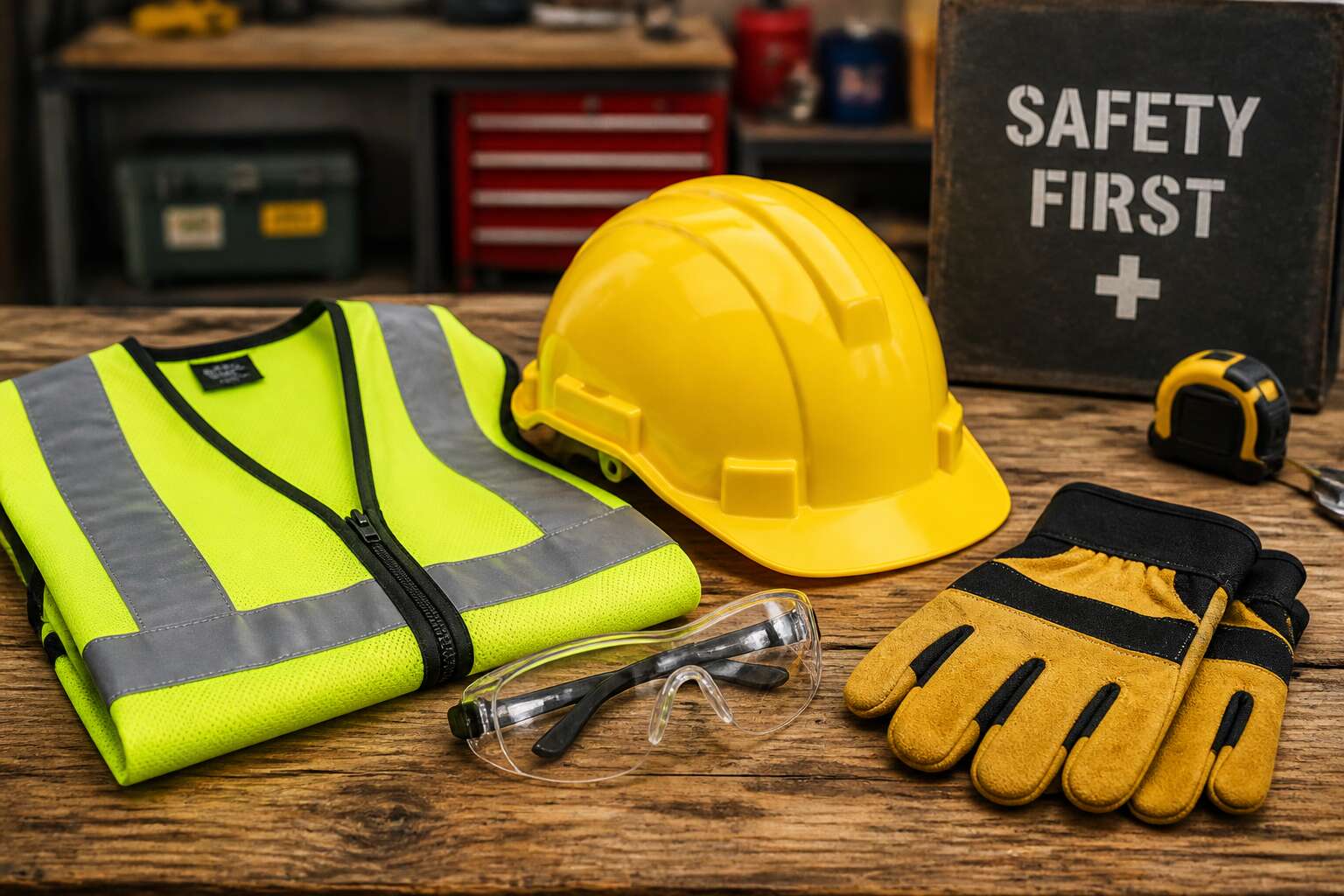
Head-to-Toe Protection: Selecting the Right Gear
Head Protection and Impact Mitigation
A single kilogram of steel falling from two storeys delivers nearly 500 joules of kinetic energy. That force can crush a standard polycarbonate shell, yet many South African workers trust helmets past their service life. Selecting proper safety equipment for head protection and impact mitigation begins with understanding your workspace’s physics, not merely a sticker.
The outer shell is half the story. Internal suspension webbing, when adjusted, distributes a blow’s force across the cranium. Without tension, impact becomes concentrated, transmitting energy to the cervical spine. Modern helmets use thermoplastics that deform, absorbing shock before bone.
When auditing protective inventory, these impact scenarios demand ratings:
- Vertical drops from overhead tools
- Lateral strikes from swinging loads
- Penetration from sharp objects
Each hazard changes your gear’s performance. A helmet for vertical impacts may fail on a glancing blow. Gear must match your environment’s movement patterns.
Eye and Face Shields for Visual Hazards
An arc flash emits ultraviolet radiation that can burn the retina in milliseconds, yet many workers rely on tinted glasses meant for sunlight! Eye protection demands a deliberate look at the task’s specific debris, splash, or radiation profile. Your safety equipment must match the actual energy source.
Consider a grinding wheel throwing sparks versus a chemical line spraying caustic fluid. Each requires a distinct barrier in your safety equipment. A polycarbonate visor stops large impacts but offers no seal against fumes. Goggles provide that seal but reduce peripheral vision. For welding, the shade number matters more than lens colour.
Common visual hazards to address:
- Flying particles from chipping or grinding
- Molten metal splashes or hot liquid
- Invisible optical radiation from welding arcs
Selecting a shield without checking its conformity to SANS standards is guesswork! The face shield’s brow and chin guard must extend beyond the shell’s rim to catch deflected particles.
Respiratory Protection Against Airborne Contaminants
Breathing is involuntary, but your respiratory defense should be deliberate. In South Africa’s industrial corridors, the air carries a mixture of fines, mists, and vapours that bypass every other layer of your safety equipment. The right respirator demands a precise fit test and an airtight seal.
- Crystalline silica from stone cutting.
- Isocyanate vapours from spray application.
- Manganese fumes from arc welding.
I have watched workers pair a dust mask with a spray gun, a fatal mismatch. A disposable mask filters particulates, yet offers zero protection against solvent gases. A cartridge rated for acid gas fails against oil mists. Match the contaminant to the exact cartridge and the exposure level to the assigned protection factor. The correct safety equipment turns exposure limits into measured, defensible outcomes.
Hand and Arm Protection for Cuts and Burns
Hands take the brunt of every task. In South African workshops, gloves are often the last thought and the first thing to fail. A wrong glove is worse than no glove.
Cuts come from glass, sheet metal, and sharp edges. Burns come from welding sparks, hot surfaces, and chemical splashes. Standard cotton gloves handle neither. You need a rated solution for the exposure. A cut-resistant liner and an outer shell matched to the job.
For each task, safety equipment must differ:
- Cutting rebar or handling steel: use leather gloves with reinforced palms.
- Welding or grinding: use gauntlet gloves with heat resistance.
- Handling chemicals or solvents: use nitrile-coated gloves with good grip.
I have seen workers strip off torn gloves to get more grip. That leads directly to a lost-time injury. Check the glove’s abrasion and cut rating before you buy. The right gear keeps a steady hand and unchanged skin.
Foot Protection and Slip Resistance
Slips and falls cause many lost workdays in South African industry, yet workers wear cracked boots or smooth-soled shoes. The workshop floor is rarely clean or dry. Oil, water, metal shavings, and dust demand specific traction.
Foot protection involves more than a steel toe cap. The outsole compound determines grip on wet concrete or greasy steel plate, and this element of safety equipment is often overlooked. A chevron tread channels liquids away; a flat rubber sole does not. Outdoor sites need deep lugs for mud and gravel.
- Welding: heat-resistant soles that resist sparks
- Chemical zones: solvent and acid resistant boots
- General workshop: oil-resistant rubber with rated slip resistance
I have watched workers take careful steps across oily floors. Selecting the right safety equipment means matching the boot to the actual surface underfoot. A heavy load demands a stable base, and the wrong sole turns a simple walk into a hazard.
High-Visibility and Full-Body Coverage
Moving up from the boots, the rest of the body deserves equal attention. High-visibility clothing and full-body coverage are the final layers of safety equipment. In South Africa, many workers operate near moving vehicles. A hi-vis vest can mean the difference between a near miss and a fatal accident.
Yet visibility is not the only function. Full-body coverage also includes flame-resistant coveralls for welding, or durable overalls for chemical handling. The fabric must breathe in the heat, but resist tears and splashes. Consider what you face each shift. A roadworker needs bright colours, while a foundry worker might require aluminised clothing.
- Class 2 hi-vis shirts for moderate traffic
- Class 3 reflective jackets for high speed zones
- Full-length coveralls with zippered closures
I have seen crews ignore the very safety equipment that would shield them. The right garment is not a luxury. It is a statement that you value your own life!
Industry-Specific Compliance and Equipment Needs
Construction and Fall Arrest Systems
Falls from height remain the leading cause of construction fatalities in South Africa. Compliance with SANS 504 is non-negotiable, yet many sites still rely on inadequate equipment. A proper fall arrest system requires more than a harness. It demands engineered anchor points, correct lanyard length, and regular inspection.
- Full body harnesses with proper fit
- Energy absorbing lanyards
- Approved connectors and anchors
Each component must meet certification standards. Trust me, this matters. The reality is that compliance goes beyond ticking boxes. It shapes how workers trust their tools. In construction, the difference between a safe site and a deadly one often comes down to the quality and condition of your safety equipment.
Chemical Handling and Hazmat Suits
In South African chemical sectors, the difference between a safe shift and a tragic one often rests on a single seam. Hazmat suits are not ordinary garments; they are engineered barriers against invisible threats. Permeation rates, breakthrough times, and degradation resistance determine their true worth. I have seen workers trust a suit purely because it looked new, only to discover that the wrong material caused rapid failure.
Proper chemical handling demands more than wearing the suit. It requires matching the fabric to the exact substance, checking seals, and understanding exposure limits. This individual safety equipment must be maintained with obsessive care.
Evaluate these elements before each use:
- Material compatibility with the specific chemical
- Seam integrity and closure condition
- Supplier certification and test data
In the end, reliable safety equipment emerges from knowledge, not guesswork. Choose wisely, because your life depends on that choice.
Electrical Work and Arc Flash Protection
An arc flash can reach 19,000 degrees Celsius, hotter than the sun’s surface. In South African electrical work, that heat turns error into catastrophe.
Electrical work requires a different category of safety equipment. Arc-rated clothing, face shields, and insulated tools must meet SANS standards, yet owning them is not enough. Incident energy analysis, switchgear labelling, and test certificates determine real protection.
- Verify the arc rating against calculated incident energy
- Inspect for thermal damage or moisture
- Confirm valid test certification
Without these checks, the strongest suit becomes a false promise. Buy certified safety equipment, but only trust it as far as your maintenance records vouch.
Healthcare and Biological Exposure Control
A single needle stick can change a career. In South African healthcare, biological exposure is a daily risk that demands safety equipment engineered for fluid resistance, not blunt force. Medical-grade gloves, gowns, and face shields must meet SANS standards, yet the human element complicates everything: fatigue, haste, misplaced confidence in a worn cuff.
Compliance requires verification. Staff check certifications, expiry dates, and storage conditions. Every facility should manage a clear inventory:
- Gloves with documented tear and puncture resistance
- Aprons with fluid barrier certification
- Filtering respirators for airborne pathogens
The presence of these items is meaningless if a worker hesitates to swap out a damaged glove. Protection lives in the daily decision to trust the kit and replace it without shame.
Firefighting and Heat-Resistant Apparel
A flashover rises from 100 to 600 degrees Celsius in under ten seconds. For South African firefighters, that window determines whether heat-resistant apparel performs as designed. Turnout gear must satisfy SANS 1129 for proximity suits, yet the real measure is how the layers behave after repeated thermal exposure.
Thermal degradation is silent. A coat that looks intact may have lost its moisture barrier. Heat-resistant apparel depends on a layered system:
- Outer shells of meta-aramid blends
- Moisture barriers that block steam and chemicals
- Thermal liners that trap air without compressing
Each component of this safety equipment carries a wear limit, not a lifetime guarantee. Crews in Gauteng and the Cape should track thermal exposure history, not just purchase dates. The full safety equipment system only protects when teams trust the rotation and replace gear without hesitation.
Understanding Safety Standards and Certifications
OSHA Requirements and Employer Responsibilities
When you buy safety equipment in South Africa, the label tells only part of the story. The real question is whether that label holds weight under the Occupational Health and Safety Act. Certifications like SABS marking or CE conformity verify that a product meets specific performance criteria. Without these, a hard hat or harness is just plastic and webbing.
OSHA requirements often serve as a benchmark for global best practice, even where local regulations differ. South African employers must perform risk assessments, document compliance, and ensure all protective gear is certified and maintained. The legal duty does not end at purchase.
- Verify certification marks on every item
- Train workers on correct usage
- Replace damaged or expired safety equipment
Employer responsibility includes keeping records and responding to changing site conditions. The cost of non-compliance exceeds any fine. Safety equipment that fails inspection can end a career or a life.
ANSI and ISO Performance Criteria
ANSI standards and ISO performance criteria settle the question of whether safety equipment actually does its job. ANSI tests specific product categories against American benchmarks. ISO applies a broader, systems-based framework recognized across international borders. Both influence procurement decisions in South African industry.
The paperwork behind a certification label reveals key details:
- The standard applied and its specific edition
- The performance thresholds verified under laboratory conditions
- The certification date and period of validity
An ANSI-rated helmet demonstrates impact resistance at defined energy levels. An ISO-compliant harness follows global design specifications. These details carry legal weight under the Occupational Health and Safety Act.
Certification captures a single moment in a product’s lifecycle. Field conditions shift. Storage ages materials. A standard stays fixed.
CE Marking and International Regulations
A CE mark is a small glyph with enormous legal consequence. For South African buyers, this mark signals that safety equipment meets European Union directives. It is not a quality badge; it confirms compliance with specific health and safety requirements. The mark applies across machinery, personal protective equipment, and electrical goods.
Each product category follows its own directive. The PPECR governs most protective gear. Importers must verify the declaration of conformity and, where required, the notified body number. I find that many procurement teams mistake CE marking for a universal standard. In truth, the mark is a customs and trade mechanism. It grants access to the European market. Other international regulations, such as the UKCA mark, demand separate assessments. The GOST certificate holds sway in Eurasian territories. Understanding these distinctions helps South African companies avoid costly delays when importing safety equipment.
Material Testing and Quality Assurance
A certificate is only as reliable as the laboratory behind it. Material testing closes the gap between paperwork and real-world performance for safety equipment that claims to resist heat, impact, or chemical exposure. Fabrics are pulled apart to measure tensile strength. Coatings are scraped and exposed to ultraviolet light. I have seen certificates that looked flawless and products that failed within a week.
Quality assurance extends beyond the sample unit. Reputable manufacturers submit batches for third-party verification in addition to their own internal checks. They keep records linking raw materials to finished goods. That chain of custody matters because a single compromised batch of safety equipment can put dozens of workers at risk.
A trustworthy programme includes three elements:
- Batch sampling to verify consistency across production runs
- Independent laboratory testing for unbiased results
- Full traceability from raw material to finished product
Maintenance, Inspection, and Lifespan of Protective Equipment
Daily Visual Checks and Cleaning Protocols
A hard hat that looks fine can crack without warning. In South Africa’s harsh UV conditions, polycarbonate shells degrade faster than many workers realise. That is why daily visual checks matter more than any certification sticker.
Inspect for cracks, discolouration, or worn suspension systems. Check straps for fraying and buckles for corrosion. Clean with mild soap and warm water, never solvents that weaken the material.
- Check shell for cracks or chalky texture
- Inspect suspension for stretched or broken components
- Wipe down with a damp cloth after every shift
Cleaning protocols vary by equipment type, but the rule stays constant: harsh chemicals destroy protective coatings. A respirator cleaned with alcohol loses its seal. Gloves washed in industrial degreaser become porous. Compromised safety equipment fails without warning.
Storage and Environmental Factors
Storage is where safety equipment goes to live or die. South Africa’s climate does not forgive neglect. A harness left in a bakkie’s load bin through a Mpumalanga summer will fail differently than one stored properly. Heat softens plastics, cold makes them brittle, and humidity corrodes metal components from the inside out.
Environmental factors shape lifespan more than most safety officers admit:
- Coastal salt air corrodes buckles and zips
- Highveld altitude intensifies UV radiation
- Mine dust abrades surfaces invisibly
- Chemical vapours weaken polymers over time
The answer is disciplined storage. Keep safety equipment cool, dry, dark, and off the ground. Rotate stock so nothing sits unused for years. Check manufacturer expiry dates, not just visual condition. The safest safety equipment is the equipment that was stored correctly from day one.
When to Replace Expired Equipment
A safety harness that expired last Tuesday is not a vintage collectible. Maintenance keeps safety equipment functional, but inspection decides its fate. Every month, I check for frayed webbing, cracked shells, and corrosion. The lifespan of protective equipment depends on use, not calendar alone. Yet expiry dates exist for a reason. Once a manufacturer’s date passes, replacement is non-negotiable.
These conditions demand immediate retirement:
- Discolouration from UV exposure
- Stiff or brittle materials
- Broken stitches or deformed hardware
Inspection records matter. If you cannot prove a unit was maintained, treat it as expired. South African conditions accelerate wear, so trust your senses. Smell for chemical damage. Listen for rattling parts. When doubt appears, replace the unit.
Documentation and Training for Proper Use
The lifespan of protective equipment is only as trustworthy as the record of its care. In my years inspecting South African sites, I have watched a two-month-old harness get retired because its log showed no monthly check. The material was fine. The proof was not.
Training changes how people treat documentation. An operator who understands why moisture accelerates webbing fatigue will record drying times without being told. A worker who sees inspection as punishment will skip steps. The difference is education, not attitude.
- Document every inspection, including the inspector’s name.
- Train each user on the specific hazards of their environment.
Proper use of safety equipment relies on this cycle. Records validate the equipment. Training validates the user. Both are non-negotiable for a programme that actually protects.
Emerging Trends and Smart Safety Equipment
Wearable Sensors for Hazard Detection
In South Africa’s deep-level mines, a single heat stroke can shut down a shift. I’ve watched wearable sensors transform that risk. These devices, worn on the body or embedded in clothing, monitor physiological markers like heart rate and skin temperature in real time. This is the new frontier of safety equipment.
Consider what a modern sensor array can detect:
- Ambient gas concentrations, such as methane or carbon monoxide
- Sudden changes in ambient temperature or humidity
- Worker proximity to moving machinery or unstable ground
The data streams to a central dashboard, where algorithms flag dangerous patterns before a worker feels symptoms. For rural and industrial sites alike, this smart safety equipment adds continuous vigilance that was impossible a decade ago. Traditional controls remain essential, but these sensors extend our awareness.
Augmented Reality Headsets for Situational Awareness
In the gold mines of the Witwatersrand, augmented reality headsets are changing how workers see danger. I have watched these devices project hazard zones, equipment status, and escape routes directly onto the field of view. This represents a significant upgrade in safety equipment for high risk environments.
The headsets merge the physical workspace with digital data streams. A miner can identify a gas accumulation before entering a drift, or spot a vehicle approaching from a blind corner. The value grows in low light, dusty, or unfamiliar conditions.
- Live structural integrity alerts for support beams
- Overlay of moving machinery proximity zones
- Real time communication of evacuation waypoints
Workers maintain eye contact with their environment while absorbing critical information. That is the practical advantage!
Impact-Resistant Materials and Nanotechnology
Across South African factories, the newest safety equipment no longer waits for an impact to prove its worth. Nanotechnology embeds resilience directly into the weave of a fabric. These materials heal small tears or stiffen on collision. I have seen graphene layers applied to work gloves, making them lighter than cotton and stronger than steel. The shift is quiet but profound.
Impact-resistant materials now do more than absorb force. They communicate. Embedded sensors track strain cycles and send warnings before failure. Consider what this means for everyday operations:
- Thermal regulation adjusts to shifting weather
- Stress points in boots or harnesses flag themselves
- Repair becomes targeted instead of wholesale
That is the emerging trend worth watching in South Africa.
Sustainability and Eco-Friendly Gear
In South Africa, the hardest question we face is whether protection can also heal the land it comes from. I have seen safety equipment that biodegrades without surrendering strength, and it changes what we expect. Smart gear now tracks its own lifecycle, from harvest to disposal.
Consider the shift:
- Recycled polymers in hard hats that still pass drop tests
- Organic fibres in harnesses that resist rot without chemical treatments
- Self-monitoring vests that report when they are unfit
This is not a compromise. It is a deeper understanding of durability. The equipment we choose either burdens the next generation or frees them.


0 Comments