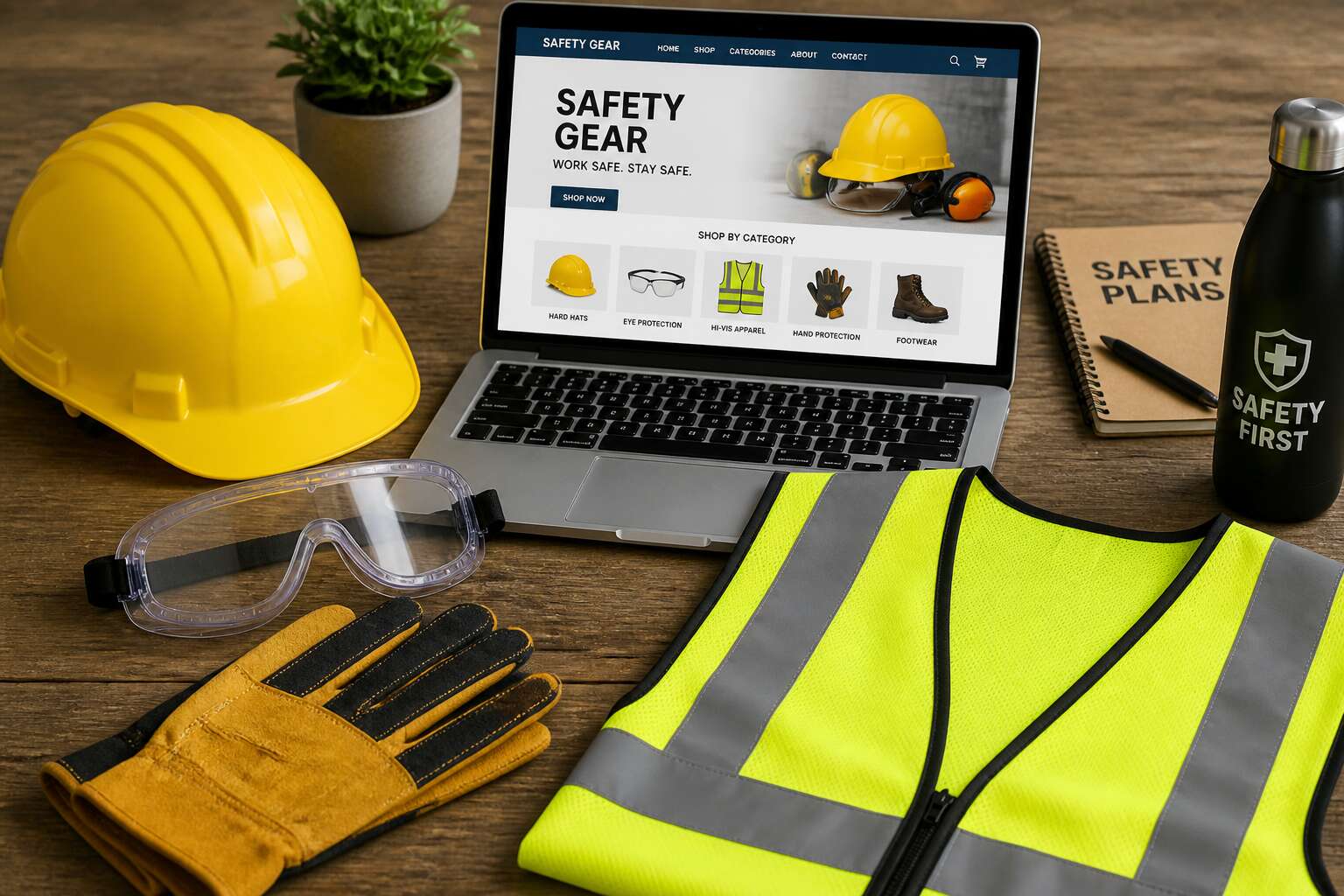
Critical Features of a Top-Quality Safety Equipment Site
Product Range and Specifications
In South Africa’s industrial landscape, the distance between a working day and a permanent injury is often measured in milliseconds. A top-tier safety equipment website must display precise load ratings, material thickness, and the specific SANS or EN standards each item meets. A vague description is a red flag.
Our product range must cover the whole work environment, from head protection to steel-toe footwear. Look for these critical features:
- Traceable batch numbers and inspection certificates.
- Clear differentiation between industrial-grade and light-use items.
- Accurate sizing guides tailored to local ergonomics.
Without these details, any safety equipment website is just a shop. With them, it becomes a vital partner in daily risk management. I would rather spend ten minutes verifying a harness specification than risk a life on a guess.
Certifications and Quality Assurance
A certificate carries weight only when it can be verified. It is a chain of custody, a paper trail from a batch of steel to a specific melting furnace, from a spool of webbing to a particular loom. When I evaluate a safety equipment website, I look for the provenance of its claims, not the volume of its warranties. Third party audits, unannounced factory inspections, and test reports with visible signatures carry more weight than a hundred marketing slogans.
The psychology of assurance is subtle. We want to believe the harness will hold, so we accept the logo. But the real measure of a supplier is how they handle the inconvenient details:
- Do they publish the date of the last recertification?
- Can they trace a faulty batch to its origin within minutes?
- Are their certificates issued by accredited bodies like SANAS?
These are the quiet indicators of a serious operation. A safety equipment website that hides these details asks for faith; one that welcomes scrutiny earns it.
User Experience and Search Functionality
Each safety equipment website I have used fails at the simple act of finding things. Users need to compare sizes, compliance standards, and local stock levels in seconds, not minutes. A slow interface or vague category names create needless uncertainty. That is why search fields must accept part numbers, common trade names, and even localized terms like “gumboots” or “hard hat.”
The best platforms let you narrow results by:
- Safety rating or class
- Material composition
- Availability in your province
A quality platform remembers your previous orders and frequent searches. That saves time, reduces mistakes, and keeps you from re-entering specifications every visit. When search works this well, you trust the site, and you return. That is the quiet difference between a useful tool and a digital catalogue.
Assessing the Professionalism and Credibility of a Safety Supplier
Transparent Company Profiles and Business History
In South Africa, employers carry legal responsibility under the Occupational Health and Safety Act, so a supplier with a shadowy past is a genuine liability. I have watched procurement teams choose a distributor on price alone, only to discover the company had no verifiable trading history.
A transparent company profile lists registration details, physical premises, and current leadership. When a supplier publishes its business history, including ownership transitions and operational setbacks, clients gain evidence of how the firm behaves when conditions turn difficult.
On a credible safety equipment website, these markers matter:
– A valid company registration number and VAT certificate.
– A physical address that can be verified independently.
– A record of active membership with recognised industry bodies.
For South African buyers, persistence through economic downturns offers a measure of stability that a catalogue cannot replicate. A dependable safety equipment website will also name the people responsible for its daily operations. Anonymity in this industry rarely accompanies accountability.
Customer Reviews and Unbiased Testimonials
Suppliers can name a thermic lance faster than they can name their own call centre manager. That is why customer reviews remain the least flattering, and most useful, mirror you can hold up to a safety equipment website. A testimonial written under a company email address, not a Gmail account, actually came from a person who paid real money for real products.
Be wary of review sections that resemble a choir recital, every voice praising the same three features. Genuine feedback is messier. Look for specific remarks about delivery timelines, restocking speed, or how a returns process handled a damaged respirator. If a supplier publishes negative comments without editing them into oblivion, that signals confidence.
When scanning reviews, consider these markers:
- Named reviewers with verifiable job titles, such as a safety officer at a listed logistics firm.
- Comments that mention invoice accuracy or clarity of compliance documentation.
An unbiased testimonial will sometimes criticise a product’s packaging. That detail, small enough to be true, builds trust. A safety equipment website that lets those imperfections remain visible proves it values credibility over vanity.
Availability of Technical Documents and Safety Datasheets
Three out of four South African safety audits fail because of missing technical documentation. That statistic alone should tell you where to look when assessing a supplier. On any credible safety equipment website, the availability of safety datasheets reveals more than compliance; it reveals respect for the user.
A professional supplier hosts current versions of every document, not just the ones that look good. These files should open quickly and load without glitches. They should carry clear revision dates and the manufacturer’s contact details. Look for a search function that allows you to find a specific sheet by product name or hazard code.
Consider these signals of a serious operation:
- Datasheets offered in both PDF and printed formats.
- A clear link to the manufacturer’s original document rather than a reworded copy.
- Access to older versions for audit purposes.
When a safety equipment website hides technical information behind a contact form, that is a warning. Transparency costs nothing. A supplier with nothing to conceal will let you read everything first.
Responsive Multi-Channel Customer Support
In the digital age, a supplier’s website is often the first handshake. For safety professionals in South Africa, that initial interaction sets the tone for the entire relationship. When assessing the professionalism of a safety supplier, you are not just looking at product photos or pricing structures. You are evaluating their operational discipline and their understanding of compliance risks. A site that answers questions proactively suggests a team that handles emergencies with similar foresight. Conversely, a website that feels like a static brochure often indicates a business that is slow to adapt when regulations change or stock runs low.
The true test of a supplier’s commitment often begins after the sale, but the groundwork is laid beforehand. You need to gauge how they handle the inevitable friction points of procurement, such as delivery timelines or order discrepancies. A professional operation will have clear channels for these queries, ensuring you are never left wondering about the status of a critical shipment. This sense of reliability is built through their communication infrastructure.
Here are the specific contact markers that separate a dedicated partner from a casual reseller:
– Dedicated support lines: Look for separate numbers for sales, technical queries, and after-hours emergencies.
– Technical email addresses: A generic info@ address is a red flag; a direct line to a technical specialist is a sign of depth.
– Physical address verification: Confirming a legitimate, non-residential physical location on their site adds a layer of accountability.
– Live chat availability: If offered, it should be staffed by competent individuals during business hours, not just a bot with scripted responses.
Evaluating the Response Ethic
Beyond the presence of these contact methods, the speed and quality of the response are paramount. Send a pre-sales question about a niche item, such as a specific gas mask filter or a particular type of fall arrest lanyard. A professional supplier will reply with a substantive answer within a few hours, not a vague “we will get back to you” and then silence. They should also be able to discuss the product’s application in the context of local South African regulations, such as the OHS Act, rather than just reading off a spec sheet.
This responsiveness is a mirror of their logistics. If a supplier struggles to answer a simple query about a product’s lead time, imagine the chaos when you need a bulk order of hi-vis vests for a site audit next week. Their ability to manage communication is directly proportional to their ability to manage inventory and delivery schedules. You are effectively testing their operational nervous system before you commit your budget.
Post-Purchase Support Matters
The interaction should not end at the point of sale. The professionalism of a supplier is also defined by how they handle returns, warranty claims, or product faults. A clear, documented returns policy on the website shows they stand behind what they sell. If you receive a damaged batch of helmets, a professional supplier will have a straightforward process for replacement without making you feel like you are doing them a favour.
Ultimately, the choice of a safety supplier is a risk management decision. You are outsourcing part of your legal and moral duty of care to that company. Therefore, their communication channels are not just a customer service feature; they are a safety feature. A responsive, accessible supplier reduces the window of vulnerability on your site. When you find a company that communicates with the same precision it applies to its stock management, you have found a partner who treats worker safety with the seriousness it demands.
Secure Payment Gateways and Data Protection Policies
Absolutely. Here is the next section of the article, focusing on secure transactions and data protection, written in a professional yet conversational tone for a South African audience.
—
Secure Payment Gateways and Data Protection Policies
You have shortlisted a supplier based on their product range and responsiveness. The next hurdle is the transaction itself. In an environment where cyber threats are a daily reality, the checkout process is a critical test of a company’s operational integrity. A professional operation treats your financial data with the same rigour they apply to their stock control.
Look for the indicators of a secure exchange before you even enter your card details. The presence of a valid SSL certificate is non-negotiable; the padlock icon in the address bar is the minimum standard. However, true credibility goes deeper. It is reflected in the payment options offered. A reputable supplier will utilise recognised payment gateways such as PayFast, Peach Payments, or direct bank integration, rather than requesting awkward manual transfers or sharing banking details via unsecured email.
Your privacy policy should be equally transparent. It needs to state clearly how your information is stored, who has access to it, and whether it is shared with third parties. Vague language or a missing policy altogether suggests a casual approach to your legal rights under the Protection of Personal Information Act (POPIA). You are not just buying hardware; you are entering a data relationship. When you make a payment on a professional safety equipment website, the entire process should feel streamlined and secure, leaving you with a clear digital audit trail. This quiet, systematic assurance is the final piece of the puzzle, confirming that you are dealing with a partner who understands the gravity of risk management.
How to Compare Pricing and Value Across Safety Product Retailers
Understanding the Cost of Compliance and Certifications
Comparing pricing across safety product retailers requires more than scanning the lowest tag. The true value emerges when you factor in certification costs, which often remain hidden until after purchase. A reputable safety equipment website will display these expenses transparently, allowing buyers to assess total cost of ownership rather than upfront savings.
Consider what compliance actually demands:
– Third-party testing fees
– Documentation and traceability costs
– Renewal charges for certification validity
Retailers who skip these details often compensate with cheaper products that fail audits. South African buyers should scrutinise whether quoted prices include SABS marks or other recognised endorsements. When a safety equipment website outlines these elements clearly, you can compare like for like, avoiding expensive surprises during inspections. That clarity transforms a simple purchase into a sound investment, protecting both workers and budget.
Warranty, Return Policies, and Replacement Guarantees
Warranties and return policies separate a reliable safety equipment website from a mere drop shipper. When comparing prices, factor in what happens after delivery. A lower quote loses value if the seller charges restocking fees or demands you pay return shipping for a defective harness.
Look for clear terms covering:
- Defect vs. misuse exclusions
- Replacement turnaround times
- Who bears the logistics costs
A solid replacement guarantee keeps workers protected without budget panic. South African buyers should verify whether claims go through a local entity or a foreign distributor. That distinction changes everything when a respirator valve fails. The best safety equipment website publishes these policies plainly, letting you compare total lifetime cost instead of the purchase price alone.
Bulk Discount Programs and Shipping Cost Structures
Bulk discount programs are rarely advertised on the homepage of a safety equipment website. They exist behind a quote request or a sales call. For a mining contractor or a construction firm, the difference between a tiered discount and a flat rate is substantial. A strong safety equipment website will present volume pricing transparently, tied to real order quantities rather than vague promises.
Shipping cost structures deserve equal scrutiny. A heavy box of fall protection gear costs more to deliver in South Africa than a box of gloves. Some retailers build shipping into the product price, others add it at checkout. Compare the landed cost, which includes delivery to your site. Watch for:
- Free shipping thresholds that force you to overstock
- Remote area surcharges that quietly inflate invoices
- Consolidated freight options that only appear after you ask
That final price, not the sticker price, tells you whether a supplier actually offers value.
Maximizing Safety Outcomes When Ordering from an Online Outfitter
Ensuring Correct Sizing, Fit, and Ergonomic Considerations
Nothing undermines workplace safety quite like gear designed for someone else’s body. When ordering from a safety equipment website, you trade the fitting room for a tape measure and reasonable hope. Your old boot size means little if your feet have been compressed inside steel caps for years.
Ergonomics demand more than picking a number from a chart. Consider how the item interacts with your specific tasks, movements, and environment. South African workplaces range from humid coastal factories to dry inland sites, and that changes what fits comfortably.
Before you click purchase, take these steps:
- Measure at the end of your shift when feet and hands are at their largest.
- Account for required under-layers or additional padding.
- Check the manufacturer’s own size guide rather than generic conversion tables.
Getting this right prevents blisters, restricted circulation, and awkward movements that lead to accidents. A safety equipment website can offer excellent products, but only you can ensure they fit your body properly.
Unchecked Common Ordering Mistakes That Compromise Protection
The most expensive piece of safety equipment is the one that fails. Failure often begins with a click. When browsing a safety equipment website, the product title may claim “industrial grade”, while the specifications list a completely different mounting system. Common ordering mistakes compromise protection in ways that are easy to overlook. Consider these examples:
- Selecting a glove based on size alone, while ignoring the cut level for your specific task.
- Buying a replacement battery for a powered air purifying respirator without checking the voltage rating.
- Assuming that a “universal” clip fits all harness brands.
Each error seems trivial at checkout. Yet on a South African site, heat stress and dust exposure make these details critical. The right product from a safety equipment website still needs the right components, the right calibration, and the right instructions.
Coordinating Procurement for Teams, Departments, or Construction Sites
When one person orders for fifty, the margin for error multiplies. A safety equipment website can list identical gloves, but the needs on a construction site vary by zone. Welding, cutting, and light assembly demand different cut levels. Procuring for a team means mapping each role to a specific specification, not settling for a single generic option.
Communication gaps often surface between the person ordering and the person wearing. The buyer checks sizes; the foreman checks fit. Without a shared reference, items go unused. Consider a simple verification loop:
- Confirm quantities against the actual headcount per shift.
- Match each product to the task and hazard for that position.
- Share the order summary with supervisors before payment.
That process prevents costly mismatches. It keeps the safety equipment website useful beyond the cart, and it gives you a defence against the false economy of bulk buying!
Leveraging After-Sale Support for Training and Installment
The true cost of a safety purchase appears months later, when the equipment must perform under stress. A safety equipment website that ends its duty at payment leaves that moment to chance. After-sale support for training and installment is what turns a box of goods into a working defence.
Training fixes movement patterns before a hazard arrives. Installment plans keep critical gear accessible when budgets run dry. I have seen sites where both were ignored, and the result was predictable; unserviced gear, untrained hands, and a supervisor explaining a near miss as bad luck.
- Scheduled drills for each hazardous task
- Clear correction paths for misfitting gear
- Flexible payment schedules tied to project milestones
Demand these from your supplier! Without them, the purchase does not reliably protect anyone.
Monitoring Knowledge Center Resources for Ongoing Safety Education
Most workers forget half of their training within a week. That statistic should scare you, especially when the training involved working at heights or handling hazardous chemicals. A good safety equipment website understands this cognitive reality. They do not simply ship your order and disappear. They maintain a knowledge center that keeps safety information alive and accessible long after the induction session ends.
Ongoing education is not a luxury in the South African industrial sector. It is the buffer between a safe routine and a catastrophic lapse. The best online outfitters foster this through dedicated resource hubs filled with fresh material.
– Short, practical video refreshers on equipment inspection
– Updated legislation summaries relevant to local compliance
– Downloadable checklists for site-specific hazard assessments
These resources bridge the gap between theoretical knowledge and daily application. They turn a transaction into an ongoing partnership. When you choose a supplier, consider their commitment to your team’s long-term competence as seriously as you consider their price list. It is the difference between buying gear and investing in a culture of vigilance.


0 Comments