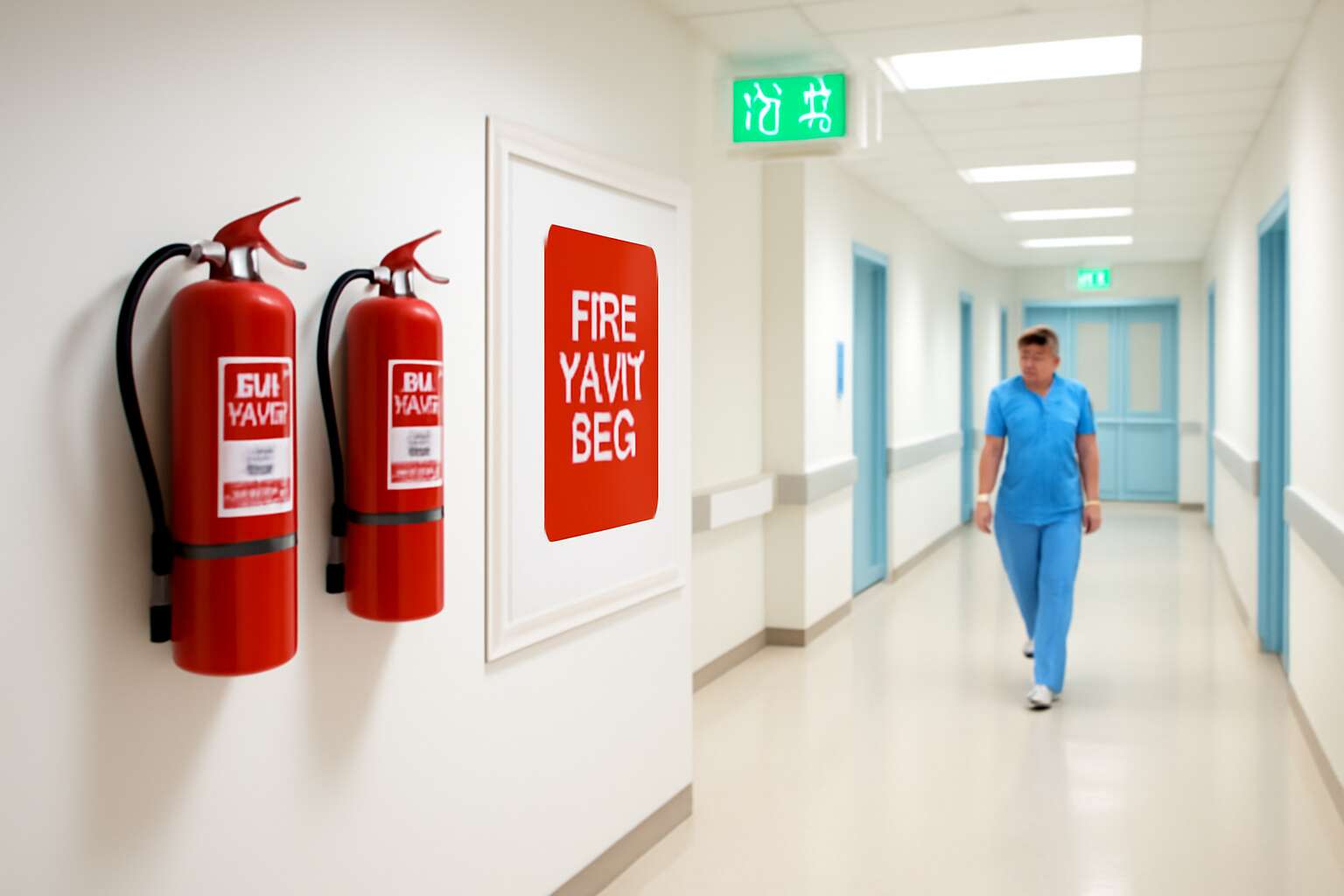
Hospital Fire Safety Equipment Overview
Essential equipment for hospitals
Fire safety statistics grab attention: when procedures and gear are in lockstep, lives hinge on response time. In our experience across SA hospitals, this is the function of fire safety equipment hospitals— to act before fear takes hold. A global review notes that reliable alarm and detection networks can cut evacuation times by up to 40%, a figure that resonates across wards, theatres, and ICU bays.
In practice, essential equipment forms a seamless safety web within every patient area. Here are the core elements that keep corridors calm during alarms:
- Fire alarm and detection systems
- Portable and fixed fire extinguishers, with suppression for high-risk zones
- Automatic sprinkler and standpipe networks
- Emergency lighting and clear exit signage
When this network is maintained with quiet vigilance, alarms translate into coordinated, humane responses rather than chaos in the wards of care.
Fire alarm systems and notification for healthcare facilities
In hospital corridors, a dependable fire alarm is more than a bell—it’s a conductor guiding action through fear. A recent global review found that reliable alarm and notification networks can cut evacuation times by up to 40% across wards, theatres, and ICU bays.
Fire alarm systems and notification for healthcare facilities must be nuanced, with zoned alerts that guide staff and patients without inflaming panic. Within fire safety equipment hospitals, these systems integrate with paging, nurse calls, and mobile devices to coordinate a calm, humane response.
- Zoned alerts differentiating staff, patients, and visitors
- Integrated paging, nurse calls, and mobile notifications
- Automatic escalation to incident command and responders
When this network hums in harmony, responses become careful choreography rather than chaos.
Suppression options in healthcare environments
In the realm of fire safety equipment hospitals, suppression options must be chosen with patient safety in mind. A cutting-edge study ties optimized suppression to up to 50% faster containment in critical zones, preserving life-support systems and care routines when minutes matter most.
Suppression options span a spectrum from water-based sprinklers to advanced clean-agent and mist technologies. The choice hinges on area and equipment sensitivity.
- Water-based sprinkler systems (wet, dry, deluge, and foam variants)
- Clean-agent systems (Novec 1230, Inergen, FM-200)
- Water mist and hybrid systems
- Gas-based inert suppression for sensitive zones
In spaces like operating theatres and ICUs, non-water options protect electronics and critical equipment while still halting flame spread. Systems should integrate with building management and nurse call networks for coordinated, calm responses.
Every ward becomes a stage where science and care meet; suppression design should honor layout and workflow, not disrupt healing.
Clear evacuation routes and signage in hospitals
A punchy statistic grabs attention: a recent hospital drill showed 25% faster evacuations when clear routes and signage were prioritized, proving that calm exits beat chaos under pressure. In the realm of fire safety equipment hospitals, clear evacuation routes are not decorative—they’re life support for wayfinding.
Designing signage that speaks hospital fluently means more than arrows on walls. It requires legible fonts, glow-in-the-dark materials, and multilingual cues that cut through stress. Across South Africa, signage also needs accessibility considerations for visually impaired patients. Here are essential elements:
- Exit route maps visible from every ward
- Floor-level color coding and tactile indicators
- Audible announcements and emergency lighting that stays on during power loss
When every hallway guides patients and staff with confidence, the whole hospital breathes easier.
Types and Deployment of Fire Safety Equipment in Hospitals
Portable extinguishers and their hospital uses
Time is tissue, and in hospital corridors that truth fuels action. Portable extinguishers stand ready, turning uncertain sparks into controlled moments and giving critical seconds back to patients and staff alike.
- ABC powder extinguishers: broad-spectrum, safe for most wards and electrical risks.
- Water-based or water mist: effective on textiles and liquids, with minimal collateral damage.
- CO2 extinguishers: ideal for electrical equipment and data areas, leaving no residue.
Deployment hinges on smart placement, legible signage, and regular maintenance. In South Africa, hospitals balance rapid access with staff training to ensure these tools are integral to fire safety equipment hospitals, delivering readiness without disrupting care.
Automatic sprinkler systems in patient care areas
Every minute counts in a hospital fire, and a reliable sprinkler can buy precious seconds. In the realm of fire safety equipment hospitals, automatic sprinkler systems in patient care areas are the steady guardians—whether wet-pipe, dry-pipe, or deluge. They respond to heat, releasing water to control a blaze and safeguard patients and staff while minimizing collateral damage.
- Wet-pipe sprinkler systems
- Dry-pipe sprinkler systems
- Deluge and deluge-valve systems
Deployment hinges on smart placement, clear signage, and routine testing. In South Africa’s healthcare facilities, sprinklers are positioned to cover high-risk zones in corridors and wards while preserving rapid access for clinicians. Regular inspections and accessible valves ensure readiness without disrupting care.
Fire blankets and safety devices for high risk zones
In hospital fires, every minute counts—treatments paused, vitals unstable, lives hanging in balance. The steady pulse of safety travels through fire safety equipment hospitals.
Types and deployment centre on immediate, human-scale tools. Fire blankets stand ready to smother small pan-fires on gowns or equipment, while safety devices guard high-risk zones surrounding kitchens, sterilization suites, and electrical rooms.
- Fire blankets mounted at bedside and in service corridors
- Heat detectors and manual call points in kitchens and storage areas
- Emergency shut-off systems for electrical panels and critical HVAC zones
Deployment hinges on smart placement, clear signage, and routine testing. In South Africa’s healthcare facilities, these blankets and devices stay accessible, quietly vigilant, and ready to perform without interrupting care.
Standpipe and hose systems for hospital complexes
In hospital fires, the first three minutes decide life or death. Behind the clinical glow, a quiet, armored system waits—the standpipe and hose network—ready at a moment’s notice to unleash mercy from a trusted valve. These lines of water form the backbone of fire safety equipment hospitals, threaded through wards, kitchens, and maintenance tunnels to deliver swift suppression where it’s needed most. When dimensioned with care, they turn chaos into order and grant staff the minutes they need to carry patients to safety.
- Strategic standpipe zoning across hospital complexes, with vertical risers and floor ports positioned for high-occupancy zones
- Accessible hose reel locations in corridors, near nursing stations, and maintenance hubs, clearly marked and protected from damage
- Regular pressure tests and integration with building management systems to ensure reliable activation when the night grows long
In South Africa’s healthcare estates, these hidden arteries keep care uninterrupted, a patient, quiet vigil beneath the sterile mask of daily life—fire safety equipment hospitals standing watch.
Standards, Compliance and Best Practices
Regulatory requirements for hospital fire safety equipment
Fire safety is care in action—every corridor counts. In South Africa, hospitals align with a spectrum of standards that govern fire protection: national building regulations, SANS fire-safety guidelines, and international benchmarks such as NFPA and ISO 45001. Compliance isn’t mere paperwork; it’s a living discipline that makes the difference between serenity and chaos in a ward. For fire safety equipment hospitals, the code becomes care made visible.
Best practices rise from a philosophy of safety—rigorous risk assessment, disciplined maintenance culture, and ongoing training at every level. To uphold fire safety equipment hospitals, authorities remind us that safety is a moral economy, where accountability and care intersect and where a well-tuned system holds the line between disruption and healing.
Industry standards for healthcare facilities
Across South Africa, fire safety in hospitals transcends policy—it’s a living standard that shapes every shift. When fire safety equipment hospitals align with SANS guidelines, national building regulations, NFPA, and ISO 45001, compliance becomes care in action—calm corridors, precise responses, and trust among staff and patients.
Standards provide the frame; compliance keeps it taut. In healthcare settings, governance hinges on accountability, robust audits, and third-party verification that benchmarks performance against international and local expectations. Consider these pillars:
- Governance and accountability across all layers
- Regular system testing and documentation
- Ongoing staff training and drills
Best practices grow from risk assessment, disciplined maintenance culture, and continuous learning. The South African experience shows that integrating local regulations with global benchmarks yields facilities where these safety systems function as a moral economy: care and accountability kept in balance.
Risk based equipment selection
Standards set the frame for hospital fire safety, but risk-based equipment selection turns policy into action. Across South Africa, aligning with SANS guidelines, National Building Regulations, NFPA, and ISO 45001 isn’t mere compliance—it makes care tangible. When fire safety equipment hospitals reflect disciplined choices, calm corridors and precise responses become the norm.
Key guiding pillars emerge from this approach:
- Risk-informed allocation prioritizing high-risk zones and vulnerable patients
- Lifecycle governance with planned maintenance, testing, and documentation
- Transparent governance with third-party verification and performance metrics
In practice, this synthesis builds a living safety culture where standards, audits, and training reinforce each other.
Documentation and labeling standards
Stellar care hinges on crisp labeling and rock-solid records. In fire safety equipment hospitals, standards set the frame—SANS, National Building Regulations, NFPA, ISO 45001—but real safety comes from disciplined documentation that travels with every device. Labels tell the story, not just the name.
Compliance becomes practice when documentation is accurate, current, and accessible. Use these core elements:
- Clear labeling with standardized fonts, colors and international codes
- Versioned manuals, maintenance logs and audit trails
- Independent verification and performance metrics shared transparently
With audits, training, and clear records, teams move as one. The result is calmer corridors, quicker responses, and confidence that every item functions when it matters.
Auditing and improvement processes
In hospital corridors where a single misstep can echo through a ward, standards are not bureaucratic walls but lifelines. Across South Africa’s healthcare landscape, a vigilant audit can bend time toward safety, and meticulous records travel with every device, turning compliance into second nature and quiet confidence into action when alarm sounds!
Compliance thrives where documentation moves as one with each asset. In this milieu, the phrase ‘fire safety equipment hospitals’ guides procurement and maintenance.
- Independent verification and performance metrics
- Versioned manuals, maintenance logs and audit trails
- Transparent access to current records
Best practices auditing becomes an improvement engine, not a checkpoint. Regular assessments, root-cause reviews, and learning loops tune response times, calm busy corridors, and keep every lever ready to act when minutes matter.
Maintenance, Testing and Staff Readiness
Routine inspection and testing protocols
Across South Africa, the quiet backbone of every hospital is its upkeep. When fire safety equipment hospitals are properly cared for, alarms ring with certainty and staff respond with practiced calm. In regional networks, rigorous maintenance and testing have reduced false alarms by up to 40%, turning tense moments into confident actions. Maintenance, testing and staff readiness form a triad that keeps wards safe through long nights and busy shifts!
Key elements include:
- Documentation and logkeeping for all devices
- Routine functional verification of alarms and power supply
- Staff readiness through regular awareness sessions and drills
In the end, the heartbeat of safety rests on reliable cues, ready teams and a culture that treats every check as care for the people inside.
Maintenance workflows and vendor management
Maintenance workflows in hospital environments are the quiet engine behind every life-saving alert. Across regional networks in South Africa, rigorous maintenance and testing have reduced false alarms by up to 40%. The steady hum of reliable fire safety equipment hospitals keeps wards calm when minutes matter.
A well-mapped routine includes predictable cycles, calibration, and functional verifications.
- Scheduled preventive maintenance windows
- Checks of power, backup systems and interlocks
- Thorough documentation of outcomes
- Coordinated service visits with vendors
Vendor management ties every piece together—service levels, fast response, spare parts, and documentation. Clear SLAs, routine performance reviews, and on-site training keep teams aligned and equipment ready.
Together, these workflows translate into safer patient care and steadier nights on the wards!
Staff training and drills for fire safety equipment
Two minutes can tilt a hospital’s fate. In South Africa, facilities pairing crisp testing with staff readiness cut activation times and calm wards when minutes count. When the siren quiets, the difference is tangible—the discipline of fire safety equipment hospitals turning chaos into coordinated care.
Maintenance and testing set the tempo; staff readiness keeps the cadence human.
- Short, scenario-based training sessions
- Clear role assignments for each team member
- Debriefs that turn drills into better practice
Drills become muscle memory, and records stay steadfast witnesses that anchor practice when the building sighs and the lights fail—fire safety equipment hospitals, keeping patients protected.


0 Comments