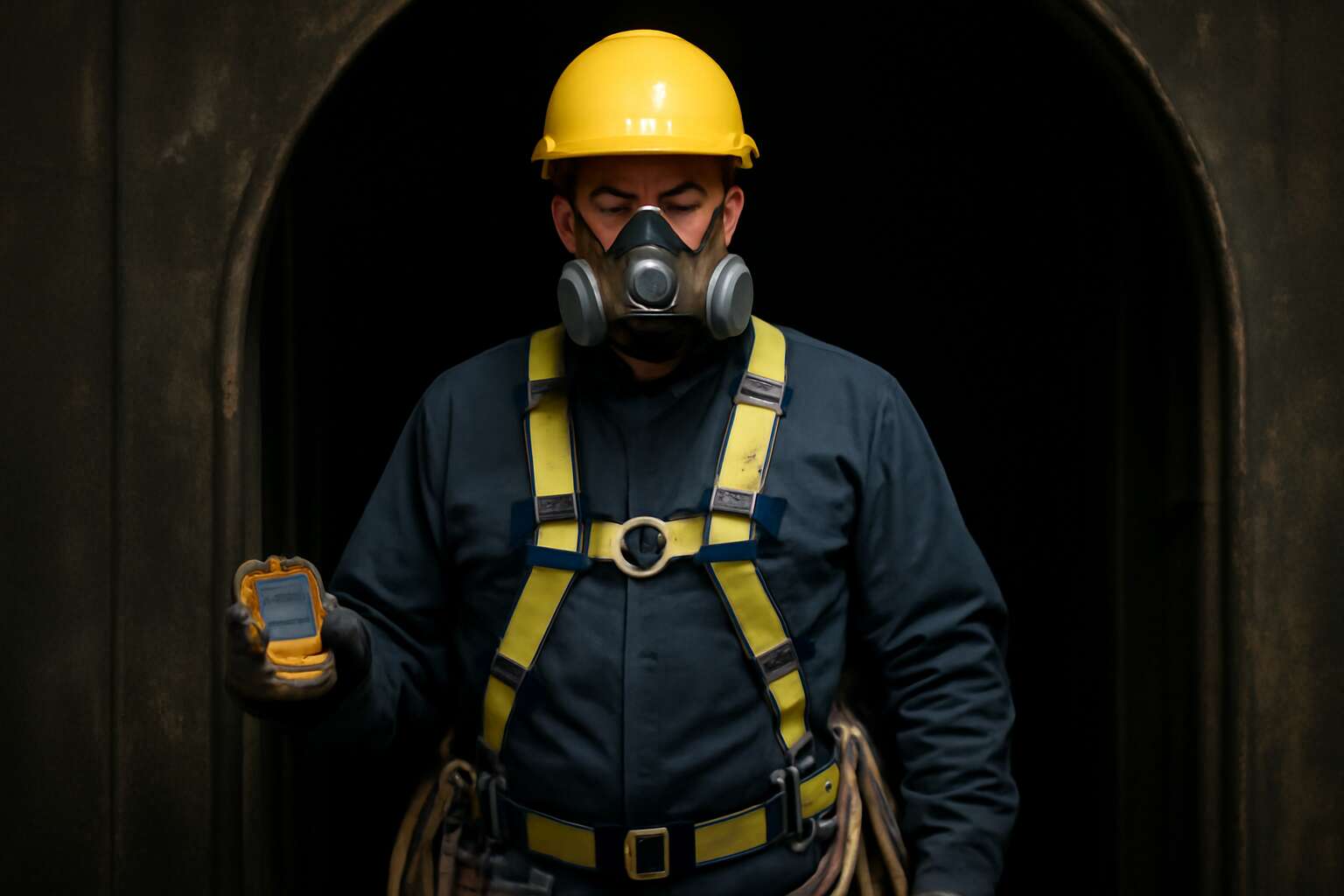
Confined Space Safety Equipment Overview
Personal Protective Equipment Essentials for Confined Spaces
Hazardous atmospheres and tight spaces demand more than knowledge—they demand vigilance. A recent safety survey finds that proper PPE reduces exposure risk in confined environments by over 40%. In South Africa, the safety equipment used in confined space is not mere protection but a decision about life and timing, shaping each entry with assurance rather than doubt.
Essential PPE covers respiratory protections, eye and face shields, gloves, sturdy footwear, plus head protection and visibility gear. Consider these core items:
- Respiratory protection
- Head, eye, and face protection
- Fall-arrest and harness systems
With careful selection and fit, teams embed safety into every breath and step, turning a risky threshold into a measured boundary!
Respiratory Protection and Air-Supply Options
In the breath between risk and relief, respiratory protection stands as the first line of defense. A recent safety survey shows that proper PPE reduces exposure risk in confined environments by over 40%, and the safety equipment used in confined space is a decisive ally, shaping every entry with measured intent rather than doubt.
Air-supply options span speed and endurance. For extended tasks, SCBA provides independent life support; for steady calm, PAPR offers comfort; airline systems deliver continuous air when mobility matters.
- Self-contained breathing apparatus (SCBA)
- Powered air-purifying respirator (PAPR)
- Supplied-air respirator (SAR) with airline
Whichever path you choose, fit and maintenance keep the breath honest and the steps sure.
Fall Protection and Trip Hazard Management
Confined spaces hide ordinary dangers behind ordinary doors, and yet one misstep can turn a routine entry into a perilous countdown. Statistics show a 28% drop in near-misses when fall protection and trip hazard management are prioritized on SA sites.
In this overview, the focus shifts to how fall protection and trip hazard management integrate with safety equipment used in confined space, forming a resilient safety net around every entry.
Key considerations include:
- Anchor points, harnesses, and lanyards aligned with site standards
- Clear pathways and snag-free cord and hose management
- Lighting, housekeeping, and signage to reduce trip risks
When combined with the right PPE ecosystems, the field becomes less unpredictable and more navigable, even in tight corridors and low-clearance zones. The subtle choreography of equipment and awareness is the heartbeat of safe confined space work.
Communication Tools and Monitoring Devices
On South Africa’s proving grounds of risk, a crisp line of communication is gold. This is safety equipment used in confined space, a coordinated chorus of radios, signals, and real-time alerts that keeps every entry in tune.
Communication tools keep the team speaking the same language in the tightest corridors. Two-way radios with noise-reducing mics, hands-free headsets, and visual signaling boards form the backbone of safe, audible coordination on site.
- Two-way radios with noise-reducing mics
- Hands-free headsets with push-to-talk
- Visual signaling boards and alarm beacons
Monitoring devices act as a second set of eyes, watching atmosphere and time. Gas detectors (for H2S, CO, and LEL), oxygen meters, and wireless real-time monitors feed data to a central dashboard, letting teams respond before danger becomes drama.
Air Monitoring and Gas Detection Tools
Portable Multi-Gas Detectors: Features and Use
Across South Africa’s industrial landscape, air inside a confined space is far from predictable. A telling stat in safety circles suggests that one in five incidents could be averted with timely air monitoring, if we actually heed the gauges instead of the office chatter!
Portable multi-gas detectors act as sentinels, tracking oxygen, flammable gases, hydrogen sulfide, and carbon monoxide in real time. Seek devices with rapid response, clear displays, intuitive controls, long battery life, and rugged enclosures designed to shrug off dust and heat. Some models offer data logging and wireless transfer for easy reporting, which is the sort of practicality we all pretend to merit.
- Simultaneous sensing of O2, LEL, CO, and H2S (and sometimes VOCs)
- Fast response and audible/visual alarms
- Data logging and easy calibration/bump testing
- Durable, dust- and water-resistant design
Used correctly, these tools sit at the heart of safety equipment used in confined space; they complement PPE and communication devices, ensuring teams can gauge risk before the door is closed.
Gas Detection Methods: Real-Time vs Proxy Sampling
Air within a confined space writes its own weather, and the ordinary gauge becomes a storyteller. Real-time gas detection acts as a vigilant sentinel, streaming oxygen, LEL, CO, and H2S data as the space breathes. Proxy sampling—colorimetric tubes, diffusion badges, or diffusion samplers—paints a slower picture, useful when power or uptime falters. Between both worlds, risk is made readable before the door seals.
- Real-time monitoring delivers continuous data streams, instant alarms, and trend insights to guide immediate decisions.
- Proxy sampling offers periodic snapshots that help corroborate real-time data and build a historical context when devices are offline.
Across South Africa, this safety equipment used in confined space becomes more than gear—it is a language of clarity, a quiet ally when the atmosphere stirs. I’ve witnessed teams breathe easier knowing the gauges speak truth, even when the space refuses to speak aloud.
Calibration, Bump Tests, and Maintenance
South Africa’s busy industrial floors remind us that a single calibration lapse can rewrite outcomes in seconds. Safety equipment used in confined space relies on trust—trust that every reading reflects reality. Calibration, bump tests, and routine maintenance are the quiet guardians behind each breath of air.
Regular calibration against certified gas, traceable records, and vigilant sensor checks keep air monitoring trustworthy. Bump tests verify response and alarm integrity without redeploying the detector. Maintenance preserves sensor life and reduces drift over time.
- Calibration gas quality and cylinder labeling
- Sensor health and compatibility with known atmospheres
- Alarm audible and visual indicators
Across SA worksites, meticulous upkeep transforms equipment into a steadfast ally when the space seems to hold its breath.
Ventilation Equipment to Improve Air Quality
On South Africa’s busiest worksites, a single breath can hinge on a whisper of air. In that moment, safety equipment used in confined space becomes more than gear—it is guardian, compass, and chorus of care. A detector ticking is a promise kept.
Air monitoring and gas detection tools map the room’s invisible contours. When paired with ventilation equipment, they choreograph fresh air into the space and pull contaminants out. Tools include:
- portable multi-gas detectors
- fixed gas monitors
- local exhaust ventilation systems
Together, meters, fans, and trained hands keep the air honest and the space safe. The atmosphere becomes a story of steady readings and quiet confidence!
Rescue, Retrieval, and Access Equipment
Lifelines, Harnesses, and Retrieval Systems
In South Africa, rescue operations in tight spaces hinge on one truth: every second counts. A veteran rescuer says, ‘Time is the difference between rescue and regret’—and that conviction echoes through confined-space assignments. Preparedness meets purpose; peril becomes measured action.
This section threads safety through Rescue, Retrieval, and Access Equipment Lifelines, Harnesses, and Retrieval Systems. Lifelines and anchors form a rope of trust; harnesses distribute load; retrieval devices, tripods, and winches provide controlled ascent and descent. This is part of safety equipment used in confined space.
- Lifelines and anchors
- Harnesses and retrieval devices
- Tripod and winch systems
Respect for inspection, maintenance, and ongoing training keeps gear reliable. In South Africa workplaces, standards for compatibility and meticulous service create the quiet confidence rescues demand. We celebrate the human drama of preparedness—the way a well-worn harness carries history as much as weight—because safety outfits a future where workers return home.
Tripod, Winch, and Hoist Systems
One veteran rescuer says, “The clock is a lifeline”—and in South Africa’s confined spaces, that lifeline is measured in inches and breaths. The Rescue, Retrieval, and Access Equipment—tripod, winch, and hoist systems—turn raw danger into measured action, ensuring lines stay tight and teams stay coordinated. This is safety equipment used in confined space in motion.
A tripod provides a quiet, secure anchor, while the winch and its brake govern steady descent and ascent. The hoist offers smooth, reliable lifting for heavier loads, keeping operators in control even when visibility is limited. In practice, these devices fuse training with trust, letting crews navigate tight hallways and cavernous voids with confidence.
Key components include:
- Tripod
- Winch
- Hoist
Rope Rescue Gear and Permit Requirements
Rope rescue gear and access systems shape the choreography of confined spaces, where every move could tip the balance between danger and deliverance. In South Africa’s mining tunnels, processing plants, and municipal shafts, Rescue, Retrieval, and Access Equipment translates fear into focus and careful action.
Permit requirements anchor practice in reality. The following elements ensure the rescue plan breathes safely through the space:
- Formal risk assessment for the confined space entry
- Approved method statement detailing rescue procedures
- Competent personnel with valid training and certification
- Equipment verification and pre-use checks
- Clear rescue plan and established communication protocol
Rope systems demand ongoing practice, from knot craft to harness discipline, ensuring teams move like measured comets through the dark. In South Africa, this fusion of gear and governance underpins safety equipment used in confined space—an edifice built from trust and technique.
Access Ladders and Platforms for Confined Spaces
In the bowels of South Africa’s industrial labyrinths, Rescue, Retrieval, and Access Equipment keeps the door between peril and safe passage ajar. Access ladders and platforms rise like steel cathedrals, offering steady lines for ascent. The line between deliverance and disaster can hinge on a single rung—safety equipment used in confined space.
These ladders and platforms endure damp tunnels and dusty plants, anchoring to structure with robust fixings, slip-resistant rungs, and guardrails. In South Africa’s varied spaces, aluminium and coated steel balance lightness with strength, letting teams move with measured confidence.
- Anti-slip rungs and secure guardrails for dependable footing
- Modular platforms that adapt to shaft diameters and heights
- Anchorage points compatible with retrieval and fall-arrest systems
Emergency Procedures: Drills and Equipment Readiness
South Africa records that nearly 40% of confined-space incidents see rescue delays that amplify risk in minutes—not hours. Rescue, retrieval, and access equipment emergency procedures translate panic into precision, shaping a culture where the safety equipment used in confined space is treated as a trusted co-worker.
Drills test plans, assignments, and equipment readiness under simulated pressure. Periodic rehearsals sweep through lifelines, tripods, winches, and harnesses, ensuring comms stay clear and responders move like clockwork. Teams rotate roles, check gas monitors, and verify access points are secured for rapid entry and exit.
- Pre-shift readiness checks of all retrieval gear
- Communication and isolation protocol practice
- Equipment inspection and service logs
- Post-drill debrief and corrective actions
When real alarms ring, muscle memory and documented procedures reduce confusion. These drills keep the facility alive with confidence, aligning human courage with engineered safety equipment used in confined space.
Personal Protective Equipment and Clothing
Head, Eye, and Face Protection Essentials
Every hour, countless hands risk a moment that could define a career—until the right protection steps in. The safety equipment used in confined space for head, eye, and face protection forms a quiet shield against flying debris, sparks, and sudden shifts in lighting. From the first clasp of a hard hat to the final seal of a face shield, these elements cultivate confidence in the worklight of danger.
- Hard hat with impact resistance and adjustable suspension
- Goggles or an eye shield that fit comfortably over eyewear
- Full-face shield or visor to shield against splashes, sparks, and dust
Across head, eye, and face, the essentials deserve careful attention, ensuring workers in South Africa move with clarity and dignity when space tightens and attention must be absolute.
Flame-Resistant Clothing and Thermal Protection
In the tight, hot corners where air barely whispers, one spark can rewrite a shift—and a career. In South Africa, where mines and workshops crowd space and pace, safety equipment used in confined space does more than protect—it preserves livelihoods. Flame-resistant clothing and thermal protection act as quiet shields, letting workers move with confidence when heat and dust swirl and lighting shifts.
Layering with FR fabric is an art, not a dare. Here are essentials that keep burn risk down without sacrificing comfort:
- Flame-resistant fabrics (Nomex, Indura, Protex FR) that resist ignition and self-extinguish
- Thermal liners and arc-rated outer shells for insulation in chilly or hot shifts
- High-visibility accents or reflective trims for clear visibility in dim confined spaces
With proper care, these garments stay protective longer and continue to serve as a practical, if stylish, reminder that safety and practicality can share the same hard hat. The safety equipment used in confined space remains ready for the next shift.
Gloves, Footwear, and Hand Safety
In the dim breath of a confined space, a moment can turn routine work into risk. In South Africa, where mines crowd space, hands bear the first consequences—grip tightens, nerves sharpen. The safety equipment used in confined space is a quiet guardian in heat and hush, turning caution into capability so workers move with poise.
Gloves are the tessellated skin of protection, while footwear anchors steps on treacherous floors. Here are glove families that marry dexterity with defense:
- Cut-resistant gloves for edge work
- Chemical-resistant gloves for splash zones
- Heat-resistant gloves for hot surfaces
- Nitrile- or latex-free options for allergy considerations
Footwear anchors balance when floor textures shift, with slip-resistant soles and protective toes enduring dusty thresholds. Hand safety is a dialogue—fit, feel, and grip working in concert with the glove to keep momentum steady.
PPE Inspection, Donning, Doffing, and Maintenance
Every breath matters in a confined space, and the gear that keeps it safe is more than cloth and rubber—it is a promise you keep with your life. In South Africa’s rugged workdays, safety equipment used in confined space becomes a guardian—an anchor in dusty dawns and a quiet reminder that preparation precedes performance.
This section honours PPE inspection, donning, doffing, and maintenance as quiet rituals that extend the life of gear and the worker’s courage. When done with care, these practices turn ordinary PPE into an extension of a worker’s instincts—steady, ready, and present in every movement.
- Inspection: look for wear, damage, and fit integrity
- Donning: ensure proper alignment and snug seals
- Doffing: remove in a controlled sequence to avoid contamination
- Maintenance: clean, dry, and store so gear lasts
On South Africa’s diverse horizons, PPE remains a steadfast ally, binding care with competence.
Lockout/Tagout, Isolation, and Safety Procedures
Lockout/Tagout Devices and Practices for Confined Spaces
In the dim hush of a confined space, a single lock becomes the guardian of life. Lockout/Tagout, isolation, and safety procedures form a quiet triad that interrupts energy flows before a hazard can surge, turning danger into a controlled moment of calm. When aligned, these practices reduce the risk of unexpected startup, stored energy release, or sudden equipment movement.
- Lockout devices that physically secure energy sources
- Tagout tags that communicate status and responsibility
- Verification steps that confirm isolation before any entry
Together, these measures weave safety equipment used in confined space, delivering dependable protection across South African workplaces with clarity and resolve.
Permit-to-Work Systems and Energy Isolation
Confined spaces are not dramatic; they’re patient. In South African workplaces, energy-related incidents still stalk the job site, often because the energy wasn’t properly held back. The safety equipment used in confined space acts as a quiet guardian, not a loud hero. Isolation, communication tags, and verification are the unseen choreography that stops a hazard from surging into a routine entry.
Permit-to-work systems and energy isolation formalize this choreography. They require a documented authorization and a deliberate check that energised sources are contained before any work proceeds. When these elements align, risk remains in the margins and the workplace breathes easier, with protection that feels almost ceremonial in its precision.
Communication Protocols and Alarm Signaling
Energy moves like a patient predator—silent until it isn’t. In South Africa’s workplaces, a disciplined approach to Lockout/Tagout and energy isolation keeps that predator at bay. The right safety equipment used in confined space acts as a calm, unflashy guardian, guiding entry with measurable certainty.
Isolation is more than a switch; it’s a ritual of verification. Tag-out devices, padlocks, and documented procedures seal energized sources and allow work to proceed only when all risks are confirmed gone from the zone.
- Clearly defined communication channels and handover points
- Standardized alarm sequences with visual and audible signals
- Pre-entry checklists and confirmation steps
These strands of protocol keep the atmosphere calm and predictable, where caution becomes routine and risk remains politely off to the wings.

0 Comments