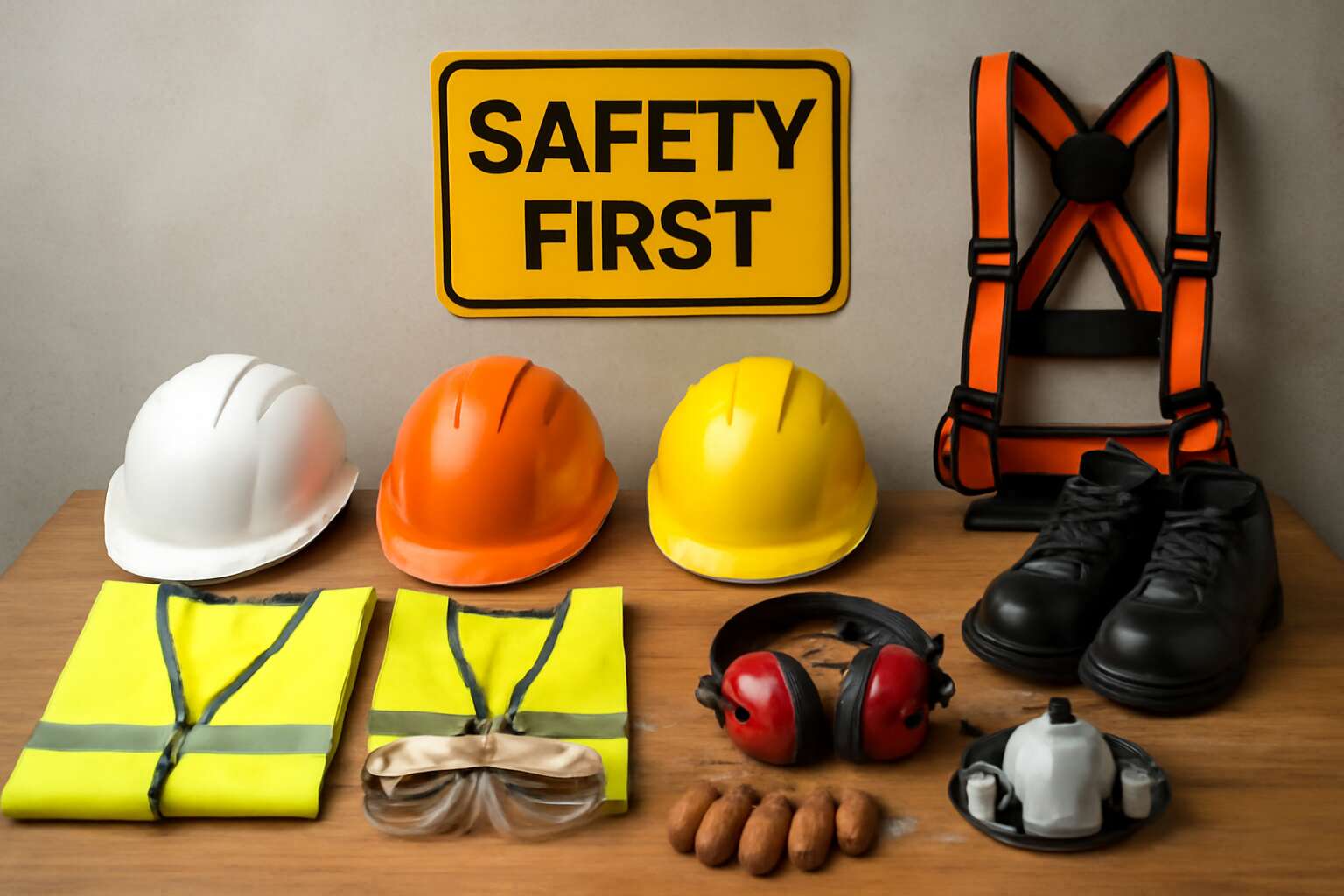
Essential Safety Equipment for Worksites
Personal Protective Equipment Essentials
A sharp gust of wind fans a safety briefing card on a South African site, and the truth lands like steel in a sunrise: safety isn’t optional; it’s the first gear! A well-tuned site safety equipment list anchors every task, shaping focus from foreman to apprentice with quiet authority. PPE essentials become a language of care, spoken at every corner.
Here are the PPE essentials that keep hands, eyes, and ears reverent on site.
- Hard hats with chin straps
- Impact-resistant safety glasses or face shields
- Hearing protection (earmuffs or plugs)
- High-visibility clothing
- Safety boots with steel toes
On warm afternoons and stormy mornings alike, this list evolves with risk and climate, honoring SA standards and the people who build our landscapes. The site safety equipment list is a living spell that keeps crews whole, confident, and ready to rise to the day’s challenges.
Head, Eye, and Face Protection
On South African sites, safety isn’t a token gesture—it’s a daily obligation! A foreman’s chant—“Your eyes are irreplaceable”—lands like steel in the sunrise, reminding crews that vigilance is the first gear that keeps momentum alive.
Head, eye, and face protection sits at the hinge of craft and care. Beyond the basics, consider full-face shields with anti-fog coatings, indirect-vent goggles for dusty afternoons, and visors designed to pair with respirators—these choices belong on the site safety equipment list.
- Full-face shields with anti-fog coatings
- Indirect-vent goggles for dusty environments
- Visors compatible with respirators
As days tilt from heat to rain, this equipment remains a living covenant, shaping how crews move with confidence and clarity through a South African workday.
Hearing and Respiratory Protection
“Your hearing is irreplaceable,” a veteran foreman once said, and the dawn chorus on a South African site confirms his wisdom. On busy days, hearing protection is a lifeline; earmuffs and earplugs share the field with respirators through dusty stretches. The site safety equipment list should include both passive and active solutions—N95 or P100 disposable respirators, elastomeric half-face masks, and PAPRs for foul air.
In long shifts, comfort and fit matter, and gear that breathes keeps fatigue at bay. Respiratory devices should seal well without choking the wearer, while hearing protectors stay in place through movement and heat. The site safety equipment list should reflect options that balance protection with practicality, ensuring teams stay attentive, clear, and safe as they navigate the rhythms of a South African workday.
Safety Footwear and Hand Protection
On a South African worksite, Essential Safety Equipment for Worksites demands more than form—it demands memory. The observer notes safety footwear and hand protection shoulder the everyday hammer of work, keeping feet planted and hands ready for anything. A robust site safety equipment list recognises that boots must grip oil and dust, protect toes, and breathe when the shift stretches toward dusk. Likewise, gloves should fuse dexterity with defence, sealing against abrasions and punctures without dulling touch.
- Steel-toe footwear for impact protection
- Slip-resistant outsoles for wet and dusty surfaces
- Cut-resistant or abrasion-resistant gloves for material handling
- Chemical- or heat-resistant gloves for spills and hot work
That weaving of protection and practicality keeps teams alert and steady as South Africa’s day shifts.
Fall Prevention and Rescue Equipment
On South African sites where the skyline shifts with every gust, a fall can turn a moment into a memory etched in steel. A well-curated site safety equipment list keeps teams anchored, minds clear, and operations moving with gravity’s respect!
Key components include:
- Full-body harness with adjustable fit and energy-absorbing lanyard
- Self-retracting lifeline (SRL) for edge safety
- Vertical lifelines and anchor systems for elevated work
- Rope rescue kit and descent devices for controlled lowering
- Edge protection and rescue descent kit for rapid response
In practice, these tools must be matched by trained personnel and a rehearsed rescue plan; without that, even the best gear is a quiet promise.
Equipment for Site Access and Control
Access Control and Security Measures
A secure gate is the first line of defense on any site in South Africa. When entry points are managed, day-to-day safety improves before the shift starts. In the site safety equipment list, Equipment for Site Access and Control earns a clear, explicit place—security at the gate sets the tone for every other measure!
- Perimeter fencing and controlled entry points
- Access control systems (card readers, biometrics, turnstiles)
- Visitor management and sign-in procedures
- Site lighting and CCTV surveillance
- Clear signage and alarm systems
Placed alongside signage, lighting, and ongoing audits, these elements form a practical shield against unauthorised access, protecting workers and assets alike. The emphasis on access and control reflects a broader, responsible site safety equipment list tailored to South Africa’s standards.
Ladders, Scaffolds, and Platforms
A single misstep on height can rewrite a day in red dust and risk. More than half of elevated-work injuries trace back to faulty access equipment, a stark reminder that ladders, scaffolds, and platforms are anchors, not accents. In the site safety equipment list, these access elements become the sturdy on-ramps of safety, guiding crews with confident, measured steps.
Choosing the right access gear means prioritising rigidity, slip resistance, and secure anchorage. Here are essentials that deserve careful attention:
- Ladders: duty-rated with anti-slip feet and secure ties
- Scaffolds: guardrails, toe boards, and stable bases
- Platforms: slip-resistant decking and clear load limits
When paired with clear signage and good lighting, these access solutions extend the reach of safety across South Africa’s varied work sites, protecting workers and assets alike as the day progresses toward the horizon.
Temporary Barriers and Traffic Control
On South Africa’s busiest sites, mismanaged access costs teams hours every day. The site safety equipment list for access and control sets the tempo, turning risk into rhythm. Gateways aren’t afterthoughts; they’re deliberate anchors that guide pedestrians and vehicles with quiet authority.
- Temporary barriers and fencing (quick-setup, sturdy)
- Traffic cones and delineators (high-visibility)
- Signage and channelizing devices (detour, warning, lane-closure)
- Portable lighting and flashers (night work, low-light conditions)
- Barricade tape and barrier drums (clear boundaries)
Together, these elements—backed by clear signals and trained oversight—keep entrances and work zones orderly, protecting crews as the day marches toward sundown.
Lockout Tagout and Equipment Isolation
A startling statistic from SA safety audits: nearly a quarter of equipment-related injuries trace back to bypassed lockout and energy isolation. ‘Safety lives in the details,’ a veteran site manager likes to say—it’s the quiet truth that keeps teams intact through the shift grind.
Equipment for site access and control hinges on Lockout Tagout and Equipment Isolation—devices that render machines harmless while work happens. Think of padlocks, hasps, and durable tags as the guardians of power.
- Lockout devices: padlocks and hasps for each energy source
- Tagout devices: highly visible tags with recovery procedures
- Energy isolation points: clearly labeled shutoffs and disconnects
- Verification: procedure to confirm energy is released and safe to work
When aligned with a site safety equipment list, these measures become repeatable and auditable, reducing risk across South Africa’s busy sites. It’s not fun—it’s essential.
Maintenance and Inspection of Safety Equipment
Routine Inspection Protocols
A telling truth haunts every workshop: 1 in 4 near-misses on SA sites trace back to neglected gear. Maintenance and inspection of safety equipment are the quiet guardians behind the site safety equipment list. Routine inspection protocols prevent silent failures, calm the bells of risk, and keep the day from tipping into catastrophe. Each check is a vigil, a promise kept by those who steward the equipment!
- Daily visual inspections for wear, damage, and corrosion
- Functional tests on critical devices before use
- Documentation and tag renewal to ensure auditable compliance
Record-keeping matters; logs travel beyond the site, guiding training and replacements. Use calibrated tools, ensure storage is dry and secure, and rotate gear to fresh life. Consistency seals the rhythm of safety and preserves the integrity of the equipment registry.
Calibration and Testing
On South African sites, a single uncalibrated gauge can tilt the day toward catastrophe. That 1 in 4 near-misses on SA sites trace back to neglected gear—a sobering reminder maintenance and inspection of safety equipment are lifelines. Calibration and testing anchor the site safety equipment list, turning certainty into practice.
Maintenance and Calibration hinge on auditable standards.
- Calibration against traceable standards with documented results
- Functional testing of critical devices before use
- Tag renewal and auditable record-keeping for lifecycle traceability
Stored properly, kept dry and secure, and rotated for longevity, equipment remains reliable. A robust register sustains the lifecycle and keeps the site safety equipment list credible across South Africa’s diverse work environments.
Storage and Hygiene
That 1 in 4 near-misses on SA sites trace back to neglected gear is a stark sunrise on an uncertain horizon. Maintenance and Inspection of Safety Equipment Storage and Hygiene guard against rust, damp, and creeping degradation, turning intent into readiness. When storage is orderly, the site safety equipment list stays credible and teams breathe easier.
- Dry, locked rooms off the floor to protect against moisture.
- Labeling and corrosion-resistant shelving to prevent mix-ups.
- Regular cleaning and checks for moisture, pests, or damage.
When shelves stay dry and audits are routine, equipment remains dependable across South Africa’s varied climates.
Documentation and Record Keeping
On SA sites, one in four near-misses traces back to neglected gear—and the problem starts with the paperwork: logs, tags, and who signed off. Documentation and record-keeping aren’t glamorous, but they shield lives. A robust site safety equipment list sits at the heart of readiness, not guesswork.
Keep a tight, human-readable trail:
- Inspection date, inspector name, and signature
- Equipment ID, model, and location
- Findings, actions taken, and responsible person
- Calibration/test certificates and next due date
Digital systems beat paper drama in South Africa’s varied sites; version control and backups prevent ‘the dog ate the log’ excuses. Define retention periods and audit profiles so anyone can verify history in seconds.
From procurement to retirement, documentation keeps credibility intact and the team sleeping easier. These records translate into faster approvals and fewer surprises.
Retirement and Replacement Guidelines
On SA work sites, a quiet clock ticks on every tool. When gear passes its prime, risk climbs and the shift pays the price in mistakes and downtime. Retirement and Replacement Guidelines keep that clock honest, ensuring the site safety equipment list stays current and trustworthy. It’s practical, steady work that prevents surprises and protects lives.
Set clear retirement criteria, tagging and recording every decision. For the team, it creates a transparent trail that audits can follow in seconds and keeps the field in step with reality.
- Retirement criteria: age, corrosion, or irreparable wear
- Replacement thresholds: performance decline and supplier lead times
- Record updates: reason, signer, and the next due date
With these practices, rural crews sleep easier, knowing the equipment list is treated with the respect it deserves and the site stays ready for the next shift.
Environment-Specific Safety Gear
Wet Work and Slippery Surfaces Gear
Wet work transforms every surface into a compromise zone. The right gear can turn risk into routine, and a solid site safety equipment list is your first shield on a South African job site. From concrete floors after rain to oil-slicked ramps, slippery surfaces demand gear that goes beyond basics and keeps workers moving with confidence!
- Non-slip, water-resistant boots
- Waterproof outerwear and overalls
- Slip-resistant gloves
- Anti-slip mats or floor coatings
- Headlamp or portable lighting for dim, wet work
In practice, a complete site safety equipment list supports teams on South African projects, adapting to daily weather and site conditions while keeping slippery surfaces from halting work.
Cold and Hot Weather Protection
On South African sites, temperature is the unwelcome project manager, flitting from scorching sun to razor-cold mornings and back. A well-tuned site safety equipment list anticipates extremes, keeping crews steady when the wind bites or the heat turns the day into a furnace. Cold-weather needs pair with heat-tolerant solutions: quick-drying layers for early starts and breathable, sun-smart options for peak heat, all designed to adapt without slowing work.
- Breathable base layers and thermal mid-layers for cold snaps
- Windproof, water-resistant outerwear and overtrousers
- Sun-protective clothing, wide-brim hats, and UV sleeves
- Cooling towels, portable misters, and shaded rest areas
- Hydration systems with electrolytes to prevent heat strain
These items slot neatly into a broader safety culture, ensuring daily weather chatter translates into practical gear choices that let South African teams stay productive.
Dust, Fume, and Gases Safety Equipment
Dust, fumes, and gases don’t announce themselves on South African sites; they slip into spaces where silence feels safer than air. Environment-specific safety gear turns those risks into a predictable rhythm—controls and detectors working in tandem so crews stay focused on the task, not the atmosphere. A thoughtful site safety equipment list treats air quality as a product of design, not chance.
- Portable fume extractors
- Gas detectors for oxygen and toxins
- Local exhaust ventilation systems
These components, aligned with the site safety equipment list, keep air movement and alerts in synch and reduce the chances of a toxic surprise.
Noise and Vibration Control Gear
Noise is the soundtrack of risk on South African sites—one thunderous hour can tilt a crew’s judgment. Environment-specific safety gear is the quiet counterpoint: acoustic enclosures for compressors, sound-dampening barriers along high-traffic routes, and low-noise power units that keep pulse and progress in balance. This approach gives projects a cadence rather than a clatter.
- Acoustic enclosures and sound-dampening barriers
- Anti-vibration mats and isolation mounts for heavy machinery
- Low-noise hand tools and mufflers for powered units
Together with the site safety equipment list, these measures shape the daily tempo, reducing fatigue and sharpening focus. It’s a human-centered design: a safer, more productive rhythm where noise and vibration become controllable elements rather than unpredictable disruptors.
Emergency Response and First Aid Equipment
Emergency Communication Devices
Seconds decide outcomes on a South African worksite. A sharp, well-rehearsed emergency response—anchored by a robust site safety equipment list—turns chaos into control in moments when every heartbeat seems loud. Preparedness becomes a moral choice, not luck.
Emergency Response and First Aid Equipment anchor this readiness. A compact, well-stocked kit and AED readiness travel with the crew, bridging the gap until professionals arrive.
- First aid kit
- Automated external defibrillator (AED)
- Emergency thermal blanket
- Trauma dressings
- Eye wash station
- Instant cold packs
Emergency Communication Devices ensure that help is summoned and guidance is clear, even when noise and fear threaten coordination. Two-way radios, satellite phones, and loud hailing methods connect every corner of the site, reinforcing the safeguarding promise.
First Aid Kits and Supplies
On a South African worksite, seconds matter in emergencies! Emergency Response and First Aid Equipment anchor readiness, turning chaos into control. This is all part of a comprehensive site safety equipment list that travels with every crew across dusty fields and urban sites alike, because preparedness is a duty owed to each other.
- First aid kit
- Automated external defibrillator (AED)
- Emergency thermal blanket
- Trauma dressings
- Eye wash station
- Instant cold packs
These supplies stay in quiet readiness, bridging the gap until professionals arrive, with AED readiness and trauma supplies ensuring calm in the storm.
Fire Safety Equipment
Seconds matter on South African worksites, where chaos can erupt in a heartbeat but calm can be retrieved with practiced hands. Our Emergency Response and First Aid Equipment aligns seamlessly with the site safety equipment list, turning panic into process and confusion into coordinated action. When the alarm cuts the air, trained crews move with measured purpose, bridging gaps until help arrives. Readiness isn’t a luxury here; it’s a duty shared across every crew and every site, from dusty fields to urban builds.
- Fire extinguishers positioned for rapid access
- Fire blankets for smothering embers on clothing
- Emergency lighting and clearly marked exits
- Audible and visual alarms with reliable communications
A well-rounded fire safety footprint protects people, keeps disruption to a minimum, and preserves momentum for the job ahead.
Spill Containment and Hazard Response
Spills don’t wait for a calm moment on a South African site; they arrive with a splash and a sigh. A well-contained spill can spare hours of downtime and protect livelihoods. Spill containment and hazard response aren’t afterthoughts; they’re the backbone of the site safety equipment list. As one foreman says, ‘Preparation is cheaper than cleanup.’
- Absorbent pads and granules
- Containment booms and secondary containment
- Neutralising agents for common chemicals
These essentials sit alongside alarms and response plans, ready to neutralise risk the moment trouble appears.
Putting these elements into the safety equipment list means teams move with quiet confidence when the alarm sounds. Absorbents, booms, and neutralisers become trusted faces, turning fear into order and keeping the project moving forward.
Emergency Shutdown and Evacuation Gear
In South Africa’s bustling sites, every second counts when danger surfaces. “When alarms blare, a swift response saves livelihoods,” a foreman once told me. A well-curated site safety equipment list keeps responders ahead of trouble and protects people when chaos arrives.
Emergency Response and First Aid Equipment, alongside Emergency Shutdown and Evacuation Gear, ensure organised action rather than panic. The kit spans fast-access first-aid supplies, alarms, shut-off devices, and clear evacuation signaling—ready to deploy the moment trouble appears.
- Emergency shutdown devices and procedures
- Audible alarms and visual signaling
- Portable evacuation lighting and signage
- Emergency assembly points and muster procedures
- Basic first aid supplies including AED where applicable
Placed into the site safety equipment list, this gear translates risk into order, letting crews move with confidence when the worst happens.


0 Comments